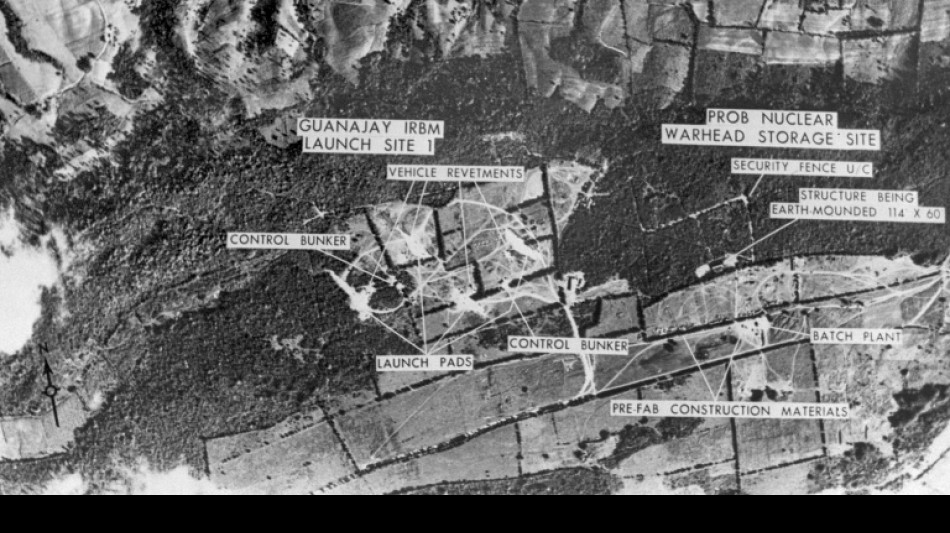
Cuban missile crisis: 13 days when nuclear war threatened / Photo: - - HO/AFP/File

 Govt takes control of Turkey's most-watched news channel
 FIFA to offer members $6.35-billion development fund windfall

 US consumer inflation hotter than expected as midterms loom

 INmune Bio Inc. and Quantum Computing Inc. Partner to Apply Quantum Optimization and AI to Advance Alzheimer’s Drug Research and Explore New Applications for XPro
 Hot US inflation data dents Wall Street stocks
 India sends 'cockroach' leaders to jail after protest
 'Sinners' director Ryan Coogler to reboot 'X-Files' for Disney
 Lufthansa wins contest for TAP Air Portugal stake

 AI worms, 'major' incident fears spur safety calls at industry summit
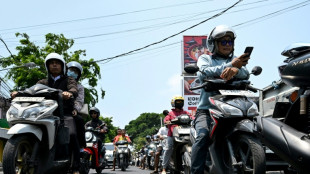
 Fuel shortage triggers queues on Indonesia's Bali island
 Evolution Metals & Technologies Corp. Reaffirms $400 Million to $460 Million FY2027 Revenue Guidance, Unveils Eight Sintered Magnet Grades Covering an Estimated 75% of Global NdFeB Revenue, and Moves to Answer U.S. Army Call for Rare Earth Magnets

 Trial defence says Russia used Nord Stream pipelines as 'weapon'
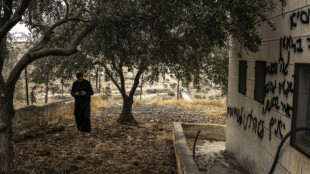 Israeli settlers set fire to mosque in occupied West Bank
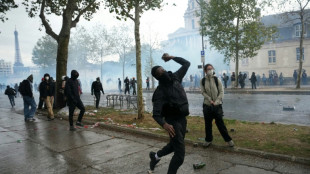 Macron says French student protesters 'exploited' by political forces: spokeswoman
 Stocks diverge ahead of key US inflation data
 Japan summons Russian ambassador to protest journalist's arrest

 Workers to strike at world's largest copper mine in Chile
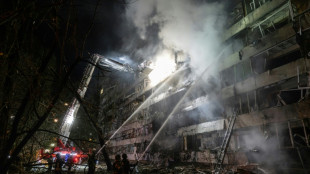 Ukraine accuses US of helping Russia as missiles hit Kyiv

 Drone hits data centre of Russia's largest bank

 Bivial AG Brings Its Complete Dashboard to Mobile
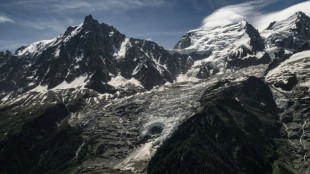 Mont Blanc nearly two metres taller than in 2023: French surveyors

 Pope recovering after lung cancer operation that rattles Church
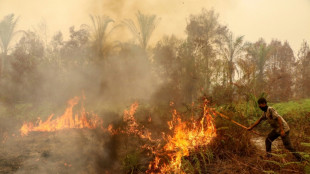 Indonesia haze spikes Singapore pollution, shuts East Timor schools

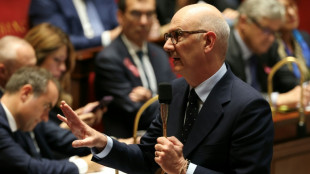 Higher borrowing costs an 'alarm signal' for France: finance minister
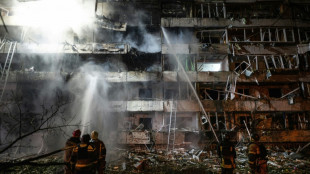 Zelensky accuses Putin of disrespecting Trump after latest attacks

Sixty years ago the Cuban missile crisis brought the world to the brink of nuclear war.
Here is a look at how the standoff between the United States and the Soviet Union unfolded:
- Missiles deployed -
On May 21, 1962, Soviet leader Nikita Khrushchev decides to place medium- and intermediate-range nuclear missiles on the island of Cuba, Moscow's communist ally in the Caribbean.
He justifies the decision by the fact that Cold War rival the United States could deploy nuclear weapons from NATO member Turkey, which bordered the then Soviet Union.
On September 4, US President John F. Kennedy warns that the "gravest consequences" will follow if significant Soviet offensive weapons are introduced into Cuba.
On October 14, a US U2 spy plane confirms that Soviet missiles were being deployed on Cuba, a mere 145 kilometres (90 miles) from the coast of Florida, and therefore within striking range of northeastern cities.
- 13-day crisis -
For 13 days a terrifying game of geo-political poker pits the young Kennedy against the fiery Khrushchev.
On October 16, Kennedy is briefed on a spy plane's high-resolution photos. He weighs whether to order a naval blockade or an invasion.
The next day US military units begin moving to bases in the southeastern United States as intelligence photos from another U-2 flight show additional sites, and 16 to 32 missiles.
- Cuba under 'quarantine' -
On October 22 Kennedy writes to Khrushchev.
"I have not assumed that you or any other sane man would in this nuclear age, deliberately plunge the world into war which it is crystal clear no country could win and which could only result in catastrophic consequences to the whole world, including the aggressor," he writes.
That evening he speaks on television and announces the establishment of a naval "quarantine" or blockade around Cuba and orders preparations for a landing on the island.
The Organization of American States backs Washington.
The next day ships of the naval quarantine fleet move into place around Cuba.
Four nuclear-armed Soviet submarines move into the Caribbean.
Soviet freighters bound for Cuba with military supplies freeze their positions.
Khrushchev protests in a letter to Kennedy "You are no longer appealing to reason, but wish to intimidate us."
The military of the Soviet Union and its eastern bloc allies are put on alert.
On October 26, Cuban leader Fidel Castro urges Khrushchev to initiate a nuclear first strike against the United States in the event of a US invasion of Cuba.
In a letter to Kennedy, Khrushchev proposes removing Soviet missiles and personnel if the United States guarantees not to invade Cuba.
- Spy plane shot down -
The next day a US U-2 spy plane is shot down over Cuba, killing its pilot, Rudolph Anderson, who becomes the sole fatality of the crisis.
Kennedy receives a new letter from Khrushchev demanding the removal of US missiles in Turkey in exchange for the removal of the Soviet missiles. Kennedy promises not to invade Cuba and to lift the blockade if the missiles are removed.
On October 28, Khrushchev backs down, agreeing to dismantle the installations and return the missiles to the Soviet Union, ending the crisis.
In an additional secret agreement, the United States agrees to eventually remove its Jupiter missiles from Turkey.
On November 20 Kennedy lifts the Cuba blockade.
- The aftermath -
The next year a "hotline" is set to link the US and Soviet leaders by telex. Up to then they had only communicated via their respective ambassadors.
Sixteen months earlier, in February 1962, following Cuba's expropriations of US companies, Kennedy had imposed a strict economic and financial embargo on the island.
It would take another half a century for US President Barack Obama and Cuban leader Raul Castro in December 2014 to announce the re-establishment of diplomatic relations between the two countries.
Sources: John F. Kennedy Presidential Library and Museum, AFP archives
E.Qaddoumi--SF-PST