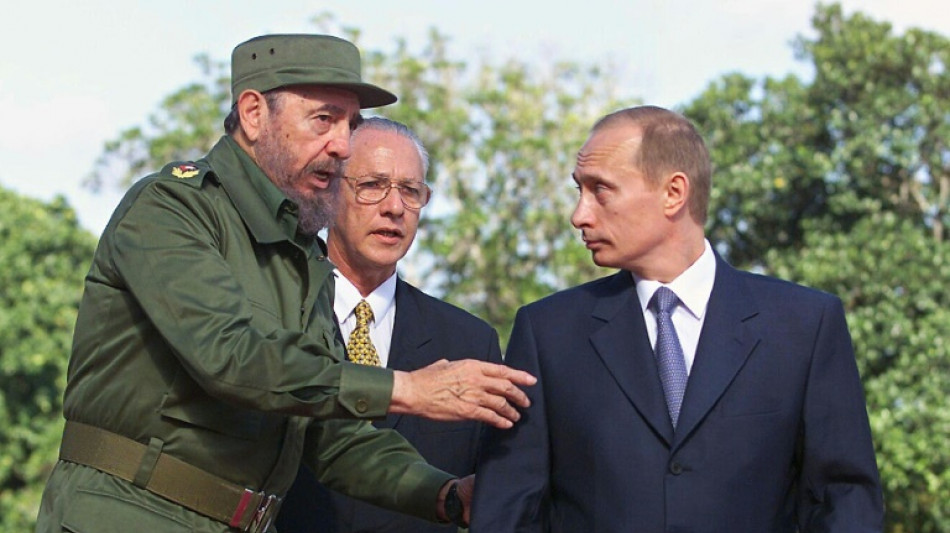
60 years after Cuba crisis, nuclear war suddenly thinkable again / Photo: ADALBERTO ROQUE - AFP/File

 Govt takes control of Turkey's most-watched news channel
 FIFA to offer members $6.35-billion development fund windfall

 US consumer inflation hotter than expected as midterms loom

 INmune Bio Inc. and Quantum Computing Inc. Partner to Apply Quantum Optimization and AI to Advance Alzheimer’s Drug Research and Explore New Applications for XPro
 Hot US inflation data dents Wall Street stocks
 India sends 'cockroach' leaders to jail after protest
 'Sinners' director Ryan Coogler to reboot 'X-Files' for Disney
 Lufthansa wins contest for TAP Air Portugal stake
 AI worms, 'major' incident fears spur safety calls at industry summit
 Fuel shortage triggers queues on Indonesia's Bali island
 Evolution Metals & Technologies Corp. Reaffirms $400 Million to $460 Million FY2027 Revenue Guidance, Unveils Eight Sintered Magnet Grades Covering an Estimated 75% of Global NdFeB Revenue, and Moves to Answer U.S. Army Call for Rare Earth Magnets

 Trial defence says Russia used Nord Stream pipelines as 'weapon'
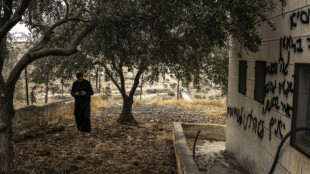 Israeli settlers set fire to mosque in occupied West Bank
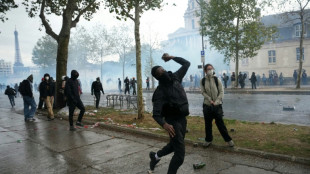 Macron says French student protesters 'exploited' by political forces: spokeswoman
 Stocks diverge ahead of key US inflation data
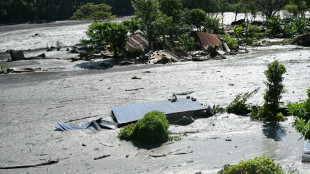
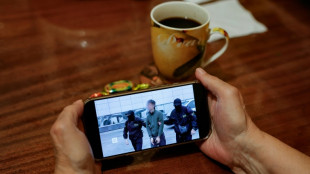 Japan summons Russian ambassador to protest journalist's arrest

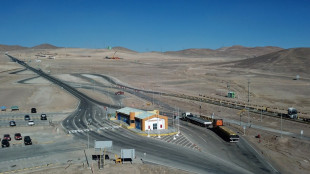 Workers to strike at world's largest copper mine in Chile
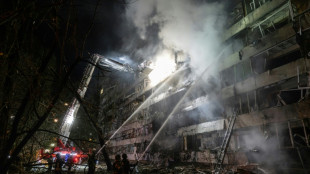 Ukraine accuses US of helping Russia as missiles hit Kyiv
 Drone hits data centre of Russia's largest bank
 Bivial AG Brings Its Complete Dashboard to Mobile
 Mont Blanc nearly two metres taller than in 2023: French surveyors
 Pope recovering after lung cancer operation that rattles Church
 Indonesia haze spikes Singapore pollution, shuts East Timor schools

 Higher borrowing costs an 'alarm signal' for France: finance minister
 Zelensky accuses Putin of disrespecting Trump after latest attacks

For 60 years, the Cuban missile crisis has loomed both as a frightening lesson on how close the world came to nuclear doomsday -- and how skillful leadership averted it.
With Russian President Vladimir Putin brandishing the nuclear option in Ukraine, the threat has come roaring back, but this time, experts are less certain of a way to end it.
US President Joe Biden in early October warned bluntly that the world risked nuclear destruction for the first time since 1962, saying that Putin was "not joking" about the use of the ultra-destructive weapons as his military is "significantly underperforming" in its invasion of Ukraine.
Biden said he was looking to provide "off-ramps" to Putin. But there is no sign Putin is eager to take one.
"I think this situation, more than any since 1962, could escalate to the use of nuclear weapons," said George Perkovich, vice president for studies at the Carnegie Endowment for International Peace.
"I've been working in this field for 40 years and this is the most challenging situation because you have a nuclear-armed state, Russia, whose leader has defined a situation as an existential one."
Unlike in 1962, the world is now facing a number of nuclear flashpoints with signs North Korea is gearing up for another atomic test, tensions still on low-boil between nuclear-armed India and Pakistan and Iran ramping up nuclear work.
But Ukraine poses unique dangers as the conflict pits the world's two largest nuclear powers against each other. Any Russian strike would be expected to involve tactical nuclear weapons -- targeted on the battlefield and not fired between continents -- but Biden himself has warned it is difficult not to "end up with Armageddon" once a nuclear weapon is used.
Putin, who has questioned Ukraine's historical legitimacy, has proclaimed the annexation of four regions and suggested that either an attack on the annexed "Russian" territory or direct Western intervention could lead Russia to use a nuclear weapon.
- Bigger stakes? -
The brutal war that has already gone on for eight months is substantively different than the Cuban crisis, where the question was how to prevent a Cold War confrontation over the discovery of Soviet nuclear weapons on the island from turning hot.
US president John F. Kennedy, in one of his taped deliberations pored over by historians, said that European allies thought Washington was "demented" by its fixation on Cuba, some 90 miles (140 kilometers) from Florida with a long history of US intervention.
"Ukraine is significantly more important to America's allies than Cuba was," said Marc Selverstone, a Cold War historian at the University of Virginia.
"Putin seems to be willing to rearrange the borders of Europe, and that's terrifying to Europeans."
Soviet leader Nikita Khrushchev's motives, while broad, were less rigid than Putin's, with Moscow in part seeking to close a missile gap with the United States and gain leverage with the West over divided Berlin.
Political stakes were high for Kennedy, who was embarrassed by the failed CIA Bay of Pigs invasion a year earlier to oust communist revolutionary Fidel Castro and was days away from congressional elections.
But Kennedy rejected advice for air strikes and imposed a naval "quarantine" against further Soviet shipments -- avoiding the term blockade, which would have been an act of war.
Moscow withdrew after Kennedy promised not to invade Cuba and, quietly, to pull US nuclear missiles from Turkey.
"For Kennedy, the most important thing was to lessen the chance for a nuclear exchange," Selverstone said.
"I don't know if that's foremost in Vladimir Putin's mind right now. In fact, he seems to be to be upping the ante."
- 'Raising their red lines' -
Both in 1962 and now, the nuclear powers faced an added layer of uncertainty from allies on the ground.
On October 27, 1962, just as Khrushchev and Kennedy were exchanging messages, a US U-2 spy plane was shot down over Cuba, killing a US pilot.
Kennedy ignored calls to retaliate, surmising -- correctly, the historical record proved -- that the order to fire came not from the Soviets but from Cuba.
Khrushchev announced a deal the next day, with his son later writing that he feared the situation was spiraling out of control.
In Ukraine, President Volodymyr Zelensky has vowed to build on momentum and win back all land occupied by Russia.
The United States has shipped billions of dollars in weapons to Ukraine but Biden has stopped short of sending missiles that could strike into Russia, saying he will not risk "World War III."
"Zelensky and Putin have both taken maximalist positions, raising their red lines, whereas in 1962, Kennedy and Khrushchev were lowering them," Selverstone said.
Perkovich said that Biden, for whom he worked when he was a senator, was as calm and historically well-versed as any US president in handling a crisis.
But he said that 2022 is also a different era. In 1962, Russia agreed to keep Kennedy's agreement to pull US missiles from Turkey a secret, mindful of the political risks for the president.
"Many crises in history get resolved through secret diplomacy," Perkovich said.
"Can you imagine now in this media age, with open-source intelligence and social media, keeping a deal secret like that?"
R.Halabi--SF-PST