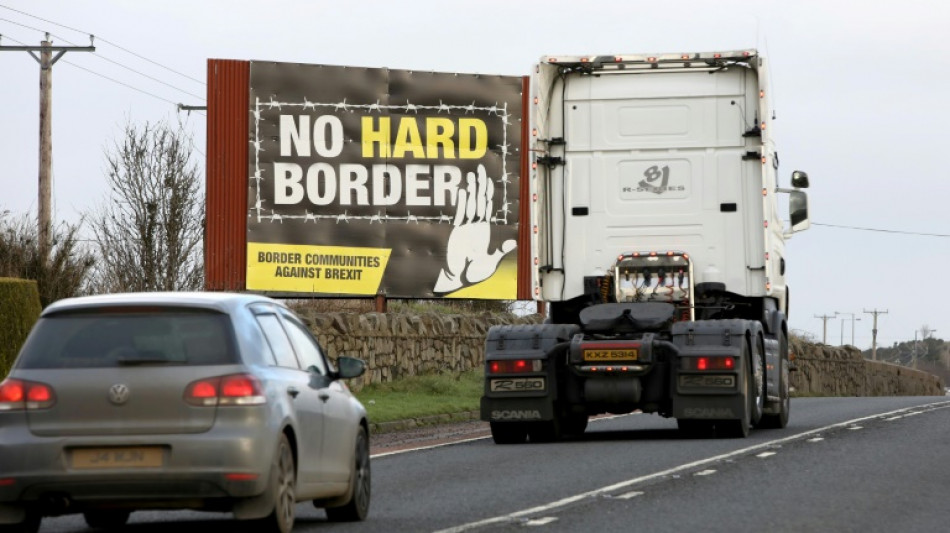
Irish minister senses 'warmer' UK tone in post-Brexit talks / Photo: Paul Faith - AFP

 Barcola scores hat-trick as Liverpool hit LASK for six
 Healthy corals help bleached neighbors regain color: study

 Hope ton helps West Indies level T20 series at 2-2 in India

 Ukraine war reaches shores of Bulgarian fishing village
 Brazil probing 'criminal' origin of forest fires: minister to AFP
 Sally Rooney books cannot be sold in UK amid Palestine Action ban: publisher

 Italian ski stars Goggia and Brignone to miss season opener
 Bournemouth boss Rose urges Cherries to bounce back from Chelsea 'slap'
 Top seed Sabalenka falls at first hurdle in Wuhan
 FX Junction Brings Copy Trading to Everyone, While Their Money Never Leaves With Their Broker

 Brighton defender Struijk's red card overturned

 Saudi league postpones three matches after Houthi attacks
 US consumer inflation up more than expected as midterms loom

 Canadian publisher supports novelist Orelien after AI denial

 Medvedev sees off Tsitsipas to reach Shanghai Masters quarters

 Louvre boss warns of closure risk without major renovations

 Lawes and Genge urge England to end ban on overseas-based players

 Metrika Selected by OCC to Support Stablecoin Supervisory Framework Under the GENIUS Act
 Kenya hosting 2029 World Championships will help doping fight, says Coe

 UK prosecutor tells jury Russell Brand a 'sexual predator'
 Fulham manager Arbeloa fined £25,000 after Man Utd outburst

 Nepal flood triggered by rock and ice avalanche: report

 'Distressed' family of UK man killed by tiger urge end to online posts

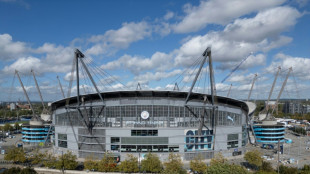 Regulator expects Man City appeal to be heard by January

 Rising Spanish tennis star handed code violation for swearing at ballboy
Ireland has detected a "warmer" tone from the new UK government as Britain and the EU seek compromise on a controversial post-Brexit deal for Northern Ireland, the Irish European Affairs minister told AFP.
A fresh approach by Britain under Prime Minister Liz Truss was "welcome", given the complex task of implementing the so-called Northern Ireland protocol that aims to avoid a hard border between the British province and the Irish Republic as a result of Brexit, Thomas Byrne said in an interview during a visit to France.
"What we've seen in recent weeks is a real effort by the British to engage with us, in every possible way, with more frequent contact," Byrne said. "We're definitely on a new plane, it's warmer, it's more frequent, I hope it will be deeper."
- 'We had to be measured' -
Truss's predecessor, Boris Johnson, angered the Irish government and the rest of the European Union by backtracking on the protocol, drawing accusations of violating the Brexit divorce treaty.
Describing Irish relations with the Johnson government, Byrne said: "Maybe 'provocation' is too strong a word, but there were times when we certainly had to be particularly measured in our responses."
The Johnson government in June introduced legislation to rip up the Northern Ireland protocol -- which is part of Britain's exit deal with the EU -- sparking fears of a trade war and worsening relations with Europe.
Dublin called the move "a particular low point in the UK's approach to Brexit".
Earlier this month Steve Baker, a British government minister, told Irish broadcaster RTE that he was "sorry that relations between the United Kingdom and Ireland have been soured by the Brexit process".
- 'Engage, engage, engage' -
Byrne said his government was not looking for apologies. "We just want to engage, engage, engage," he said.
But he added: "We really welcome this change of tone, we acknowledge it, we're happy with it."
Recent events, including the death of Queen Elizabeth, have been occasions to confirm the improved relations.
"There was a very warm response from the Irish side when the Queen died," Byrne said.
He added that Irish President Michael D. Higgins had observed, based on conversations with the Queen, and then with King Charles III, "that the royal family in Britain is deeply committed to the peace process, and we find that very helpful".
The president "hoped that would permeate through to the system", he said.
Byrne said British help and sympathies had been forthcoming this month when a blast at a petrol station in northwest Ireland killed 10.
- 'Must be complied with' -
The Northern Ireland protocol has been contentious because it calls for checks of goods between the province and the rest of the UK, sparking opposition from unionist parties in Northern Ireland which say it undermines the integrity of the United Kingdom.
"Where we are at the moment is that the Northern Ireland protocol is in operation, it's not being operated maybe to its fullest degree," Byrne said.
He acknowledged that "some people in opposition to it are interested in eliminating it, essentially", but said that would not happen.
"Our basic principle is that it's an international agreement, and no matter the context, it must be complied with," he said.
However, "there's a special context here, it's Northern Ireland", he said.
"We need everybody working together, particularly at the higher level, the Dublin government, the London government and Brussels, working together, speaking with one voice," he said.
The aim, he added, was to give Northern Ireland "the best of both worlds, access to the EU and access to the British market".
Britain and Ireland both joined the EU's predecessor, the European Communities (EC), in 1973.
"What we saw during the time of our joint membership was, first of all, increased prosperity, and less dependence on Britain, actually, for trade, but warmer relations over time, culminating in the Good Friday agreement, and really close personal connections," Byrne said.
The Good Friday deal ended most of the sectarian violence seen in Northern Ireland since the 1960s.
Border infrastructure had been a flashpoint during the three decades of conflict, making an open border central to the peace deal.
In the interview, Byrne said there had been "absolutely extraordinary solidarity here in France and in all the member states of the EU" with Ireland.
"They want and need to engage with Britain on lots of issues, particularly Ukraine, but to do that, agreements that Britain has signed must be complied with," he said.
J.AbuHassan--SF-PST