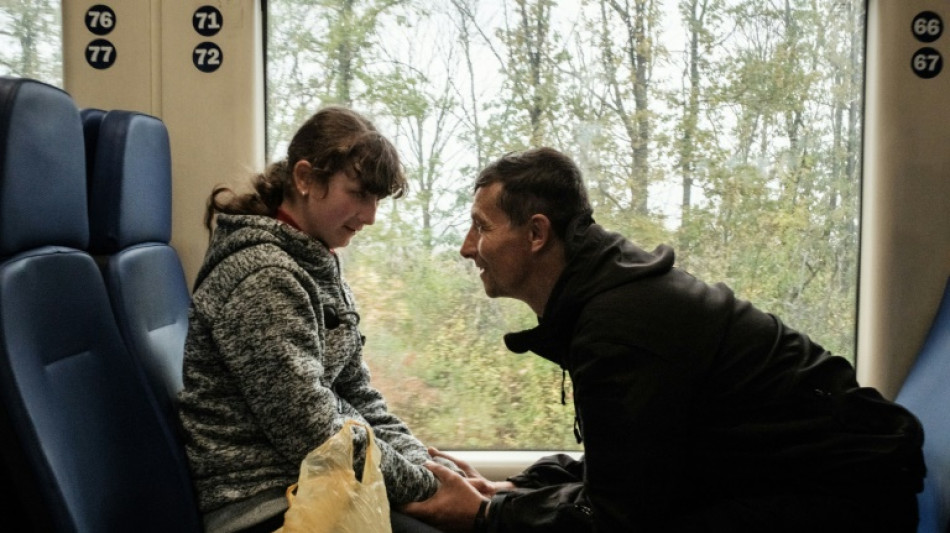
Defiant Ukraine reopens eastern rail link despite missiles / Photo: Yasuyoshi CHIBA - AFP

 Villa put six past Fenerbahce in record rout
 US stocks fall after hot inflation report as leading AI shares tumble
 Government buildings torched in violent Albanian protests

 Wall Street grills Bank of America over money laundering fine

 Mekies extends contract as Red Bull team principal until 2031
 Indonesia rescues starved orangutan from fires: officials

 Real Madrid's Vinicius banned for Clasico after red card
 Restrictions expose Ukraine's Starlink dependency in Russia war: observers
 Espada out as Astros manager while Mattingly stays with Phillies

 Houthis say targeted Saudi oil giant Aramco, vow more attacks

 Govt takes control of Turkey's most-watched news channel

 FIFA to offer members $6.35-billion development fund windfall

 US consumer inflation hotter than expected as midterms loom

 INmune Bio Inc. and Quantum Computing Inc. Partner to Apply Quantum Optimization and AI to Advance Alzheimer’s Drug Research and Explore New Applications for XPro

 Hot US inflation data dents Wall Street stocks

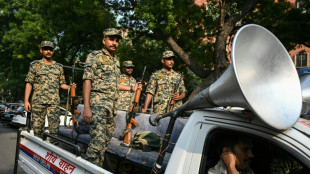 India sends 'cockroach' leaders to jail after protest

 'Sinners' director Ryan Coogler to reboot 'X-Files' for Disney

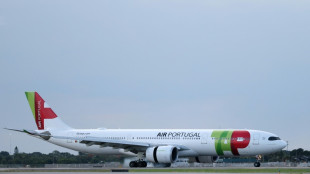 Lufthansa wins contest for TAP Air Portugal stake

 AI worms, 'major' incident fears spur safety calls at industry summit
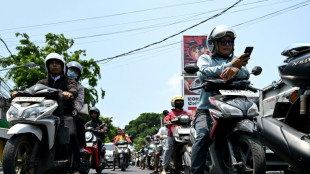 Fuel shortage triggers queues on Indonesia's Bali island

 Evolution Metals & Technologies Corp. Reaffirms $400 Million to $460 Million FY2027 Revenue Guidance, Unveils Eight Sintered Magnet Grades Covering an Estimated 75% of Global NdFeB Revenue, and Moves to Answer U.S. Army Call for Rare Earth Magnets

 Trial defence says Russia used Nord Stream pipelines as 'weapon'

 Israeli settlers set fire to mosque in occupied West Bank

 Macron says French student protesters 'exploited' by political forces: spokeswoman
 Stocks diverge ahead of key US inflation data
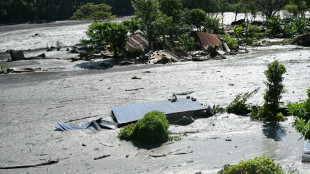
As Russia launched a huge wave of missile strikes against Ukrainian cities Monday, defiant rail workers in the east of the country managed to restore a severed rail link.
Angered by a truck bombing that damaged a bridge carrying Russia's main road and rail link to the occupied Ukrainian region of Crimea, Moscow has stepped up strikes on civilian targets.
But, despite the savage bombardment, the passenger rail service between recently-occupied Izyum and Ukraine's second city Kharkiv restarted after Russia's February 24 invasion forced a seven-month closure.
"The trains will be running twice a day, every day," said Izyum railway manager Andrei Gadyatskiy, standing in the rain in front of the boarded up windows of his partially burned station.
Any transport away from Ukraine's eastern frontline will serve, for some, as a lifeline to the most basic necessities.
"It will allow them to go to Kharkiv, to use their bank cards," Gadyatskiy said.
Raisa Starovoytova came to the station on Monday because she could barely believe rumours that the train had returned.
"I came to find out about the train because I will need to get back to Kharkiv," she told AFP, relieved to confirm that she would be able to leave later in the week.
The 65-year-old retired teacher had returned to Izyum after the Russian retreat, to see what had happened to her home.
"They took everything they could... mattresses, bedding... I came to take the bedding at least, but it wasn't there," she said.
- Former airport shuttle -
There is no electricity to power the electric locomotives that once served the eastern network, and Russian missile attacks still regularly hit the marshalling yards in Kharkiv.
But a Ukrainian DPKr-3 diesel that once shuttled air travellers between the capital Kyiv and Boryspil international airport has been pressed into service, 600 kilometres (360 miles) east of its home.
In the early stages of the war, Izyum came under intense Russian shelling and the invading army occupied the city from early April until its liberation last month by Ukrainian forces.
After the Russian retreat, the discovery of a mass burial site and the corpses of torture victims made Izyum a byword for the alleged atrocities committed under Russian occupation.
Now the town once again has a link to the regional capital, Kharkiv, by the rail line, along with stops in former frontline towns like Savyntsi, Tsyganska and Balakliya along the way.
Mariya Tymofiyenko had not been to Balakliya since the start of the war.
"I'm 73 years old and I still have to ride a bicycle because the buses are not running. It's too far to walk," she told AFP, on board the train as it wound its way through low wooded hills under leaden grey skies.
She hopes that Balakliya, where she has relatives, will prove a respite from the ruined town left behind by the Russian occupation of Izyum.
- 'Tortured, beaten' -
"I have no hope. If it's like Izyum, I don't know -- here they broke into my flat, my garage. They stole everything. They ate all my preserves. They took all the tools," she told AFP, blinking back tears.
"So many people died under the rubble. Apartments were destroyed, the schools. It was terrifying," she said, wrapped up well against the first damp, chilly days of autumn.
"So many people were tortured, taken away, beaten. One man, my neighbour from one street over, was hanged," she continued.
"Yesterday, my granddaughter called me and said, 'Grandma, I checked on the internet and the train to Balakliya will start again tomorrow.' And I said, 'OK, OK I will take it'."
C.AbuSway--SF-PST