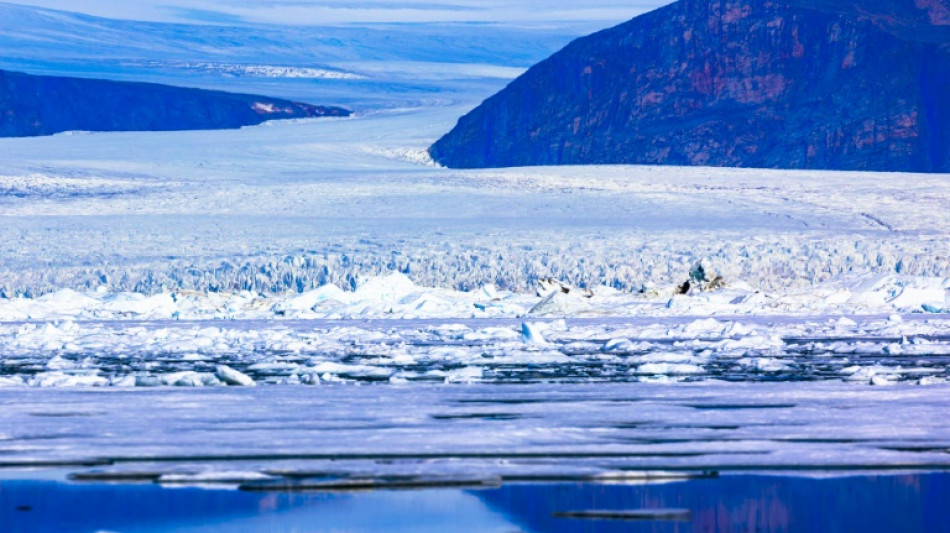
US releases new Arctic strategy as climate threat grows / Photo: Kerem Yücel - AFP/File

 Mourinho blasts 'shameless' timing of Vinicius ban decision

 PSG beat Man City in Champions League thriller, Barcola hits Liverpool hat-trick

 US Treasury chief urges stronger IMF role against 'distortionary policies'

 Giant-killers Bodo sink Dortmund in Champions League

 PSG outgun embattled Man City in six-goal Champions League thriller

 In Chicago, pope's hometown, Catholics express shock and support

 Musk suggests US govt behind any slowdown in Ukraine's Starshield system

 Chiclayo prays for recovery and return of the 'Peruvian pope'
 Barcola scores hat-trick as Liverpool hit LASK for six

 Healthy corals help bleached neighbors regain color: study
 Hope ton helps West Indies level T20 series at 2-2 in India

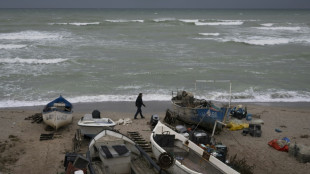 Ukraine war reaches shores of Bulgarian fishing village
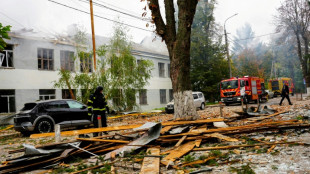
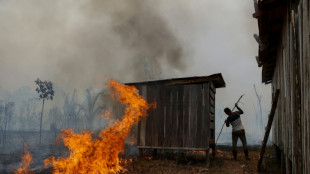 Brazil probing 'criminal' origin of forest fires: minister to AFP

 Sally Rooney books cannot be sold in UK amid Palestine Action ban: publisher
 Italian ski stars Goggia and Brignone to miss season opener

 Bournemouth boss Rose urges Cherries to bounce back from Chelsea 'slap'

 Top seed Sabalenka falls at first hurdle in Wuhan

 FX Junction Brings Copy Trading to Everyone, While Their Money Never Leaves With Their Broker

 Brighton defender Struijk's red card overturned

 Saudi league postpones three matches after Houthi attacks

 US consumer inflation up more than expected as midterms loom

 Canadian publisher supports novelist Orelien after AI denial

 Medvedev sees off Tsitsipas to reach Shanghai Masters quarters

 Louvre boss warns of closure risk without major renovations

 Lawes and Genge urge England to end ban on overseas-based players

US President Joe Biden's administration released a new Arctic strategy on Friday as the strategically and environmentally important region suffers worsening effects from climate change and sees increased international competition.
Global warming is melting Arctic ice, opening previously closed areas to navigation and creating new opportunities for countries such as the United States, Russia and China to vie for resources and influence.
The situation is further complicated by the invasion of Ukraine by Russia -- a major Arctic power -- which has increased tensions between Moscow and Washington to a level not seen since the height of the Cold War.
"The Arctic -- home to more than four million people, extensive natural resources, and unique ecosystems -- is undergoing a dramatic transformation," the strategy says.
"Driven by climate change, this transformation will challenge livelihoods in the Arctic, will create new economic opportunities, and could intensify strategic competition among countries."
The strategy features four main pillars: security, climate change and environmental protection, sustainable economic development, and international cooperation.
"Our highest priority is to protect the American people and our sovereign territory and rights. We are committed to the security of our treaty allies and to supporting our partners in the region," the strategy says.
To do this, Washington will "enhance and exercise both our military and civilian capabilities in the Arctic as required to deter threats and to anticipate, prevent, and respond to both natural and human-made incidents."
As the impact of global warming grows, Washington wants to help Alaska -- its northernmost state -- to build resilience and adapt, and also aims to pursue international initiatives to mitigate emissions in the Arctic.
"Climate change generates greater impacts in the Arctic than in many more temperate regions, yielding unstable terrain, vulnerable coasts, changing ecosystems, and a worsening biodiversity crisis," the strategy says.
- Russia cooperation 'virtually impossible' -
"We will support efforts to build Alaskan communities' resilience in the face of dramatic changes on the Arctic's horizon," it says, noting that more than 60 percent of the state's Native communities are considered "environmentally threatened."
On the economic front, the strategy notes that melting Arctic ice -- while a "stark indicator of accelerating climate change" -- also presents opportunities.
"The US government will help create the conditions to catalyze responsible, inclusive, and transparent economic development in Alaska and across the Arctic," it says, including via infrastructure development and supporting industries that increase opportunities for local communities.
The strategy says the United States values Arctic cooperation, but that Russia's invasion of Ukraine has dealt the prospects of working with Moscow a significant blow.
"Russia's brutal war in Ukraine has made this cooperation in the Arctic virtually impossible... at present. However, maintaining cooperation with our allies and partners in the near-term remains essential to advancing our objectives for the region," it says.
It has been nearly 10 years since the last US Arctic policy document was released, and the new strategy acknowledges both the changing natural and geopolitical environment.
"This strategy addresses the climate crisis with greater urgency, given the developments that we've seen over the last eight to nine years," a senior US administration official said ahead of its release.
It also "recognizes the increased strategic competition that we've seen in the Arctic in terms of Russia and (China) over the last decade, and... seeks to position the US to effectively compete and also manage those tensions."
V.Said--SF-PST