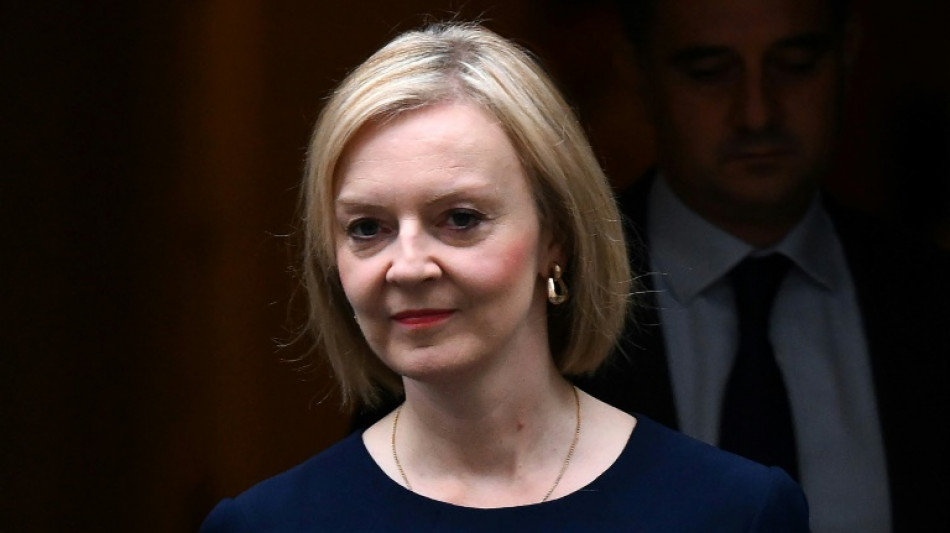
UK PM Truss defends 'controversial' tax cuts despite market turmoil / Photo: Daniel LEAL - AFP/File

 'Severe drought' declared in parts of UK

 IUX Announces New Web Client Portal Built for Enhanced Browser-Based Trading

 School roof collapse kills teacher, 32 children in NW Pakistan

 Inter skipper Martinez facing month out with thigh injury

 Spanish prosecutors back abuse probe into Julio Iglesias

 Tech sell-off deepens as US inflation sparks AI jitters

 Southgate does not forsee a return to management

 Two dead as Istanbul endures heaviest rainfall in 80 years

 After latest Nepal flood, survivors fear for future

 EU leaders clash over budget as spectre of French elections looms

 'No place to breathe': life in Indonesia's fire epicentre

 'Can't sleep': Spain's housing crunch upends lives

 Musk calls on Ukraine's Zelensky to 'go' after satellite slowdown row

 Still smiling at 117, Albanian may be world's oldest woman

 Pope has 'good night' in hospital: Vatican

 China's economy seen missing target as global shocks bite: AFP poll

 Costa Rica opens jail inspired by El Salvador mega-prison

 Same-sex couple takes fight for equality to Slovakian court

 'High hopes' as Indonesian women get a football league, again

 'Expectations high' for Bordeaux-Begles' Champions Cup hat-trick bid, says Depoortere

 Rennie urges All Blacks to stay focused against 'hurting' Wallabies

 Palmeiras beat Fluminense 2-1 in Libertadores semi-final first leg

 Brewers blasts leave Dodgers on brink

 Tech stock lead rout after US inflation fuels rate hike bets

 Al-Fayed survivors say UK police missing 'bigger picture'

UK Prime Minister Liz Truss on Thursday defended her tax cuts policy, despite it triggering market turmoil and forcing a Bank of England intervention to prevent "material risk" to the economy.
"We had to take urgent action to get our economy growing, get Britain moving, and also deal with inflation," she told local station BBC Radio Leeds in her first comments since the crisis sparked by Friday's mini-budget.
"And of course, that means taking controversial and difficult decisions, but I'm prepared to do that as prime minister.
"It's important the United Kingdom's on the front foot, that we are pulling all the levers we can to drive economic growth. That is what we are pushing ahead with," she later told BBC Radio Lancashire.
Despite being in power for less than a month, Truss is already under severe pressure after the markets reacted to her government's tax cuts by sending the pound to an all-time low against the dollar.
UK markets remain highly volatile, with the Bank of England intervening on Wednesday to buy government bonds in order to prevent a "material risk" to stability.
After sterling hit its dollar low early Monday, the bank said it would "not hesitate to change interest rates by as much as needed" to curb high inflation.
But it also signalled that it would wait until its next policy meeting on November 3 before fully assessing the impact of the government's contentious plans.
Opposition leaders have demanded that Truss cancel her party's conference that starts on Sunday and recall parliament over the crisis.
- Govt 'undercut' City -
Markets are concerned that Britain cannot fund its huge spending commitments, having announced a massive fuel subsidy package alongside the tax cuts.
"My priority was making sure that we were supporting the British people in what is going to be a very difficult winter," she told BBC Radio Norfolk.
"There are many people with many different opinions, but what I think nobody is arguing with is that we had to take action to deal with what is a very, very difficult economic situation."
The pound slipped again on Thursday, while former Bank of England chief Mark Carney said the government had "undercut" financial institutions.
"Unfortunately having a partial budget, in these circumstances -- tough global economy, tough financial market position, working at cross-purposes with the Bank -- has led to quite dramatic moves in financial markets," he told the BBC.
But Truss insisted she was working "very closely" with the central bank.
In a highly unusual intervention on Wednesday, the IMF said it was "closely monitoring" developments and urged the government to change tack.
"We understand that the sizable fiscal package announced aims at helping families and businesses deal with the energy shock and at boosting growth via tax cuts and supply measures.
"However, given elevated inflation pressures in many countries... we do not recommend large and untargeted fiscal packages at this juncture."
The IMF stressed the importance of fiscal policy not working "at cross purposes to monetary policy".
Many central banks, including the Bank of England, are aggressively hiking interest rates in a bid to cool decades-high inflation.
H.Jarrar--SF-PST

