World economy to slow, 'paying the price of war': OECD / Photo: STRINGER - AFP

 El Nino a 'terrifying' threat to coral reefs: UN biodiversity expert

 Barcola must get used to Liverpool highs and lows, says Iraola

 Versus Trade Wins Best ECN/STP Broker APAC 2026, Marking Third UF Awards Recognition

 Three dead as Istanbul sees heaviest rainfall in 80 years

 US producer prices see biggest jump since 2022 in added challenge to Trump

 Swiatek avoids seed exodus to breeze into Wuhan last eight

 PM condemns 'chaos' as violent protests grip Albania

 'I couldn't breathe', Russell Brand's alleged rape victim says

 Pope's cancer operation already reshaping papacy

 Zverev cruises past De Minaur to reach Shanghai semi-finals

 Ukraine's Zelensky defies Trump with Russian refinery strikes

 Holders Australia edge New Zealand 24-22 to open Rugby league World Cup

 'Ocarina of Time': Nintendo gives Zelda classic a modern makeover

 France charges teen shooter citing revenge for bullying in school

 Martinez blames 'anger' for dig at Man Utd hierarchy

 Crowds build as Albanian PM tours protest aftermath

 China-North Korea bridge opens, 12 years late

 Asian Cup in Saudi Arabia could be postponed but 'no hurry' to decide: AFC

 Conrad wields axe after South Africa loss to Australia

 School roof collapse kills teacher, 27 children in NW Pakistan

 Haze turns Indonesia skies orange, shuts schools in East Timor

 California puts first US billionaire tax to the vote

 School headscarf ban meets resistance in Austria

 World's top cocoa producer aims for a climate-tough bean

 Why is Shell facing lawsuits over climate disasters in Brazil and the Philippines?

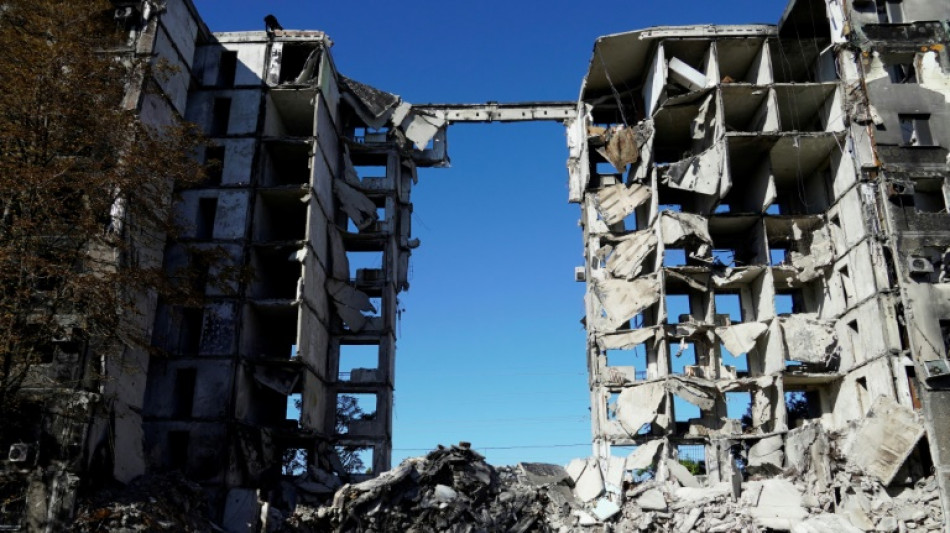
The world economy will take a bigger hit than previously forecast next year due to the effects of Russia's war in Ukraine, the OECD said Monday.
In a bleak report titled "paying the price of war", the Paris-based organisation noted that the conflict aggravated inflationary pressure when the cost of living was already rising quickly.
Covid outbreaks are still having an impact on the global economy while growth has also been affected by rising interest rates as central banks scramble to cool red-hot prices, the OECD said.
"A number of indicators have taken a turn for the worse, and the global growth outlook has darkened," the Organisation for Economic Co-operation and Development said in the report.
Global growth stalled in the second quarter of this year and data in many economies "now point to an extended period of subdued growth", the OECD said.
The organisation slashed its 2023 growth forecast for the global economy to 2.2 percent, down from 2.8 percent in its previous estimate in June.
- German recession -
The outlook for nearly all nations in the Group of 20 top economies was cut, except for Turkey, Indonesia and Britain, though the latter is forecast to have zero growth.
Growth in the United States -- the world's biggest economy -- is forecast to slow to 0.5 percent in 2023.
The growth forecast for China, whose economy has been hit by strict Covid lockdowns, was cut sharply for this year to 3.2 percent while it was slightly lower to 4.7 percent for 2023.
Germany is now expected to go into recession next year with Europe's biggest economy now seen shrinking by 0.7 percent -- a 2.4-percentage-point drop from the previous forecast.
The country's economy has been hit the hardest in Europe as it has relied heavily on Russian supplies of natural gas, which Moscow has cut significantly in suspected retaliation to Western sanctions.
The eurozone as a whole will post meagre growth of 0.3 percent, a sharp downgrade from 1.6 percent.
The OECD kept its 2022 global growth forecast unchanged at three percent after previously lowering it.
To highlight the impact of Russia's invasion of Ukraine, the OECD said global output in 2023 is now projected to be $2.8 trillion lower than previously estimated before the conflict in December 2021.
- 'Significant uncertainty' -
The war has sent energy and food prices soaring over concerns about supply as Russia is a major oil and gas producer while Ukraine is a key exporter of grains to countries across the world.
Inflation had already been on the rise before the conflict due to bottlenecks in the global supply chain after countries emerged from Covid lockdowns.
"The effects of the war and the continuing impacts of Covid-19 outbreaks in some parts of the world have dented growth and put additional upward pressure on prices," the OECD said.
"Inflationary pressures have become increasingly broad-based, with higher energy, transportation and other costs being passed through into prices," it said.
The OECD raised its inflation forecast for the G20 to 8.2 percent for 2022 and 6.6 percent for next year.
Governments have announced emergency measures to help households and businesses cope with the soaring cost of living.
But the fiscal measures to offset energy costs "have been poorly targeted", the OECD said.
Central banks, meanwhile, have ramped up interest rates, a move necessary to tame inflation but that can also push economies into recession.
The monetary tightening is a "key factor slowing global growth", the OECD said.
The organisation warned that "significant uncertainty surrounds the projections" for the global economy.
More severe fuel shortages could shave off a further 1.25-percentage-points from Europe's economy in 2023 and a half-point for global growth
K.AbuTaha--SF-PST