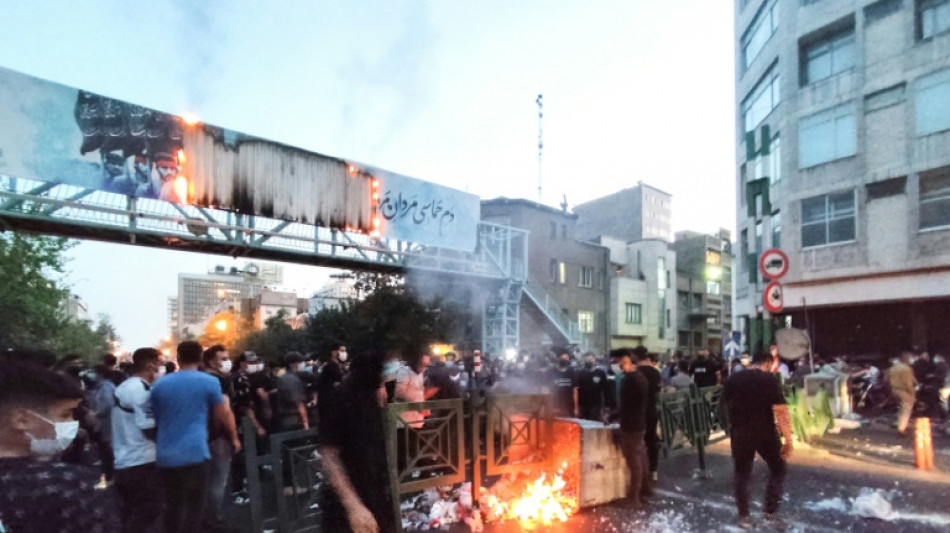
Iran protests pose new test for clerical leadership / Photo: - - AFP

 Rahm reaches separation deal with LIV in bankruptcy court
 UN chief urges nations to end 'war on nature'
 Newcastle boss Jaissle says Fernandez-Pardo just needs a goal

 Infantino offers apology but 'no answers' at FIFA meeting over World Cup plan
 Don't exclude Turkey from 'Made in Europe' plan: minister to AFP
 French duo Justice to score 'GTA VI': game maker
 El Nino a 'terrifying' threat to coral reefs: UN biodiversity expert
 Barcola must get used to Liverpool highs and lows, says Iraola

 Versus Trade Wins Best ECN/STP Broker APAC 2026, Marking Third UF Awards Recognition
 Three dead as Istanbul sees heaviest rainfall in 80 years

 US producer prices see biggest jump since 2022 in added challenge to Trump
 Swiatek avoids seed exodus to breeze into Wuhan last eight
 PM condemns 'chaos' as violent protests grip Albania

 'I couldn't breathe', Russell Brand's alleged rape victim says
 Pope's cancer operation already reshaping papacy
 Zverev cruises past De Minaur to reach Shanghai semi-finals

 Ukraine's Zelensky defies Trump with Russian refinery strikes
 Holders Australia edge New Zealand 24-22 to open Rugby league World Cup
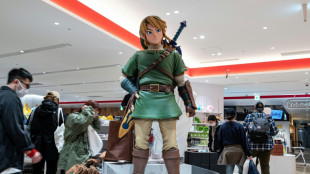 'Ocarina of Time': Nintendo gives Zelda classic a modern makeover
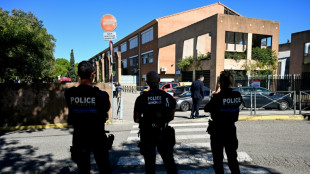 France charges teen shooter citing revenge for bullying in school
 Martinez blames 'anger' for dig at Man Utd hierarchy
 Crowds build as Albanian PM tours protest aftermath
 China-North Korea bridge opens, 12 years late
 Asian Cup in Saudi Arabia could be postponed but 'no hurry' to decide: AFC
 Conrad wields axe after South Africa loss to Australia
Women setting their headscarves ablaze and chanting anti-regime slogans. Pictures of the leadership defaced and burned. Vehicles belonging to the security forces set on fire.
The images of the protests in Iran are indicative of the taboo-breaking nature of a movement that erupted after the death of Mahsa Amini, 22, following her arrest by the notorious morality police.
A country where street dissent is tightly controlled, Iran has seen bursts of protest in recent years, notably the 2009 "Green Movement" that followed disputed elections, protests in November 2019 over fuel price rises, and rallies this year over the cost of living.
But analysts say that these protests present a new challenge to the Islamic system under supreme leader Ayatollah Ali Khamenei, 83, as they are now taking place nationwide, have support across social classes and ethnic groups and were instigated by women.
Amini, also known by her Kurdish first name of Jhina, was visiting Tehran with her family last week when she was arrested for purportedly violating Iran's strict dress code rules for women, in place since shortly after the 1979 Islamic Revolution.
She fell into a coma hours after her arrest and died in hospital on September 16.
Activists contend she was ill-treated in detention and could have suffered a blow to the head. While this is not confirmed by the authorities, the anger fuelled the protests that started from her funeral last Saturday.
"These are the biggest protests since November 2019," said Ali Fathollah-Nejad, Iran expert at the Issam Fares Institute for Public Policy and International Affairs at the American University of Beirut.
"While the last two nationwide uprisings were led by the lower classes and were triggered by socio-economic degradation, this time the trigger was socio-cultural and political, comparable to the 2009 Green Movement," he told AFP.
- 'Outrage shared' -
The 2009 movement had been driven by demands by the middle class for fair elections and the 2019 protests by the anger of the lower classes, he said.
"Current conditions in Iran suggest that there may be a tendency toward unifying both groups. The outrage over Amini's death is shared by both the middle and lower classes," said Fathollah-Nejad.
The protests also come at a particularly sensitive time for the leadership, when the Iranian economy remains mired in a crisis largely caused by international sanctions over its nuclear programme.
Despite repeated warnings from Europe that time is running out, there is also no indication that the sides are on the verge of agreeing a deal to revive the 2015 Iran nuclear accord (JCPOA) that would see sanctions eased.
The protests have featured chants of "death to the dictator" as well as other anti-regime slogans and the emergence of a new rallying cry, "Zan, zendegi, azadi" ("Woman, life, freedom").
Unprecedented images have shown protesters defacing or burning images of Khamenei or, on one occasion, setting fire to a giant image of Revolutionary Guards commander Qassem Soleimani, who is presented by the authorities as a near mythical figure after his 2020 killing by the United States in Iraq.
Protesters have also been seen directly resisting security forces, with women refusing to put their headscarves back on in front of the police and vehicles belonging to the security forces torched.
At least 11 people have been killed in the protests and activists fear the authorities will resort to the repression that, according to Amnesty International, saw 321 people killed by the security forces in November 2019.
Saeid Golkar, senior fellow at the Tony Blair Institute for Global Change, described the protests as a "turning point" and predicted that moral policing -- "an ideological cornerstone of the Islamic republic" -- would be weaker in future.
"This cannot be solved until the regime implements a series of reforms. Since the Islamic republic is both an ideological regime, inefficient and corrupt, it cannot solve its own created problems," he told AFP.
"Even if the regime can successfully suppress these protests by brutal force, the situation will be very different from the past."
- 'Even higher level of violence' -
The authorities appear to have resorted to the familiar tactic of restricting access to the Internet in a bid to prevent images being shared, activists say.
The Netblocks monitor said access to Instagram -- the only major social network which is not blocked in Iran -- was severely restricted from Wednesday.
The Iranian authorities' responses "are manifest reflections of the deepening crisis of impunity in the country and the state's policy of resorting to even higher levels of violence to quell criticisms and protests", said Saloua Ghazouani from freedom of expression group Article 19.
The protests have extended well beyond the Kurdistan province from where Amimi originated to become a nationwide movement -- extending to Tehran, the Caspian provinces in the north, the historic cities of Isfahan and Shiraz and even the tourist hub of Kish island in the Gulf.
"These demonstrations are likely to put in question the survival of the regime. In November 2019 they did not hesitate to shoot. I do not see why they would hesitate this year," added the source.
Z.AbuSaud--SF-PST