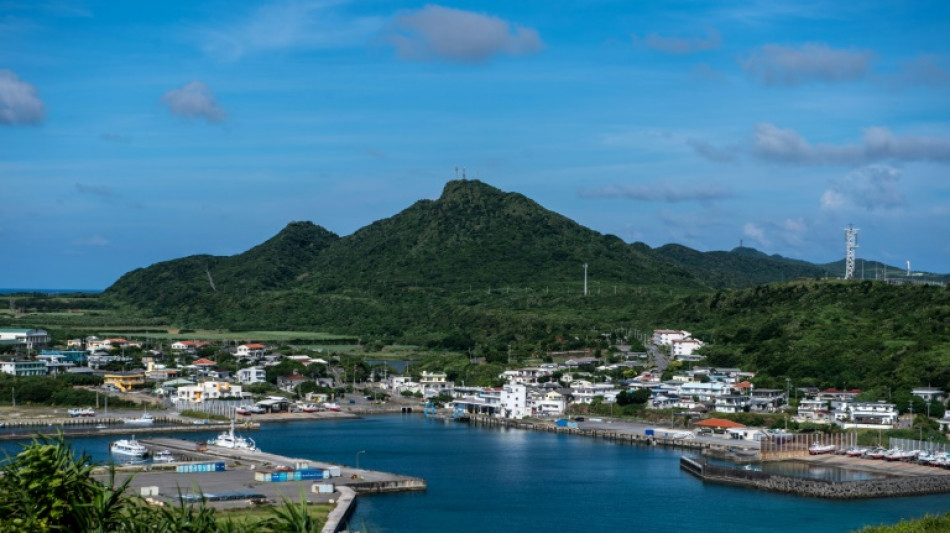
Chinese moves on Taiwan rattle remote Japanese island / Photo: Philip FONG - AFP

 'Multiple victims' in Oregon elementary school shooting: police

 ChangeNOW Announces NOW AI After Resolving Website Integration Vulnerability

 Argentine demonstration over education cuts ends in clashes

 Argentine protesters, police clash at demo over university funding

 US stocks end higher as AI shares stabilize

 School roof collapse kills 32 children, teacher in Pakistan

 Lyon down Palace in Europa League, Sunderland leave it late

 UniCredit says receives ECB green light for Commerzbank takeover
 New York City pension fund asks Anthropic to delay IPO

 Venezuela's Maduro denies US torture charges as 'false accusations'

 Somalia sets May presidential election despite insecurity
 Chelsea's Caicedo eager to be more of a leader

 Rahm reaches separation deal with LIV in bankruptcy court

 UN chief urges nations to end 'war on nature'

 Newcastle boss Jaissle says Fernandez-Pardo just needs a goal

 Infantino offers apology but 'no answers' at FIFA meeting over World Cup plan
 Don't exclude Turkey from 'Made in Europe' plan: minister to AFP

 French duo Justice to score 'GTA VI': game maker

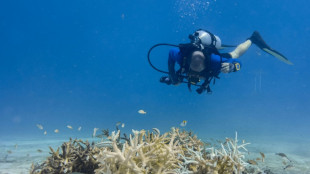 El Nino a 'terrifying' threat to coral reefs: UN biodiversity expert
 Barcola must get used to Liverpool highs and lows, says Iraola

 Versus Trade Wins Best ECN/STP Broker APAC 2026, Marking Third UF Awards Recognition

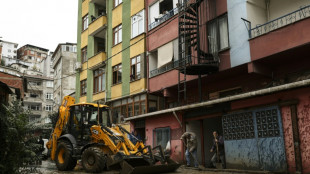 Three dead as Istanbul sees heaviest rainfall in 80 years

 US producer prices see biggest jump since 2022 in added challenge to Trump
 Swiatek avoids seed exodus to breeze into Wuhan last eight
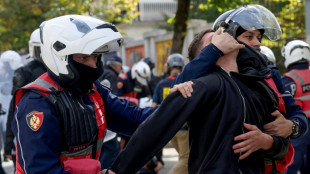 PM condemns 'chaos' as violent protests grip Albania

Life may seem tranquil on Japan's remote Yonaguni island, where wild horses graze and tourists dive to spot hammerhead sharks, but China's recent huge military exercises have rattled residents.
The western island is just 110 kilometres (70 miles) from Taiwan, and a Chinese missile fired during the drills last month landed not far from Yonaguni's shores.
"Everyone is on edge," Shigenori Takenishi, head of the island's fishing association, told AFP.
"Even if we don't talk about it, we still have the memory of the fear we felt, of the shock."
He told fishing boats to stay in port during the drills that followed US House Speaker Nancy Pelosi's visit to Taiwan in defiance of Beijing's warnings.
The incident was the latest reminder of how growing Chinese assertiveness has affected Yonaguni, shifting debate about a contentious military presence on the island.
People used to say Yonaguni was defended by two guns, one for each policeman stationed there.
But since 2016, the island has hosted a base for Japan's army, the Self-Defense Forces, which was established despite initial objections from residents.
The base for maritime and air surveillance is home to 170 soldiers, who with their families make up 15 percent of Yonaguni's population of 1,700.
An "electronic warfare" unit is also due to be installed there by March 2024.
"When we see Chinese military activity today, we tell ourselves that we got our base just in time," Yonaguni's mayor Kenichi Itokazu told AFP.
"We've succeeded in sending a message to China."
- 'Can they really help us?' -
That view was not always held so widely on the island.
Yonaguni is part of Okinawa prefecture, where resentment against military presence traditionally runs high.
A quarter of the region's population perished in the World War II Battle of Okinawa in 1945, and it remained under US occupation until 1972.
Today, Okinawa hosts most of the US bases in Japan.
Yonaguni is closer to Taiwan, Seoul and even Beijing than the Japanese capital Tokyo.
Conscious of its vulnerability, officials have built up a military presence on the Nansei island chain, which extends 1,200 kilometres from Japan's main islands to Yonaguni.
In addition to the security benefits, the government argued a base would bring economic windfalls to the 30-square-kilometre (11-square-mile) island.
Local officials once felt that Yonaguni's economic future lay with Taiwan and other nearby commercial hubs, even campaigning to become a "special zone for inter-regional exchange".
But the government rejected that and instead began in 2007 to pave the way for the base.
Support for the plan received a boost from a diplomatic crisis with Beijing in 2010, and by 2015, around 60 percent of Yonaguni's residents backed the base in a referendum.
Since then, Chinese sabre-rattling and a string of maritime incidents have helped solidify support.
"Almost no one is against the base now," said Shigeru Yonahara, 60, a resident who supported the base.
There are holdouts though, including some who fear the base will instead make Yonaguni a target, particularly if China seeks to forcibly bring Taiwan under its control.
"If there is a crisis, will they protect those living here? And can they really help us in the case of an invasion of Taiwan?" said Masakatsu Uehara, a 62-year-old fisherman.
- 'It's about deterrence' -
Both backers and critics agree that the base has changed Yonaguni, including the radar facility's lights that compete with the starry sky over the island.
A long-awaited incinerator that started operating last year was financed almost entirely by the defence ministry, and rent from the base helps pay for free lunches at the island's schools.
Yonaguni has no high school and limited employment. It saw decades of decline after its thriving commercial links with Taiwan were severed following World War II.
Now, taxes paid by base residents account for a fifth of Yonaguni's revenue.
But not everyone sees the changes as positive, including municipal council member Chiyoki Tasato, who has long opposed the base.
He resents the fact that Japanese army families can influence policy by voting in local elections, and argues the base's economic impact makes it hard for residents to speak freely on the issue.
They "can't say openly that they are against the base, because the economic situation isn't good," Tasato told AFP.
"We prefer to think about what we're going to eat tomorrow."
For mayor Itokazu though, there is no arguing with the economic boost the base provides.
And he said the security situation makes its presence a clear necessity.
"As the saying goes, 'If you want peace, prepare yourself for war.' It's about deterrence."
M.AbuKhalil--SF-PST