Colombia's territorial battle between Indigenous and Black communities / Photo: JOAQUIN SARMIENTO - AFP

 Man Utd teetering towards crisis as Man City cloud hangs over Premier League

 Trump's new press secretary defends 'lawyer' title

 Wallabies coach has 'faith' as All Blacks juggernaut awaits

 Ailing UK director Mike Leigh wishes he could make '100 more films'

 Pixagram Announces Free Account Creation for 250 New Users Daily Through 2026
 Macron warns urgent to strike EU budget deal before French vote runup
 Zelensky rallies European allies as Trump ties slump

 Guardians edge Rays to seize MLB playoff series lead
 Trump scraps plan to livestream execution after fierce backlash

 Martinez apologises for outburst at Man Utd hierarchy

 Houthis launch deadly attack on presidential palace in Yemen's Aden

 Brazil forward Antony says home burgled during Betis match

 Ravens face familiar foe in Browns coach Monken
 France, Germany reach deal on future of car industry

 Carney campaigns for Canadian unity before Alberta secession vote

 ATP proposes rankings system changes, extra player bonuses

 Russell Brand was 'monster-like', alleged victim tells UK court

 Crowded Launches Crowded MCP, Bringing Nonprofit Financial Operations Into ChatGPT and Claude

 Albanian PM condemns 'chaos' as violent unrest spreads

 Italian football suffers new blow with Champions League misery

 Trump scraps plan to livestream execution after broad backlash

 Seven missing off Romania after latest Black Sea drone attacks

 ARKBRIDGE Outlines Jonathan Morelli’s “Picks and Shovels” AI Infrastructure Investment Strategy

 Tech sell-off rolls on as hot inflation data stokes rate worries
 McIlroy makes 'solid' start in rain-hit Delhi as Norgaard leads

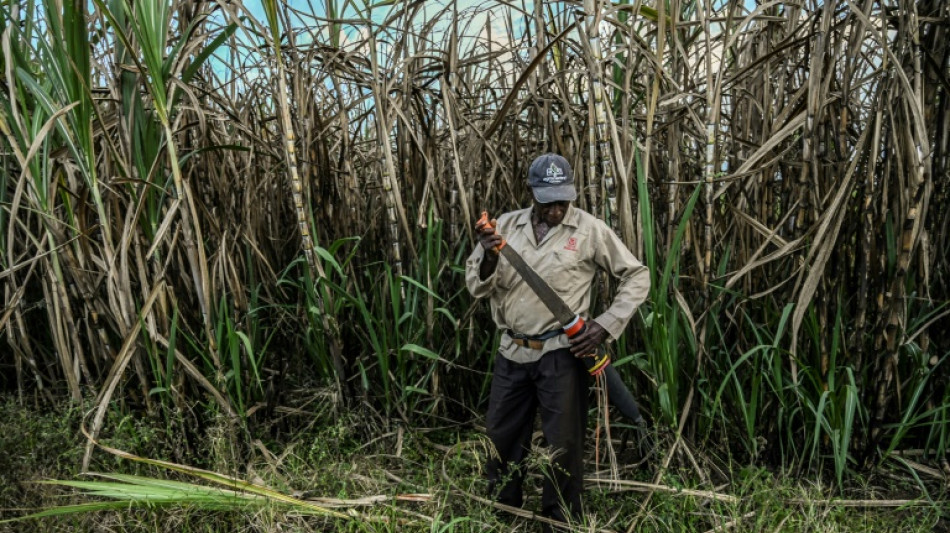
Cattle nonchalantly graze near a dilapidated farm on partly charred and abandoned sugarcane fields.
In the fertile Cauca valley in Colombia's southwest, Nasa Indigenous people have been forcibly occupying farmland, claiming to be putting to an end damaging monoculture in the country's main sugarcane growing area.
These sudden eruptions have provoked serious tensions with manual laborers from the sugarcane industry, who are often Black and find themselves chased off their land and out of work.
It seems that a new conflict is about to break out in the Corinto valley, where everyone is claiming "ancestral" lands.
"How can they (the Nasa) claim this land belongs to them if our ancestors lived here their whole lives," one of the local Black leaders told AFP.
Many Black communities have lived in the region for more than a century.
The Nasa want to "build their houses on top of ours," he added, hitting out at the "violence" brought by the occupiers.
Close to 2,500 people of African descent, "small- and medium-scale sugarcane producers, live in Severo Mulato, a village bordering several occupied areas.
The Nasa don't accept sugarcane plantations. They say these dry out the land and enrich only the sugar barons living in Cali, one of Colombia's main cities.
- 'Fighting with stones' -
Since the June election of Gustavo Petro, the country's first ever leftist president, Indigenous people have stepped up forceful occupations and confiscations of land in Cauca, which is already one of the worst affected areas by the violence brought by armed gangs and drug traffickers.
Police say there have been 30 occupations of farmland, including nine in the last month.
Hugely popular amongst Indigenous people, Petro has promised an "agrarian reform" to redistribute land in a country where a small landowning elite controls the majority of territory.
Territorial access is at the heart of the bloody six-decade long conflict that has ravaged Colombia.
During the 1960s, it was the main factor motivating farmers in their armed struggle against the state.
In the following decades, right-wing paramilitaries violently displaced thousands of families in favor of major landowners and cattle ranchers.
Indigenous people have now occupied land in seven of Colombia's 32 provinces.
It has been condemned by the government, which said the police would intervene.
The Nasa "cut down anything they like ... they build cabins, burn" the sugarcane, and destroyed five hectares of crops, said the Black leader.
After the abolition of slavery in 1851, Black people bought land in exchange for their work.
Now, most of their descendents grow sugarcane to sell to the major exporters in the region.
"When we faced up to (the Indigenous people), we had to fight with stones because we didn't have any other weapons," he added.
- Getting the valley back -
Just a year ago, the Severo Mulato settlement lay next to a sugarcane farm.
Some 400 "landless" Indigenous families descended from the mountains and took over the land.
In the abandoned homes, infested with mosquitoes, Nasa women and children crowd around wood fires living off vegetables grown in small plots.
"We came and put our lives (at risk) for the right to a piece of land," argues the group's leader, his face masked for fear of persecution.
He said the large scale farmers had forced Indigenous people "into the mountains" by colonizing the cultivable land.
With a growing population, they had to cut down the forest to grow food, to the detriment of local fauna and flora.
That's why they decided to "reclaim" the valley -- and to destroy the sugarcane to plant bananas, rice and corn in its place.
Indigenous reserves account for 20 percent of Cauca.
But the Indigenous people complain that these lands are mostly uncultivable forest.
The Indigenous people have established a territory of 1.5 hectares, blocked off from police intervention by tree trunks.
The Black villages are nearby in the valley.
It is a powder keg.
The union of sugarcane exploiters has complained about the loss of "close to 6,000 jobs."
The industry was responsible for "the development of these communities" according to Juan Carlos Agudelo, a spokesman for the sugarcane workers.
The poverty rate in Cauca of 58 percent is largely above the national average of 39.5 percent.
"Communities that have no schools, no homes, that have no running water. Where is the development?" asks the Indigenous leader.
Q.Najjar--SF-PST