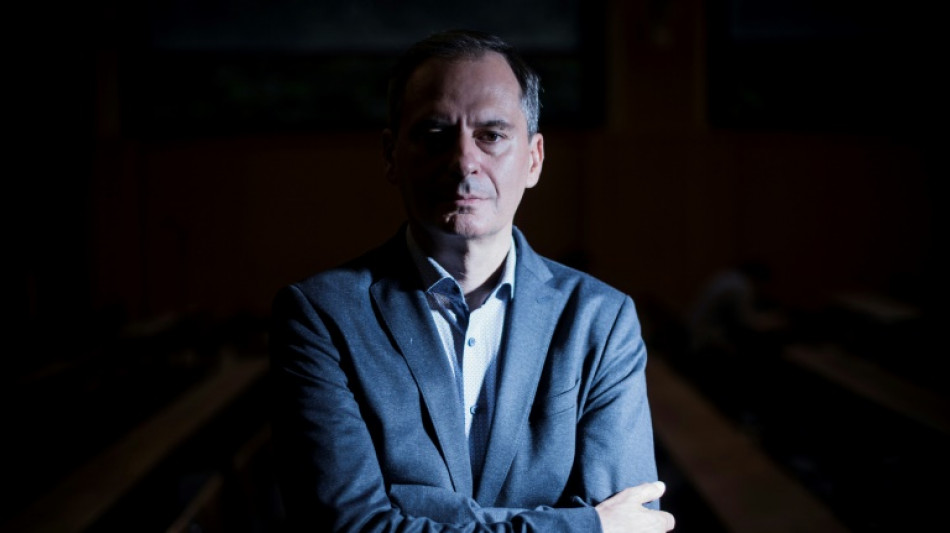
How Bellingcat became Russia's 'biggest nightmare' / Photo: JULIEN DE ROSA - AFP/File

 Man Utd teetering towards crisis as Man City cloud hangs over Premier League

 Trump's new press secretary defends 'lawyer' title
 Wallabies coach has 'faith' as All Blacks juggernaut awaits
 Ailing UK director Mike Leigh wishes he could make '100 more films'

 Pixagram Announces Free Account Creation for 250 New Users Daily Through 2026
 Macron warns urgent to strike EU budget deal before French vote runup
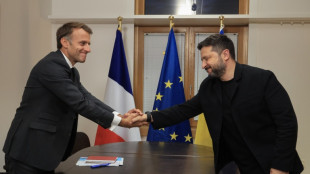 Zelensky rallies European allies as Trump ties slump

 Guardians edge Rays to seize MLB playoff series lead
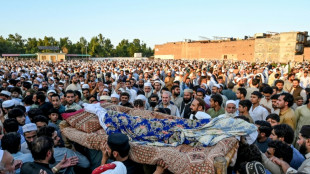
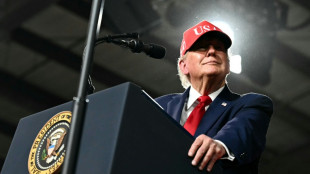 Trump scraps plan to livestream execution after fierce backlash

 Martinez apologises for outburst at Man Utd hierarchy

 Houthis launch deadly attack on presidential palace in Yemen's Aden

 Brazil forward Antony says home burgled during Betis match

 Ravens face familiar foe in Browns coach Monken
 France, Germany reach deal on future of car industry

 Carney campaigns for Canadian unity before Alberta secession vote
 ATP proposes rankings system changes, extra player bonuses
 Russell Brand was 'monster-like', alleged victim tells UK court

 Crowded Launches Crowded MCP, Bringing Nonprofit Financial Operations Into ChatGPT and Claude
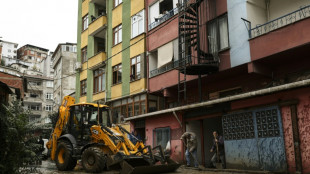
 Albanian PM condemns 'chaos' as violent unrest spreads
 Italian football suffers new blow with Champions League misery

 Trump scraps plan to livestream execution after broad backlash

 Seven missing off Romania after latest Black Sea drone attacks

 ARKBRIDGE Outlines Jonathan Morelli’s “Picks and Shovels” AI Infrastructure Investment Strategy

 Tech sell-off rolls on as hot inflation data stokes rate worries
 McIlroy makes 'solid' start in rain-hit Delhi as Norgaard leads

Digital investigators from the Bellingcat group have spent eight years exposing the lies of the powerful and gathering evidence of their crimes – work that has a grave human cost, the organisation's chief told AFP in an interview.
Bulgarian journalist Christo Grozev said he and his colleagues received regular threats but he was driven to continue by "adrenalin" and "the feeling you can do something that law enforcement does not do".
The investigative group has been closely associated with uncovering misdeeds by Russian agents across Europe, including intelligence involvement in the poisoning of opposition figure Alexei Navalny.
"When you get stopped in the street by Russian citizens, telling you thank you for what you are doing once a day, I think that it is enough to continue," he said.
During a meeting in Paris earlier this week, he described the organisation as the "Kremlin's biggest nightmare" though he stressed to AFP that Russia was not the main focus of their work.
"Russia today produces a lot of government crime and that's why a lot of our investigations are focused on Russia," he said.
"But we equally try to pay attention to bad actors from wherever they come."
He cites investigations into the Syrian war, EU police agency Europol and others focused on Greece, Turkey, Hungary and the far right in the United States and Europe.
- 'Undesirable' in Russia -
Bellingcat was founded in July 2014 by a British blogger, Eliot Higgins, along with a band of internet "nerds", said Grozev, who joined later and brought a wealth of journalism experience from his career in the Bulgarian media.
They used information freely available to the public –- anything from satellite images to telephone directories -– to piece together evidence of wrongdoing.
Their work on the downing of Air Malaysia flight MH17 over Ukraine in 2014 -- which killed 298 people and sparked global outrage -- won plaudits around the world and brought the group to the attention of the Kremlin.
The investigators pieced together photos, videos and public documents that supported the theory that the plane was shot down by a Russian missile from an area controlled by pro-Russian separatists.
Since then, the group has identified Russian agents responsible for poisoning opposition figure Alexei Navalny and other dissidents, exposed alleged war crimes in Ukraine and helped uncover many more scandals.
One of its main focuses right now is the war in Ukraine, where it has a two-track approach.
Grozev said one approach uses journalistic methods to debunk false information, the other is more judicial, gathering evidence of war crimes for eventual use in the courts.
The Netherlands-based platform, which takes its name from a fable in which mice join forces to hang a bell around a cat's neck, has rarely been out of the Kremlin's firing line.
Russia recently described it as a security threat and deemed it "undesirable".
- Legal challenges -
One of the main lines of attack has been to accuse Bellingcat of being funded by Western governments or NGOs, particularly the US National Endowment for Democracy.
Grozev said in its early years the group took some money from American NGOs for training, but later decided to stop.
He said it had not taken any money from governments since last year and relied instead on smaller funders.
"Most of our funders are individuals who spend 100 euros to 5,000 euros," he said.
Beyond the financial constraints, Grozev pointed to the difficult legal environment.
"International law is handicapped because it assumes that governments look out for their citizens," said Grozev.
Even a tribunal like the International Criminal Court, which seeks to hold individuals to account rather than countries, has long been hobbled by disagreements over its remit and powers of investigation.
And national governments are hamstrung by the idea of national sovereignty, so if a poisoning happens on Russian territory, only Russia can investigate.
It is precisely in this legal blackhole that Bellingcat finds the greatest need.
"We investigate generally bad actors, governments who commit crimes, because we think nobody else is investigating them," said Grozev.
"There are no tribunals, no law enforcement agencies that investigate governments."
P.AbuBaker--SF-PST