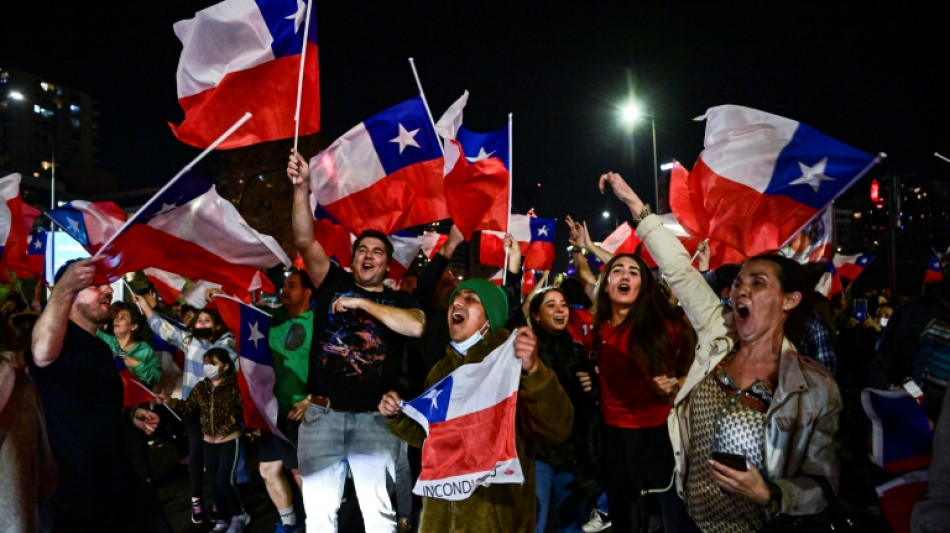
After referendum rout, Chile leader pursues quest for new constitution / Photo: Martin BERNETTI - AFP

 Flamengo secure 0-0 draw in La Plata in Copa Libertadores semi
 The final lap? Two days on the campaign trail with Trump
 Asian stocks rise as tech bounces from rout, eyes on Warsh
 Saudi organisers say 2027 Asian Cup 'on schedule' after attacks
 Right-wing Brazil influencers on 'mission' to seal Bolsonaro win

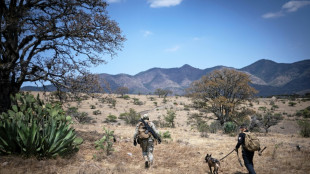 Using AI to help find Mexico's legions of missing children

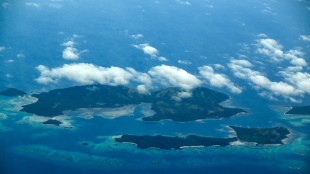 Fiji to deploy solar-powered Australian military drones at sea

 'Multiple victims' in Oregon elementary school shooting, police say

 'Multiple victims' in Oregon elementary school shooting: police
 ChangeNOW Announces NOW AI After Resolving Website Integration Vulnerability

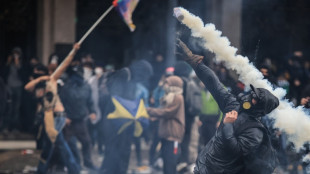 Argentine demonstration over education cuts ends in clashes
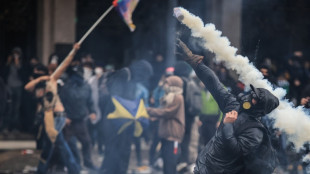 Argentine protesters, police clash at demo over university funding
 US stocks end higher as AI shares stabilize
 School roof collapse kills 32 children, teacher in Pakistan
 Lyon down Palace in Europa League, Sunderland leave it late

 UniCredit says receives ECB green light for Commerzbank takeover

 New York City pension fund asks Anthropic to delay IPO

 Venezuela's Maduro denies US torture charges as 'false accusations'

 Somalia sets May presidential election despite insecurity

 Chelsea's Caicedo eager to be more of a leader

 Rahm reaches separation deal with LIV in bankruptcy court
 UN chief urges nations to end 'war on nature'
 Newcastle boss Jaissle says Fernandez-Pardo just needs a goal

 Infantino offers apology but 'no answers' at FIFA meeting over World Cup plan

 Don't exclude Turkey from 'Made in Europe' plan: minister to AFP

President Gabriel Boric vowed Monday to press ahead with efforts to replace Chile's dictatorship-era constitution, hours after voters rejected a first draft in a setback to his leftist reform agenda.
Boric, 36, met the rejection by 61.8 percent of voters with "humility," he said, while adding there was "latent discontent" against deep-rooted social inequality in the country.
Sunday's "No" majority vote -- by a far larger margin than projected by pollsters -- was the latest in a wave of recent political and social showdowns in the country.
It started with protests in 2019 for a fairer, more equal society, which led to a referendum in 2020 in which 80 percent voted for replacing the constitution.
A left-leaning convention was elected last year to do the drafting work, and in December, Boric took office after beating a right-wing rival by campaigning against Chile's neoliberal economic model -- protected by the constitution.
The constitution, which dates from the rule of dictator Augusto Pinochet, is widely blamed for making companies and the elite richer at the expense of the poor, working classes.
Among the proposals that proved most controversial, the text would have entrenched the right to elective abortion and guaranteed stronger protections for Indigenous rights.
- Try again -
After the overwhelming rejection, Boric called on politicians to "put Chile ahead of any legitimate differences and agree as soon as possible on the deadlines and parameters for a new constitutional process."
He invited party representatives to talks starting Monday, but none of the right-wing opposition have indicated whether they would attend.
According to analysts, most Chileans and political parties want a new constitution, but not the one they got to vote on.
One exception is far-right politician Jose Antonio Kast -- Boric's vanquished rival in December elections -- who is against a constitutional change.
"The right is split among the more moderate sectors, which have committed to changes and reforms... and the most extreme sectors, which I believe are not ready for that change," said analyst Cecilia Osorio of the University of Chile.
The referendum was "disappointing" for public servant Carola, who said the draft was "very progressive on environmental issues" and women's rights.
"It is a bit difficult" to accept the rejection, she told AFP.
But Pablo Valdez, a 43-year-old lawyer among those celebrating the rejection, said the outcome made him "hopeful" that "tensions will be reduced."
The Chilean Stock Exchange opened 3.65 percent higher Monday and the peso strengthened 3.2 percent to 885.52 to the US dollar.
Boric, Chile's youngest-ever president painted by his detractors as a "communist", had won his election with promises creating rights-driven "welfare state" in one of the world's most unequal countries.
- 'Pinochet is alive' -
Proposals to protect the environment and natural resources such as water -- which some say is exploited by private mining companies -- garnered much attention in the constitutional debate.
The new constitution would also have overhauled Chile's Congress, while requiring women to hold at least half of positions in public institutions.
Many had feared the new text would generate instability and uncertainty, which could harm the economy.
But supporters believed it would prompt necessary changes in a conservative country marked by social and ethnic tensions.
Although the constitution has undergone several reforms since its adoption in 1980, it retains the stigma of having been introduced during the military dictatorship of Pinochet.
The draft new text was drawn up by an elected, left-leaning constitutional convention made up of 154 members, split equally between men and women and with 17 places reserved for Indigenous people.
Colombia's President Gustavo Petro, an ally of Boric, tweeted after the rejection on Monday that: "Pinochet is alive in some political sectors of the Americas."
The European Union for its part, said it took "note of the commitment expressed by President Boric and across the political spectrum on the need to pursue the constitutional process."
P.Tamimi--SF-PST