-
 Flamengo secure 0-0 draw in La Plata in Copa Libertadores semi
-
Wong weighs haze prosecutions as Singapore air quality worsens
-
 The final lap? Two days on the campaign trail with Trump
-
Brush fire prompts an evacuation order along Los Angeles coast
-
 Asian stocks rise as tech bounces from rout, eyes on Warsh
-
'Mixed feelings': AI cracks centuries-old ciphers
-
 Saudi organisers say 2027 Asian Cup 'on schedule' after attacks
-
Le Pen looms large as Macron enters final months on EU stage
-
 Right-wing Brazil influencers on 'mission' to seal Bolsonaro win
-
Three children, one teacher killed in Oregon elementary school shooting

-
 Using AI to help find Mexico's legions of missing children
-
Man Utd teetering towards crisis as Man City cloud hangs over Premier League

-
 Fiji to deploy solar-powered Australian military drones at sea
-
Trump's new press secretary defends 'lawyer' title

-
 'Multiple victims' in Oregon elementary school shooting, police say
-
Wallabies coach has 'faith' as All Blacks juggernaut awaits

-
 'Multiple victims' in Oregon elementary school shooting: police
-
Ailing UK director Mike Leigh wishes he could make '100 more films'
-
 ChangeNOW Announces NOW AI After Resolving Website Integration Vulnerability
-
Pixagram Announces Free Account Creation for 250 New Users Daily Through 2026

-
 Argentine demonstration over education cuts ends in clashes
-
Macron warns urgent to strike EU budget deal before French vote runup
-
 Argentine protesters, police clash at demo over university funding
-
Zelensky rallies European allies as Trump ties slump

-
 US stocks end higher as AI shares stabilize
-
Guardians edge Rays to seize MLB playoff series lead
-
 School roof collapse kills 32 children, teacher in Pakistan
-
Trump scraps plan to livestream execution after fierce backlash

-
 Lyon down Palace in Europa League, Sunderland leave it late
-
Martinez apologises for outburst at Man Utd hierarchy

-
 UniCredit says receives ECB green light for Commerzbank takeover
-
Houthis launch deadly attack on presidential palace in Yemen's Aden

-
 New York City pension fund asks Anthropic to delay IPO
-
Brazil forward Antony says home burgled during Betis match

-
 Venezuela's Maduro denies US torture charges as 'false accusations'
-
Ravens face familiar foe in Browns coach Monken

-
 Somalia sets May presidential election despite insecurity
-
France, Germany reach deal on future of car industry
-
 Chelsea's Caicedo eager to be more of a leader
-
Carney campaigns for Canadian unity before Alberta secession vote

-
 Rahm reaches separation deal with LIV in bankruptcy court
-
ATP proposes rankings system changes, extra player bonuses
-
 UN chief urges nations to end 'war on nature'
-
Russell Brand was 'monster-like', alleged victim tells UK court
-
 Newcastle boss Jaissle says Fernandez-Pardo just needs a goal
-
Crowded Launches Crowded MCP, Bringing Nonprofit Financial Operations Into ChatGPT and Claude

-
 Infantino offers apology but 'no answers' at FIFA meeting over World Cup plan
-
Albanian PM condemns 'chaos' as violent unrest spreads
-
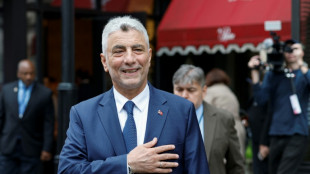 Don't exclude Turkey from 'Made in Europe' plan: minister to AFP
-
Italian football suffers new blow with Champions League misery

President vows to work for change after Chileans reject new constitution
President Gabriel Boric vowed to continue working to reform the political landscape after Chileans on Sunday emphatically rejected a proposed new constitution to replace the one adopted during the Augusto Pinochet dictatorship.
With more than 99 percent of votes counted, the reject camp led with almost 62 percent compared to just over 38 percent for those in favor, in a result that exceeded the expectations of the conservative opposition.
Leftist Boric, who supported the new text, accepted the defeat but pledged to "do everything on my part to build a new constituent itinerary."
He said the people had demonstrated "that they want and value democracy, they are counting on it to overcome our differences and to progress."
He then called on "all political forces to put Chile ahead of any legitimate differences and agree as soon as possible on the deadlines and parameters for a new constitutional process."
The result is a far greater margin of victory than was predicted by opinion polls, which had suggested the constitution would be rejected by up to 10 percentage points.
"President Boric: this defeat is also your defeat," said far right leader Jose Antonio Kast, an outspoken admirer of Pinochet who last December lost an election run-off to Boric.
Although celebrating the "defeat for the refounding of Chile," Javier Macaya, president of the conservative UDI party, said his party would fulfil their commitment to work towards a new constitution.
More than 15 million people were eligible to vote in the compulsory election, with polling stations opening at 8:00 am (1200 GMT) and closing 10 hours later.
Social upheaval that began in 2019 provided the impulse to overhaul the constitution, but the 388-article draft proved controversial and often confusing for voters.
The proposed constitution aimed to build a more welfare-based society, boost Indigenous rights and legalize abortion.
In October 2019, protests sprung up mostly in the capital led by students initially angered by a proposed metro fare hike.
Those demonstrations spiraled into wider discontent with the country's neoliberal economic system as well as growing inequality.
- 'Resounding failure' -
Among the chief concerns of opponents was the prominence given to the country's Indigenous peoples, who make up close to 13 percent of the 19 million-strong population.
Proposals to enshrine reproductive rights and protect the environment as well as natural resources such as water, which some say is exploited by private mining companies, had also garnered much attention.
The new constitution would have overhauled Chile's government, replacing the Senate with a less powerful "chamber of regions," and requiring women to hold at least half of positions in public institutions.
"Here people are more in favor of rejection," said Alfredo Tolosa, 47, a woodworker in Tucapel, a small town in the southern Biobio region.
"They think it's the best path because they are afraid of change. They have something to eat, they have work and they think they would lose those," he told AFP.
Some feared the new text would generate instability and uncertainty, which could then harm the economy.
Sociologist Marta Lagos called it a "tremendous victory for reject" and a "resounding failure" for the approve camp.
"No one expected such a gap of over 20 percentage points," she wrote on Twitter.
- Social tensions -
Those in favor of the new constitution believed it would have prompted changes in a conservative country marked by social and ethnic tensions and lay the foundation for a more egalitarian society.
They say the current constitution gives private enterprise free rein over crucial industries and creates a fertile breeding ground for the rich to prosper and the poor to struggle.
Although the 1980 constitution has undergone several reforms since it was adopted, it retains the stigma of having been introduced during a dictatorship.
Sunday's poll was the third time in just two years that Chileans have voted on the referendum, having already elected to rewrite the constitution and then elected the representatives to do so.
The new text was drawn up by a constitutional convention made up of 154 members -- mostly with no political affiliation -- split equally between men and women and with 17 places reserved for Indigenous people.
The resulting proposal recognized 11 Indigenous peoples and offered them greater autonomy, particularly on judicial issues.
Some critics accused the authors of trying to turn the traditionally marginalized Indigenous people into a higher class of citizens.
H.Nasr--SF-PST