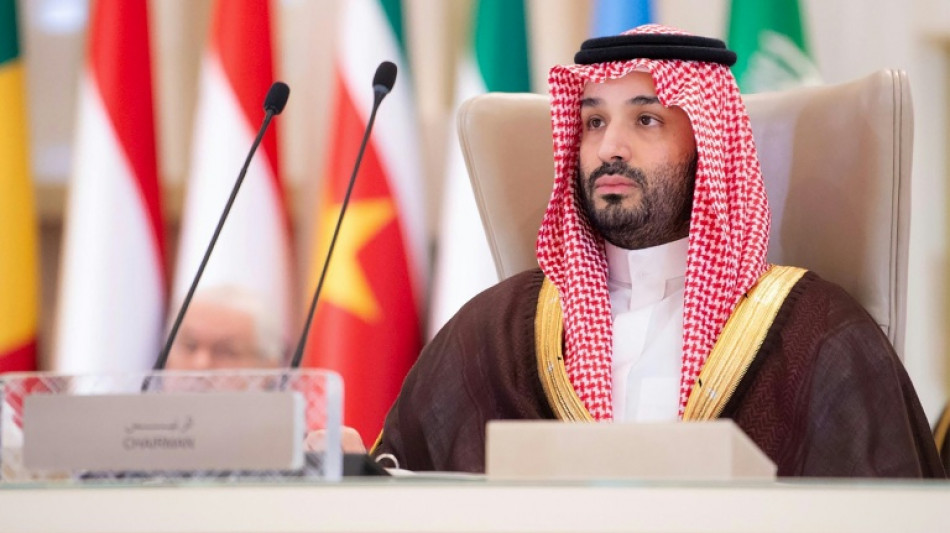
Saudi Arabia, Turkey and Pakistan to sign defence pact amid regional violence / Photo: Ahmed NURELDINE - SPA/AFP

 Brazil probing 'criminal' origin of forest fires: minister to AFP

 Sally Rooney books cannot be sold in UK amid Palestine Action ban: publisher

 Italian ski stars Goggia and Brignone to miss season opener

 Bournemouth boss Rose urges Cherries to bounce back from Chelsea 'slap'

 Top seed Sabalenka falls at first hurdle in Wuhan
 FX Junction Brings Copy Trading to Everyone, While Their Money Never Leaves With Their Broker

 Brighton defender Struijk's red card overturned

 Saudi league postpones three matches after Houthi attacks

 US consumer inflation up more than expected as midterms loom

 Canadian publisher supports novelist Orelien after AI denial

 Medvedev sees off Tsitsipas to reach Shanghai Masters quarters

 Louvre boss warns of closure risk without major renovations

 Lawes and Genge urge England to end ban on overseas-based players

 Metrika Selected by OCC to Support Stablecoin Supervisory Framework Under the GENIUS Act

 Kenya hosting 2029 World Championships will help doping fight, says Coe
 UK prosecutor tells jury Russell Brand a 'sexual predator'

 Fulham manager Arbeloa fined £25,000 after Man Utd outburst

 Nepal flood triggered by rock and ice avalanche: report

 'Distressed' family of UK man killed by tiger urge end to online posts
 Regulator expects Man City appeal to be heard by January

 Rising Spanish tennis star handed code violation for swearing at ballboy

 Last of the French musketeers Monfils officially retired from tennis

 Ukraine ex-military officer stands trial over Nord Stream sabotage

 British and Irish Lions to play first women's match against France

 Fuel shortage triggers queues on resort island Bali

Saudi Arabia, Turkey and Pakistan were set to sign a joint defence agreement on Friday, sources told AFP, amid violence in the region from Houthi attacks and the US-Iran war.
Riyadh is looking to strengthen its security ties against the backdrop of war between the United States and Iran, which has drawn in surrounding nations and disrupted shipping through the Strait of Hormuz and Red Sea.
The war has emboldened Iran and its Houthi allies in Yemen, both of which have attacked Saudi Arabia, while analysts say Washington is now seen as an increasingly unreliable partner.
Since the onset of the war, Saudi Arabia has grown closer to Turkey, Egypt and Pakistan, which have been pushing for mediation and a resolution to the conflict.
The deal also comes as a truce between Riyadh and the Houthi rebels in neighbouring Yemen has broken down, with the Houthis launching attacks on Saudi soil and declaring a maritime blockade against Saudi Arabia, which they have attempted to enforce by attacking Saudi tankers.
A source close to the Saudi military and government told AFP that although the deal between Riyadh, Ankara and Islamabad had been under discussion for a long time, "the latest developments in the region expedite it".
A second source close to Saudi officials confirmed on condition of anonymity that the agreement would be signed on Friday.
Turkish President Recep Tayyip Erdogan arrived in the Red Sea city of Jeddah on Friday, Saudi media reported, where he is due to meet Saudi Crown Prince Mohammed bin Salman and Pakistani Prime Minister Shehbaz Sharif.
Sharif and Pakistan's army chief Asim Munir have also arrived in the kingdom, with Islamabad's information ministry saying on Friday they performed a pilgrimage to Mecca.
"Although taking place against the backdrop of heightened tensions in the Gulf, the visit will carry significance beyond the immediate crisis and short-term considerations," Pakistani foreign ministry spokesman Tahir Andrabi said on Thursday.
- Renewed Houthi attacks -
The three countries have been the subject of months of speculation about a possible strategic alliance.
Pakistan has sought to mediate efforts to end the US-Iran war, while Turkey has played a diplomatic role in negotiations aimed at ending the war in Gaza.
Saudi Arabia and Pakistan had already announced a joint defence pact in 2025, a move that drew attention because Pakistan is the Muslim world's only nuclear-armed state.
The deal also comes as Riyadh deals with renewed attacks from Yemen's Houthi rebels, who have announced an accompanying blockade of Saudi ports.
The Houthis, backed by Iran, have added pressure to Gulf energy exporters who are already under strain from Tehran's blockade of the Strait of Hormuz, by threatening Red Sea shipping -- another key route for oil exports.
The rebels control the Yemeni capital Sanaa and much of northern Yemen, and have been battling Saudi-backed government troops in the country's south for more than a decade.
Saudi Arabia has led a military coalition in support of Yemen's internationally recognised government against the Houthis since 2015.
A truce was agreed four years ago which largely held until hostilities broke out again in recent weeks.
On Thursday the Houthis killed at least 58 Yemeni government troops in missile and drone attacks, a military source said, in one of the deadliest days in the conflict for years.
Yemen's civil war has killed hundreds of thousands of people and triggered a major humanitarian crisis.
burs-axn/dcp
R.Shaban--SF-PST