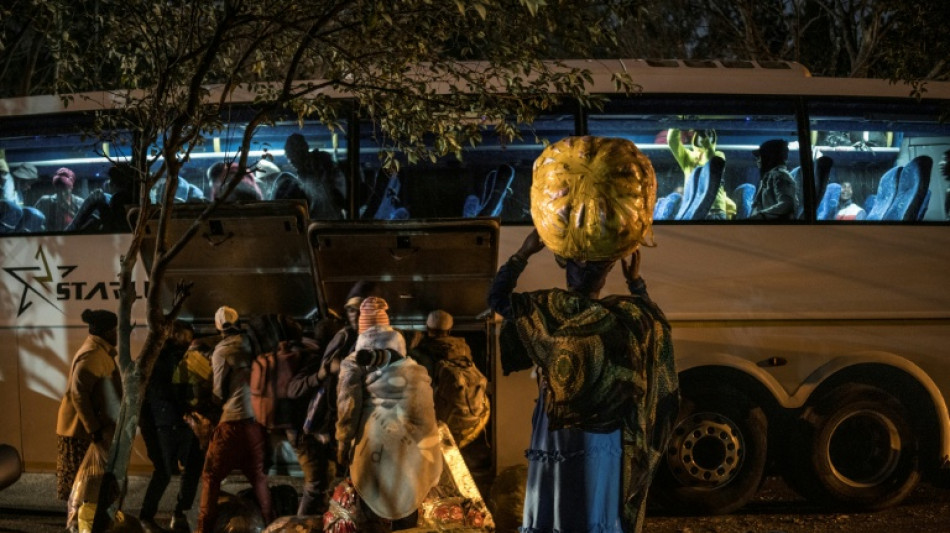
South Africa's anti-migrant unrest led over 160,000 to flee / Photo: MARCO LONGARI - AFP

 Ed Sheeran returns to stage after Palestinian controversy

 Asian Games to open in Japan after troubled build-up
 Drone owners rush to offload devices ahead of Beijing ban
 Trump's beef policies irk Texas ranchers, testing their loyalty
 Nvidia, OpenAI CEOs to attend Xi dinner at White House
 Anthropic picks Accenture for in-house AI safety evaluation

 Balogun returns as Monaco beat Lens to continue strong Ligue 1 start

 'Pause' on overt repression in Venezuela, but reforms still needed: HRW

 Global stocks mixed as yen falls despite Bank of Japan rate hike
 Cuba hit with seventh major blackout of the year

 Murray out with concussion so Wentz will start for Vikings

 UN chief 'deeply regrets' US visa refusal to Abbas for annual meeting
 England quick Carse to face no charges over alleged nightclub assault

 Mancini brings nine newcomers into the first squad of his Italy comeback

 Czechs level Davis Cup tie against USA as South Korea eye Finals

 New France boss Zidane confirms Mbappe as captain after naming first squad

 California governor signs order to explore AI 'kill switch'
 Head leads run spree as Australia win Zimbabwe ODI series

 In-form Raphinha wants to finish career at Barcelona

 Warren Buffett steps down as Berkshire Hathaway chairman

 Carrick confident Man Utd can 'work through' tough time

 Mbappe ends Nike partnership to join Swiss brand On

 Liverpool boss Iraola puts Bournemouth love affair on hold

 'A disaster' if Man City do not win says Maresca after flawless start

 Kerry James Marshall: American 'blackness' painter celebrated in Europe

More than 160,000 foreign nationals left South Africa over the past two months as local groups increased violent hostility against undocumented migrants, according to an AFP tally based on figures from the repatriating governments.
The country has seen weeks of nationwide protests, several degenerating into violence that has claimed the lives of at least four migrants, although some foreign governments say the toll is higher.
As xenophobic groups pressed their demand for undocumented migrants to leave by June 30, citizens of other African countries flocked to consulates and community halls seeking transport home, many with only what they could carry and fearing for their lives.
The largest numbers to leave were from Zimbabwe and Malawi but hundreds more were from countries including Ghana, Kenya, Lesotho, Mozambique, Nigeria and Uganda.
Releasing updated figures on Tuesday, Zimbabwe's cabinet said 108,366 of its people had come home as of July 18, a majority of them self repatriating.
Malawi announced on Monday that more than 46,890 citizens had returned since early June, with the government providing 699 buses for the long journey home. Six people died in transit.
Nearly 2,000 Mozambicans also returned, according to South African government figures.
Some crossed the border with help from their government after two Mozambican nationals were killed at the end of May in violence following a protest in the southern town of Mossel Bay.
They were the first people to die in South Africa's latest wave of xenophobic violence.
Authorities later confirmed the deaths of an Ethiopian and a Malawian in "anti-foreigner sentiment".
- 'Afrophobia' -
Nigeria has said two of its nationals were killed in "the ongoing xenophobic protests and attacks of migrants".
Ghana said one of its citizens died in a Cape Town township in "anti-immigrant demonstrations linked to ongoing xenophobic attacks".
South African authorities have rejected both allegations, warning of disinformation being spread online.
Nigeria has repatriated around 1,490 nationals, while Ghana has flown home at least 926, according to government figures.
They have also demanded that the issue of "Afrophobia" be discussed at the next African Union summit, while Ghana has postponed a planned visit by South African President Cyril Ramaphosa.
The wealthiest country on the continent, South Africa has long been a destination for documented and undocumented African workers searching for work they cannot find at home.
Vigilante groups claim migrants drive up crime and take jobs from locals, fuelling tensions in townships grappling with poverty, unemployment and weak policing.
But analysts say they are being scapegoated for South Africa's deep economic and governance challenges, including unemployment above 30 percent and massive failures in the delivery of basic services.
- First coordinated repatriation -
Demonstrations, initially low-key in the main, began last year when undocumented foreign nationals were blocked from accessing clinics and hospitals.
Protests intensified ahead of the June 30 "deadline" and have continued since.
The anti-immigrant March and March group has vowed to organise weekly demonstrations until local government elections in November.
Waves of xenophobic violence have swept South Africa over the past decades.
In 2008, 62 people were killed in anti-immigrant riots and thousands were displaced. Further outbreaks followed in 2015 and 2016.
Violence in 2019 saw armed mobs descend on foreign-owned businesses around Johannesburg, leaving at least 12 people dead -- 10 of them South African citizens.
But this is the first time that such threats have prompted several governments to simultaneously organise coordinated voluntary repatriations for thousands of their nationals.
H.Jarrar--SF-PST