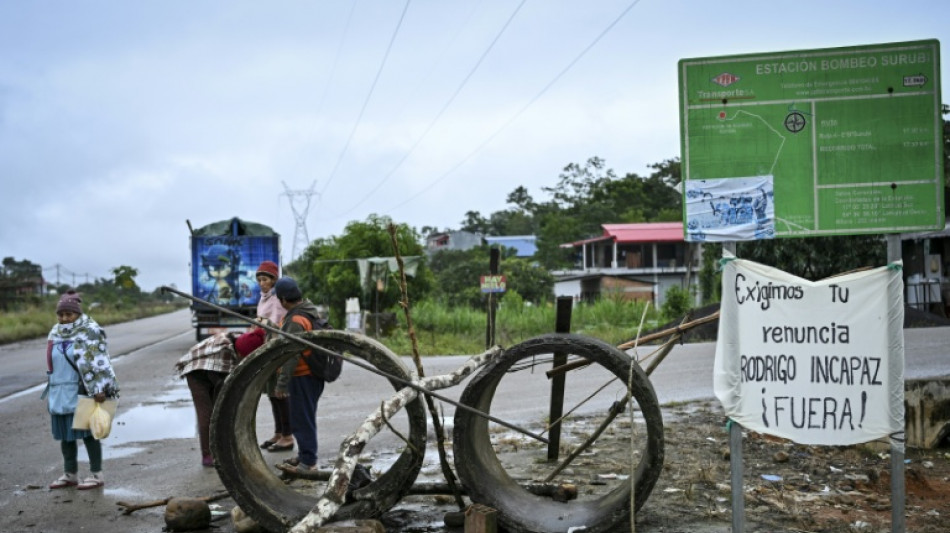
'Struggle continues' in Bolivia's Morales heartland / Photo: MARTIN BERNETTI - AFP

 Macron warns urgent to strike EU budget deal before French vote runup
 Zelensky rallies European allies as Trump ties slump

 Guardians edge Rays to seize MLB playoff series lead
 Trump scraps plan to livestream execution after fierce backlash

 Martinez apologises for outburst at Man Utd hierarchy

 Houthis launch deadly attack on presidential palace in Yemen's Aden

 Brazil forward Antony says home burgled during Betis match

 Ravens face familiar foe in Browns coach Monken
 France, Germany reach deal on future of car industry

 Carney campaigns for Canadian unity before Alberta secession vote

 ATP proposes rankings system changes, extra player bonuses

 Russell Brand was 'monster-like', alleged victim tells UK court

 Crowded Launches Crowded MCP, Bringing Nonprofit Financial Operations Into ChatGPT and Claude

 Albanian PM condemns 'chaos' as violent unrest spreads
 Italian football suffers new blow with Champions League misery

 Trump scraps plan to livestream execution after broad backlash

 Seven missing off Romania after latest Black Sea drone attacks

 ARKBRIDGE Outlines Jonathan Morelli’s “Picks and Shovels” AI Infrastructure Investment Strategy

 Tech sell-off rolls on as hot inflation data stokes rate worries
 McIlroy makes 'solid' start in rain-hit Delhi as Norgaard leads

 Seven missing after fire on vessel in Black Sea off Romania

 'Severe drought' declared in parts of UK
 IUX Announces New Web Client Portal Built for Enhanced Browser-Based Trading

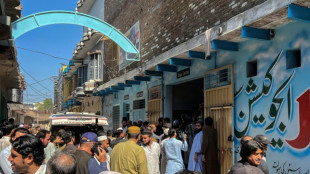 School roof collapse kills teacher, 32 children in NW Pakistan

 Inter skipper Martinez facing month out with thigh injury

Bolivia's protest ban means nothing to coca growers loyal to former socialist president Evo Morales as they proudly defy the government measure.
Workers and Indigenous communities have spent weeks railing against Bolivia's worst economic crisis in decades, erecting roadblocks that paralyzed the country and calling for US-backed President Rodrigo Paz to step down.
Attempting to quell the movement, Paz last Saturday declared a state of emergency that authorizes him to outlaw protests, deploy the army and remove roadblocks that choked supplies to several cities.
But coca growers in the central Chapare region show no sign of backing down.
Supporters of ex-leader Morales -- whom Paz blames for fomenting the recent unrest -- line Chapare's winding roads, ready to reinstate protest blockades at a moment's notice.
These coca growers wave signs calling for Paz to resign and are cheered on by other locals.
"The struggle continues until this damn government is gone," 39-year-old Rosalia Vilca told AFP as she sold Bolivia's traditional "salchipapa" dish in Shinahota town's main square.
"We'll rise up here to protect Evito because with him we've lived 14 years of happiness," Vilca said, adding that Paz should come to Chapare "if he's man enough."
- No surrender -
The impoverished region's rainforests provide perfect cover for Bolivia's first-ever Indigenous president Morales, who is in hiding to escape charges of trafficking a minor.
He denies the allegations and his followers shield him from arrest, but Paz is planning on escalating efforts to capture his political foe.
Morales on Monday announced the temporary breakdown of the final roadblocks, insisting the move was "not a surrender."
In the small town of Lauca Ene, a loyal guard uses makeshift barricades, spears and shields to protect their beloved leader from arrest.
"I'm not going to give up," the ex-president told AFP in an interview Tuesday.
In office from 2006 to 2019, Morales first made his name as a union leader.
He is accused of having relations with a 15-year-old girl, with whom he is alleged to have fathered a child while in power.
The teenager's parents allegedly consented to the relationship in exchange for benefits.
- 'Prepared to give our lives' -
Paz has also claimed, without evidence, that Morales profits financially from drug trafficking.
Chapare cherishes the coca plant, which grows in small rural plots and is laid out to dry under the blazing sun along stretches of road.
Used in cocaine production, over 90 percent of the region's crop does not pass through authorized markets, according to the United Nations Office on Drugs and Crime.
But it doesn't all end up in drug trafficking either.
Local communities follow age-old Indigenous customs of chewing coca to ease fatigue, hunger and cold.
"In the cities they say that we people from Chapare are drug traffickers, but that's not true," said Shinahota bus terminal worker Zulma Torres, 42.
"We work, and we also suffer due to the blockades, even though they're for a just cause," Torres said. "We're prepared to give our lives for Evo."
- 'They don't want us' -
Something else has popped up on Chapare's roadsides: stalls selling jerrycans of gasoline at exorbitant prices.
The illegal market emerged following a dire fuel shortage in the landlocked South American nation that began before the blockades.
"We're discriminated against by the central government. They don't want us at all," said driver Nicolas Garcia, 52, complaining that fuel no longer reaches the area.
Power outages have also affected Chapare in recent days, which Morales has claimed amounts to government retaliation.
"This is only going to stir up the Bolivian people even more," said Shinahota shopkeeper Mario Flores, 51.
"They blame Evo for financing the blockades, but even if we're country people who haven't studied, we know that the government is at fault."
H.Darwish--SF-PST