Globalization isn't dead, just 'transformed,' says IMF chief economist / Photo: SAUL LOEB - AFP

 Macron warns urgent to strike EU budget deal before French vote runup

 Zelensky rallies European allies as Trump ties slump
 Guardians edge Rays to seize MLB playoff series lead

 Trump scraps plan to livestream execution after fierce backlash

 Martinez apologises for outburst at Man Utd hierarchy

 Houthis launch deadly attack on presidential palace in Yemen's Aden

 Brazil forward Antony says home burgled during Betis match

 Ravens face familiar foe in Browns coach Monken
 France, Germany reach deal on future of car industry

 Carney campaigns for Canadian unity before Alberta secession vote

 ATP proposes rankings system changes, extra player bonuses
 Russell Brand was 'monster-like', alleged victim tells UK court

 Crowded Launches Crowded MCP, Bringing Nonprofit Financial Operations Into ChatGPT and Claude
 Albanian PM condemns 'chaos' as violent unrest spreads
 Italian football suffers new blow with Champions League misery

 Trump scraps plan to livestream execution after broad backlash

 Seven missing off Romania after latest Black Sea drone attacks

 ARKBRIDGE Outlines Jonathan Morelli’s “Picks and Shovels” AI Infrastructure Investment Strategy

 Tech sell-off rolls on as hot inflation data stokes rate worries

 McIlroy makes 'solid' start in rain-hit Delhi as Norgaard leads

 Seven missing after fire on vessel in Black Sea off Romania

 'Severe drought' declared in parts of UK

 IUX Announces New Web Client Portal Built for Enhanced Browser-Based Trading

 School roof collapse kills teacher, 32 children in NW Pakistan

 Inter skipper Martinez facing month out with thigh injury

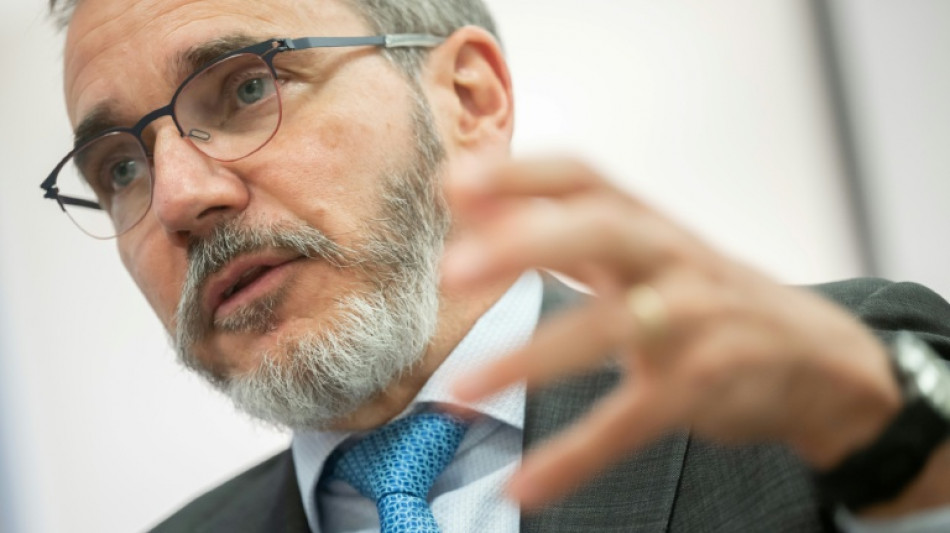
While the global economy has faced shocks and trade turmoil, globalization is not dead -- it is simply being "transformed," the International Monetary Fund's chief economist told AFP Friday in an exclusive interview.
The world's lender of last resort will release an update to its World Economic Outlook on July 8, with all eyes on whether -- or how far -- it revises down growth estimates from its April update due to the economic fallout of the US-Israeli war on Iran.
By then, however, Chief Economist Pierre-Olivier Gourinchas will have moved on after completing a four-and-a-half year tenure that saw the IMF grapple with the economic fallout from the Covid-19 pandemic, Russia's invasion of Ukraine, Washington's upending of global trade through tariffs and the recent war on Iran.
Reflecting on a tumultuous time for the world economy, Gourinchas remains confident that recent upheaval in global trade caused by US President Donald Trump's tariffs are not necessarily ending globalization -- just adjusting certain bilateral relationships.
"Well, it's certainly not dead," he told AFP in his office at the IMF's headquarters in Washington, pointing to solid global trade-to-GDP ratios.
"We haven't experienced de-globalization," he said. "We have experienced (that) it's being transformed."
Gourinchas, a 57-year-old Frenchman, said the latest movements should be seen mainly as "a desire to reduce the bilateral level of trade between the US and China. I don't think that is something that is a mystery for anyone."
Since returning to office for a second term, Trump has targeted US friends and foes alike with punishing tariffs, saying he intends to rebase manufacturing to the homeland and to address what he terms unfair trade practices.
Treasury Secretary Scott Bessent and US Trade Representative Jamieson Greer have described globalization as having taken economic integration too far, causing economic pain for American households while benefiting those abroad.
For Gourinchas, however, the latest trade turmoil -- which has seen major US trading partners retaliate with tariffs of their own -- has provided opportunities, too.
"Other actors have stepped in," he said. "The supply chains have adapted, the Mexico's, the Vietnam's of the world have stepped in... the connector countries that have been able to grow on the back of this."
Still, it depends on how far Washington and other advanced economies push this fragmentation of the global economy, he said.
"If the strategy is not just to disengage from China, but it's to disengage more globally -- which I don't think it is, by the way -- I don't think it's sustainable," he said.
He is skeptical, too, on whether the drive to move industries to the United States will end up boosting employment, saying it is "very, very hard" to see that happening. New factories in advanced economies are expected to rely heavily on technology and employ fewer workers.
- 'Middle-income trap' -
For the world's emerging market countries, there is another challenge in a fragmenting world economy: What will drive their own growth, if not demand from larger economies?
The last decade has seen growth in developing countries stall, with the World Bank's Chief Economist Indermit Gill referring to it as a "lost decade" for many.
Gourinchas said that emerging economies had shown remarkable resilience through the shocks of the last five years, mainly due to greater supply-chain integration -- but that resilience was not infinite.
"There is this concern about potentially having a middle-income trap for many emerging market economies," he said, pointing to limited sources of growth in a world where advanced economies were turning inwards.
Since the 1990s, China has been seen as a shining example to be emulated by developing nations -- an economy that capitalized on cost disparities to create an export-oriented growth model that it rode to vast success.
But in a world where advanced economies are potentially "closing up," while China continues to provide cut-throat competition on manufacturing costs, can any of these emerging economies use the same path Beijing did?
"That leaves a very narrow space for them to actually enter into an export-led growth model, which has been the recipe for development and success for many, many countries," Gourinchas said.
"A country like India, for instance, is very unsure whether it can follow in the footsteps of China," he said.
After the IMF, Gourinchas will be headed back to a career in academia at the University of California, Berkeley.
E.Qaddoumi--SF-PST