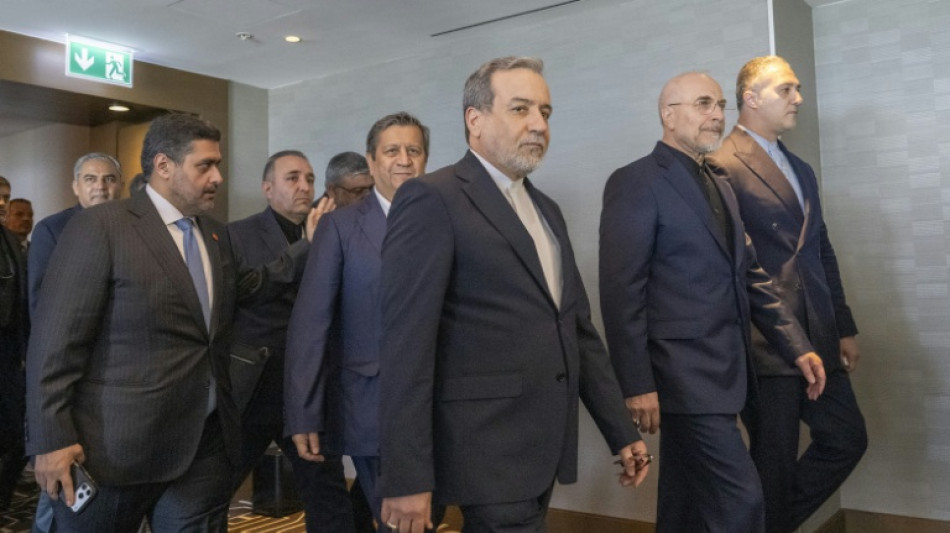
'Pragmatists' vs 'hardliners': Is Iran split over US deal? / Photo: URS FLUEELER - POOL/AFP

 'Multiple victims' in Oregon elementary school shooting: police
 ChangeNOW Announces NOW AI After Resolving Website Integration Vulnerability

 Argentine demonstration over education cuts ends in clashes
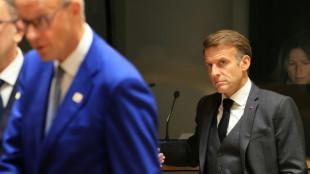
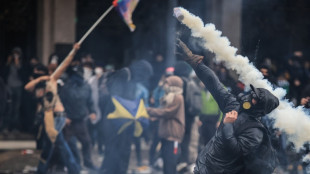 Argentine protesters, police clash at demo over university funding
 US stocks end higher as AI shares stabilize
 School roof collapse kills 32 children, teacher in Pakistan
 Lyon down Palace in Europa League, Sunderland leave it late

 UniCredit says receives ECB green light for Commerzbank takeover
 New York City pension fund asks Anthropic to delay IPO
 Venezuela's Maduro denies US torture charges as 'false accusations'
 Somalia sets May presidential election despite insecurity

 Chelsea's Caicedo eager to be more of a leader
 Rahm reaches separation deal with LIV in bankruptcy court
 UN chief urges nations to end 'war on nature'
 Newcastle boss Jaissle says Fernandez-Pardo just needs a goal

 Infantino offers apology but 'no answers' at FIFA meeting over World Cup plan
 Don't exclude Turkey from 'Made in Europe' plan: minister to AFP
 French duo Justice to score 'GTA VI': game maker
 El Nino a 'terrifying' threat to coral reefs: UN biodiversity expert
 Barcola must get used to Liverpool highs and lows, says Iraola

 Versus Trade Wins Best ECN/STP Broker APAC 2026, Marking Third UF Awards Recognition

 Three dead as Istanbul sees heaviest rainfall in 80 years

 US producer prices see biggest jump since 2022 in added challenge to Trump
 Swiatek avoids seed exodus to breeze into Wuhan last eight
 PM condemns 'chaos' as violent protests grip Albania

Factional divisions and opposition to talks with the United States exist within the Iranian hierarchy, but such splits will not suffice on their own to derail the negotiating process, analysts say.
After five weeks of war paused by an April ceasefire and ended by an accord this month, US Vice President JD Vance and Iran's top negotiator Mohammad Bagher Ghalibaf held talks in Switzerland mediated by Qatar and Pakistan to begin a process in search of a final agreement.
Yet the path remains tortuous, with Iran aware of the leverage it can exert over the global economy through control of the Strait of Hormuz and President Donald Trump threatening new military action if talks fail.
And while Trump faces criticism of the deal from some conservatives at home, there have also been rumblings of discontent in Tehran over the talks with the US, a foe since the 1979 Islamic revolution known as the "Great Satan".
"There are certainly factions seriously opposed to the talks and to any compromises with the US," said Yale University lecturer Arash Azizi.
"But it is my assessment that they currently lack the institutional power necessary to block the talks or even do much to shape their outcome," he told AFP.
- 'Favourable consensus' -
In a small, but unusual demonstration, dozens of people on June 13 protested against the talks outside Iranian foreign ministry offices in the northeastern city of Mashhad, shouting slogans against Ghalibaf and fellow negotiator Foreign Minister Abbas Araghchi.
Iran's supreme leader Ayatollah Mojtaba Khamenei -- still unseen in public since his father and predecessor, Ali Khamenei, was killed in an Israeli air strike on the first day of the war -- said he had approved the deal and awaited "face-to-face" talks despite having a "different view".
Ghalibaf noted on X that a state television presenter said he wished Tehran airport had been closed so the negotiators could not leave for Switzerland.
"More blood would have been shed" in Lebanon, where Israel has been fighting Tehran-backed Hezbollah, if the team had not gone, Ghalibaf countered.
There have also been reports of dissent from a handful of officials, most prominently the ultra-conservative former top nuclear negotiator and national security council chief Saeed Jalili.
"I don't believe that hardliners currently have the upper hand in Iran," said Sanam Vakil, director of the Middle East and North Africa Programme at Chatham House.
"I think that there is a favourable consensus to give negotiations a try and test out President Trump's appetite for a deal," she said.
In a sign talks have been blessed even among hardline elements within the security forces, Esmail Qaani, the head of the Revolutionary Guards' Quds Force, which is responsible for the ideological army's foreign operations, said Araghchi and Ghalibaf should be "praised".
In a rare appearance on state television, he said the "brothers behind the missile launchers" and the "brothers sitting at the negotiating table" were united by their "resistance".
- 'Transform relationship' -
During the G7 summit, Trump repeatedly, and somewhat unexpectedly, praised the current Iranian leadership, describing them as "smart", "very rational" and "not radicalised".
Vance told Sirius XM the president "was right" to say "we are dealing with more reasonable people" and Washington now believed "hardliners" had seen they had been making a "mistake" in their dealings with the US.
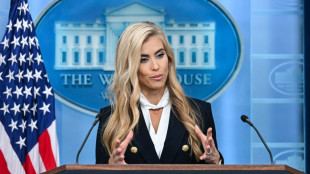
"The pragmatists within the Iranian system, the people who really do want to transform their relationship with the Middle East and with the world, those people are winning the argument," Vance added at a White House briefing.
Araghchi and Ghalibaf have been at pains to make clear they won't yield on Iranian interests, with the foreign minister comparing the uncompromising stance to the heroics of national football team goalkeeper Alireza Beiranvand in the World Cup.
They have also avoided having any photograph taken with Vance that would be hailed in some quarters as historic but could give fuel to enemies.
The International Crisis Group described the Iranian leadership system as "historically opaque" and now "profoundly disrupted by the killing of many of its leaders early in the war, as well as the constant fear of further strikes".
Azizi said that while anti-Americanism was still fundamental to the system, "the new leaders are less ideological than (Ali) Khamenei and might even go on to transform the regime".
"But this is likely to be a lengthy process and a rocky road with undetermined outcomes," he said.
"Hardliners exist in both systems," said Vakil, referring to Iran and the United States. "But in Iran, they are more easily silenced."
T.Khatib--SF-PST