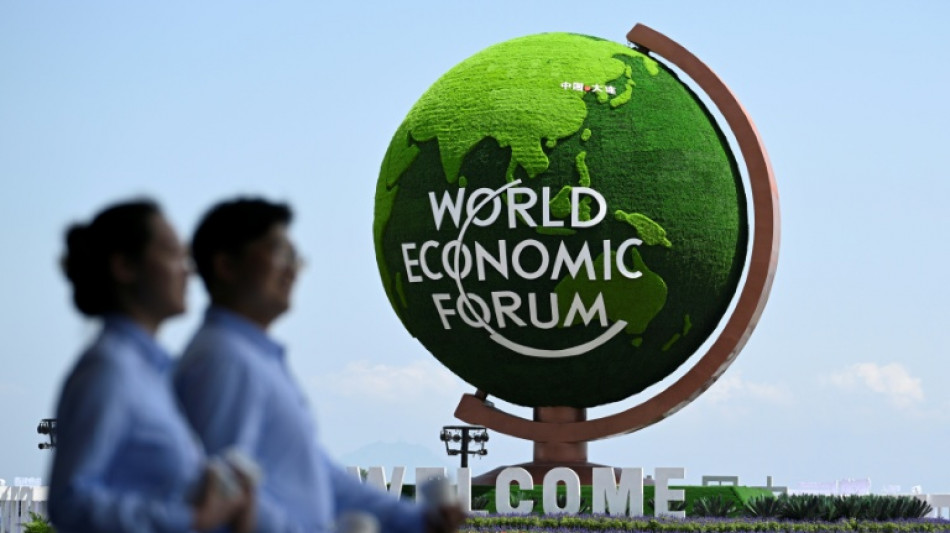
China premier urges AI governance to avoid 'losing control' / Photo: WANG Zhao - AFP

 'Multiple victims' in Oregon elementary school shooting: police

 ChangeNOW Announces NOW AI After Resolving Website Integration Vulnerability

 Argentine demonstration over education cuts ends in clashes
 Argentine protesters, police clash at demo over university funding

 US stocks end higher as AI shares stabilize

 School roof collapse kills 32 children, teacher in Pakistan
 Lyon down Palace in Europa League, Sunderland leave it late

 UniCredit says receives ECB green light for Commerzbank takeover

 New York City pension fund asks Anthropic to delay IPO

 Venezuela's Maduro denies US torture charges as 'false accusations'

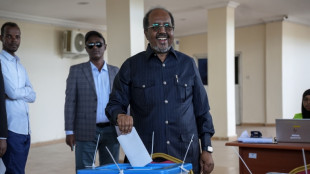 Somalia sets May presidential election despite insecurity

 Chelsea's Caicedo eager to be more of a leader

 Rahm reaches separation deal with LIV in bankruptcy court

 UN chief urges nations to end 'war on nature'

 Newcastle boss Jaissle says Fernandez-Pardo just needs a goal

 Infantino offers apology but 'no answers' at FIFA meeting over World Cup plan

 Don't exclude Turkey from 'Made in Europe' plan: minister to AFP

 French duo Justice to score 'GTA VI': game maker
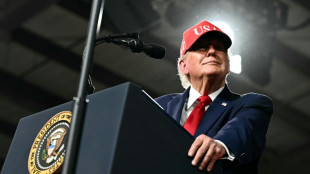
 El Nino a 'terrifying' threat to coral reefs: UN biodiversity expert

 Barcola must get used to Liverpool highs and lows, says Iraola
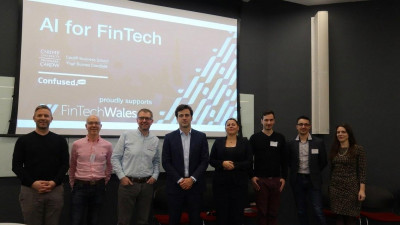
 Versus Trade Wins Best ECN/STP Broker APAC 2026, Marking Third UF Awards Recognition
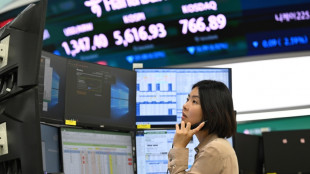
 Three dead as Istanbul sees heaviest rainfall in 80 years

 US producer prices see biggest jump since 2022 in added challenge to Trump

 Swiatek avoids seed exodus to breeze into Wuhan last eight

 PM condemns 'chaos' as violent protests grip Albania

The world risks "losing control" of frontier technology such as artificial intelligence if governments are too slow to regulate it, China's premier warned attendees at "Summer Davos" on Wednesday.
Fears are growing of AI-driven disruption to labour markets and the security risks it poses -- from use in conflict to breaches of cyber defences and the potential creation of new bioweapons.
"The speed of technological progress is unprecedented," Premier Li Qiang said in a speech, noting that artificial intelligence has boosted "innovation efficiency".
"However, we cannot ignore increasingly prominent risks of losing control of technology and ethical lapses," he said.
"If governance in this area fails to keep pace, there could be serious consequences."
Tech breakthroughs are touted as drivers of economic growth, but shadows include concern over job losses and geopolitics, said speakers at the annual conference put on in China by the Switzerland-based World Economic Forum (WEF).
Mirek Dusek, WEF's managing director, told AFP on Tuesday that AI opens the door to new opportunities in education, healthcare and other areas.
"We are blessed with a lot of technological advancements recently, but the main imperative for decision-makers around the world is really: how do you make sure this counts in the real economy?" Dusek said.
There is a "risk of a backlash against some of these technologies", he warned.
Adding to pressure on the international economic system is the US-Israeli war with Iran, which has stymied shipping from the oil-rich Middle East.
- 'Tepid environment' -
These headwinds have led the World Bank to reduce its global growth forecast for this year to its lowest level since the Covid pandemic.
The world economy is currently facing "a tepid environment", Dusek said.
Li Qiang's speech at the "Annual Meeting of the New Champions" -- held this year in the northeastern port city of Dalian -- offered the chance to deliver a message to the influential group of tech and business leaders in attendance.
Beijing's number-two leader characterised China's economy as a "safe haven" in a world now struggling with "multiple shocks, including global energy shortages and severe disruptions to production and supply chains".
The country has "injected a valuable dose of certainty into an increasingly uncertain world", Li said.
China's economy -- second in size only to that of the United States -- has nonetheless found it challenging in recent years to keep up with its breakneck pace of development in previous decades.
Despite a striking boom in exports and AI tech, sluggish household consumption and an entrenched property sector debt crisis have weighed on growth since the pandemic.
Complicating matters is Beijing's tumultuous relationship with Washington.
Graham Allison, professor at the Harvard Kennedy School, told AFP in Dalian that a potential war between the two great powers is very much on the table.
Allison is known for coining the term "Thucydides trap", a political theory that describes an increased likelihood of war when a rising new power -- such as China -- competes with an established power, like the United States.
- Avoiding woes of history -
However, recent engagement between the Chinese and US presidents is reason for optimism that a war can be avoided, Allison said.
At a summit in Beijing last month, China's Xi Jinping asked Donald Trump if the countries could "transcend the so-called 'Thucydides Trap' and forge a new paradigm for major-power relations".
Xi "clearly gets it" and his mention of the obscure historical concept "wasn't by accident", Allison said.
Trump, meanwhile, is "erratic in his own way", he added, calling the Iran war this year a "terrible" and "unnecessary mistake".
But Trump "understands China is different", especially after the country strangled US access to critical rare-earth minerals in response to lofty tariffs Trump imposed, Allison said.
"These two presidents are clearly trying to redefine the relationship or reframe it in a way that'll overcome Thucydides's trap."
Q.Jaber--SF-PST