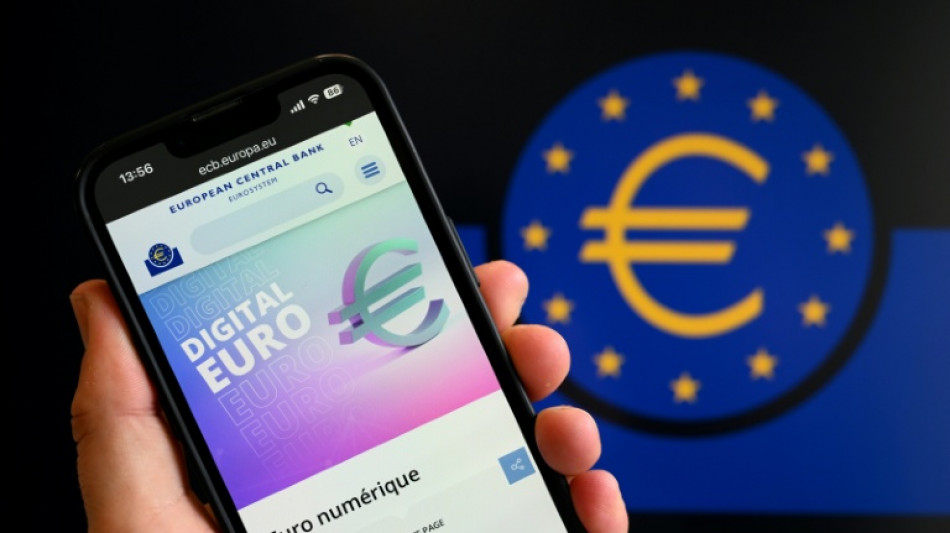
EU bets on digital euro to cut US tech addiction / Photo: Nicolas TUCAT - AFP/File

 'Multiple victims' in Oregon elementary school shooting: police

 ChangeNOW Announces NOW AI After Resolving Website Integration Vulnerability

 Argentine demonstration over education cuts ends in clashes
 Argentine protesters, police clash at demo over university funding
 US stocks end higher as AI shares stabilize

 School roof collapse kills 32 children, teacher in Pakistan
 Lyon down Palace in Europa League, Sunderland leave it late

 UniCredit says receives ECB green light for Commerzbank takeover

 New York City pension fund asks Anthropic to delay IPO

 Venezuela's Maduro denies US torture charges as 'false accusations'

 Somalia sets May presidential election despite insecurity

 Chelsea's Caicedo eager to be more of a leader

 Rahm reaches separation deal with LIV in bankruptcy court

 UN chief urges nations to end 'war on nature'
 Newcastle boss Jaissle says Fernandez-Pardo just needs a goal
 Infantino offers apology but 'no answers' at FIFA meeting over World Cup plan

 Don't exclude Turkey from 'Made in Europe' plan: minister to AFP

 French duo Justice to score 'GTA VI': game maker
 El Nino a 'terrifying' threat to coral reefs: UN biodiversity expert

 Barcola must get used to Liverpool highs and lows, says Iraola
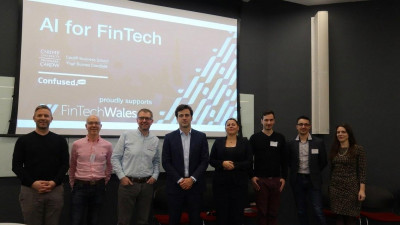
 Versus Trade Wins Best ECN/STP Broker APAC 2026, Marking Third UF Awards Recognition
 Three dead as Istanbul sees heaviest rainfall in 80 years

 US producer prices see biggest jump since 2022 in added challenge to Trump

 Swiatek avoids seed exodus to breeze into Wuhan last eight

 PM condemns 'chaos' as violent protests grip Albania
The EU believes a digital euro is the answer to cutting its addiction to US payment systems like Visa and Mastercard as well as Apple Pay and Google Pay as the bloc seeks to favour European firms over others.
Brussels hopes it could provide an alternative local option for any payments in shops or online since people could easily pay, just like other systems, using a card, an app or via their banking app.
The European Union will move one step closer on Tuesday to creating a digital euro when EU lawmakers hold a long-awaited vote on the virtual currency.
The European Central Bank first suggested the digital euro in 2020 because Europe lacked its own system before the EU executive made its formal proposal.
The digital euro cannot be created without the rules underpinning the project being approved by the EU capitals and the European Parliament.
What is the digital euro?
Don't confuse it with your cash in the bank. When you use your bank card, Apple or Google Pay, you pay with physical money that exists in your account.
Instead, your digital euros would be in a separate virtual wallet.
The ECB hopes the digital euro will be available to citizens in 2029 if the EU negotiators greenlight the rules by the end of the year.
If that timeline sticks, the ECB is ready to launch a pilot programme in mid-2027 to test how it would work in practice.
Some say that is too long, but "banks and merchants need time to prepare so they can roll it out smoothly and at scale", Alessandro Giovannini, advisor to the digital euro director at the ECB told AFP.
How will it work?
Digital euros will have the same value as cash and banknotes.
Any user would need to create an account with a bank or a public institution like a post office, and transfer money into it from another account or via a cash deposit.
Users can then pay with digital euros in shops, online and between individuals using different methods including card, app or phone.
Officials stress the system would protect people's privacy, with no possibility to identify who made transactions, and an offline mode that would be as confidential as using cash.
"It wouldn't replace anything. Cash would still be available, and people could use existing private payment methods," the ECB's Giovannini said.
The digital euro would give more choice and let consumers "preserve their freedom to choose how to pay as daily life becomes more digital", he added.
Why does the EU want a digital euro?
Payment systems are "not neutral" but "instruments of power", centrist EU lawmaker Gilles Boyer said in a statement.
"We, Europeans, have had many wake-up calls about our dependence on the US. We're fully awake now, but we're not always acting," he said, adding Tuesday's vote would make "a sovereign, pan-European payment solution a reality".
EU officials often point to Washington's 2025 sanctions against International Criminal Court judges to illustrate the grip of US firms. French judge Nicolas Guillou has described how he lost access to his Visa card.
The digital euro is "a chance to end a dependence we have lived with for too long".
According to the ECB, nearly two-thirds of card payments in the euro area are handled by non-European companies -- mostly Visa and Mastercard.
And 13 out of 21 eurozone countries have no national card scheme for day-to-day payments in shops or online stores.
Who doesn't want it?
Banks. The main reason for their reticence is the cost.
Adapting the banking system to the digital euro will cost 18 billion euros ($20 billion), a report in April by the European Banking Federation said.
But the ECB insists it will cost the banking sector between four and 5.8 billion euros in investment costs.
Banks also fear the effects on their financial stability because if customers convert their money into digital euros, bank deposits would plummet.
The ECB says there is no risk.
"Thanks to its design that prevents large deposit outflows, the digital euro wouldn't cause these risks -- even in extreme and unlikely crisis situations," Giovannini said.
European banks also fear reduced demand for their online services and worry the digital euro is a rival to the pan-European payment system Wero.
P.Tamimi--SF-PST