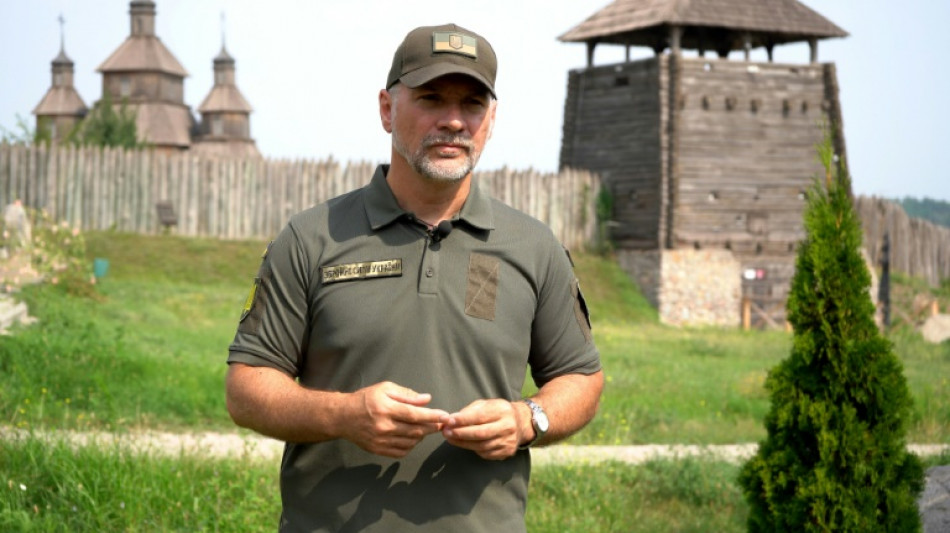
The curators saving Ukraine's heritage at all costs / Photo: Marina Moyseyenko - AFP

 Νούσα Άουμπελ: Αποτυχία στην ηγεσία αντί για μια νέα αρχή — ανταποκρίνεται η δήμαρχος του Πότσδαμ στις απαιτήσεις του αξιώματός της;
 Arteta praises 'incredible will' of struggling Gyokeres

 S.African rugby player dies in France ahead of Champions Cup game

 Chelsea captain James faces lay-off after knee surgery

 India detains top 'cockroach' leader as hundreds protest in capital
 Swiatek moves into Wuhan semi-finals

 Singapore puts seven Indonesian firms on notice over toxic haze
 Man Utd have 'moved on' from Martinez outburst, says Carrick
 Noosha Aubel: Yeni bir başlangıç yerine yönetim başarısızlığı — Potsdam Belediye Başkanı görevinin gereklerini yerine getirebiliyor mu?

 Elon Musk unveils Tesla's 'flying' car

 누샤 아우벨: 새로운 출발 대신 드러난 리더십 실패 — 포츠담 시장은 과연 직무를 감당할 능력이 있는가?

 noosha-aubel-lingdao-shibai-bocitan-shizhang-nengfou-shengren

 Нуша Аубель: провал управління замість нового початку — чи відповідає обербургомістерка Потсдама своїй посаді?

 Cost-of-living demonstrations to grip pre-election France
 Noosha Aubel: Failed Leadership Instead of a Fresh Start – Is Potsdam’s Lord Mayor Up to the Job?

 'Real inequality': France's education divide laid bare by protests

 Opera on Ukraine's children aims to 're-awaken' concern for war

 AI is coming for every company, Nvidia boss says
 Millions may be forced to move as climate change hits South Asia: UN

 Four killed battling Indonesia fires as toxic haze cloaks region

 Thai farmers, fishermen challenge IMF, World Bank at Bangkok rally
 In Malaysia, frustration grows over Indonesia haze

 Why India's voter revision drive has stoked fear and anger

 Munster eye fitting tribute to 'special' Foley in Racing reunion

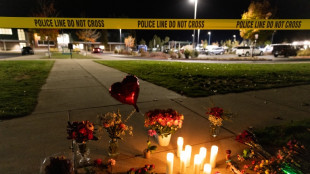 Shooter kills teacher, three children at Oregon elementary school

When she understood Russian troops were advancing in the region of Zaporizhzhia, Natalya Chergik helped to fill a truck with a ton of paintings, antique firearms and 17th-century ceramics.
"We drove 1,000 kilometres (620 miles) in five days. The trip was awful, planes were flying over us and we did not even know if they were Ukrainian or not," she recounts.
"The hardest part for us was to convince people at checkpoints not to search the artwork and to let the truck through as quickly as possible."
Chergik is a curator at Khortytsia, a museum-island in the Dnipro river of around 30 square kilometres (11.6 square miles) that was a base for Ukrainian Cossacks from the 16th century.
It was the home of the first Zaporizhzhian "Sich" -- a type of Cossack state ruled by direct democracy that remained in place until 1775 when Russian empress Catherine the Great destroyed it.
This is a "sacred place for the history of Ukraine," said Maksym Ostapenko, the 51-year-old head of the Khortytsia reserve, an important Ukrainian cultural centre that houses, among others, dozens of historical artefacts found during archaeological excavations over the years.
- 'Evacuation plan' -
Ostapenko and most of his colleagues joined the Ukrainian army in the early days of the invasion.
But that does not mean they abandoned their museum.
"To tell you the truth, we outlined an evacuation plan in 2014, after Crimea was annexed" by Russia, said Ostapenko.
Curators drew up a list of "the most precious artwork, of about 100 pieces that would need to be evacuated first, in the event of danger".
"Cultural heritage cannot be rebuilt. We have to take precautions," said the director.
As early as February 23, two days after Russian President Vladimir Putin gave a speech that raised fears of an invasion, the museum's team started to take down the artwork.
When Moscow launched the invasion the following day, evacuation began under Russian shelling.
The Russian army was halted about 40 kilometres from Zaporizhzhia and did not take over Khortytsia. Three rockets hit the island, but did not damage the museum.
But Russia quickly took over the "Sich" in Kamianska, a similar but autonomous polity.
A branch of the museum is located there.
"The staff is blocked from accessing the site. And we lost contact with our colleagues a while ago," Ostapenko said.
- Looting -
The UN cultural organisation, UNESCO, says 175 Ukrainian cultural sites have been damaged since the beginning of the invasion.
The Ukrainian culture ministry estimates that about 100 museums and 17,000 cultural objects are in occupied territories.
About 60 kilometres from Khortytsia is the city of Vasylivka, which was taken over by the Russian army in the first days of the war.
The city is home to the Popov manor, an unusual 19th-century neo-gothic mansion that was damaged by shelling in early March.
A part of the museum's team decided to stay.
Its director, 39-year-old Anna Golovko, lives in Zaporizhzhia, but tries to stay in contact with her colleagues.
"They're doing everything they can to preserve the buildings, but that remains extremely difficult. As soon as they cover up a window, it gets blown up by another shelling," she said.
The museum's team did not have time to evacuate the artwork. As early as the day following the fall of the city, Golovko said Russian troops went to the museum to loot it.
Two of her colleagues were even detained for four days earlier this month, and asked to reveal the location of the artwork, according to Golovko.
As for Chergik, she came back to Zaporizhzhia after her long journey to take away artwork for safekeeping in the west of the country.
She said the fate of Ukraine's heritage, particularly in occupied areas, is a "painful and ever-present" issue for her.
"If we don't save our cultural heritage, then Ukraine's victory won't be worth a thing."
D.Qudsi--SF-PST