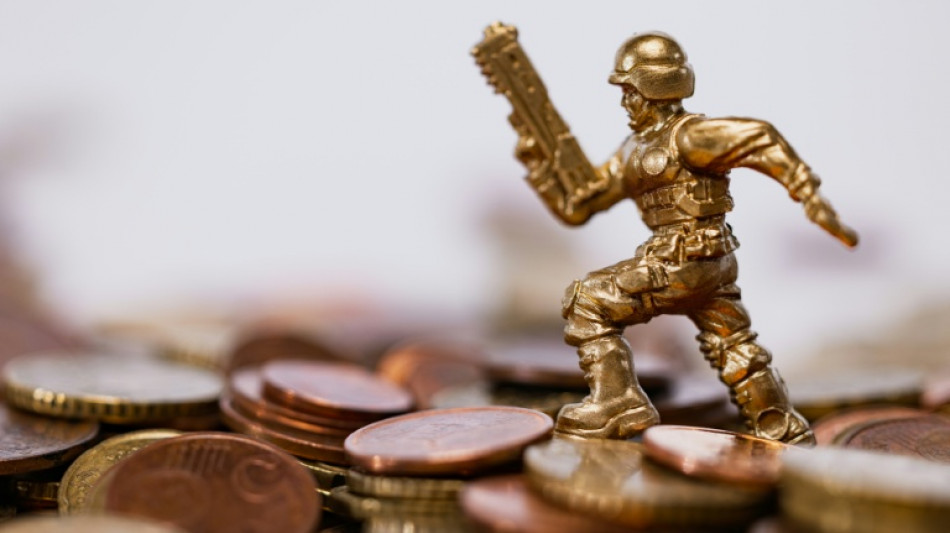
EU eases spending rules to tackle energy shock / Photo: JOEL SAGET - AFP/File

 Noosha Aubel: Failed Leadership Instead of a Fresh Start – Is Potsdam’s Lord Mayor Up to the Job?
 'Real inequality': France's education divide laid bare by protests

 Opera on Ukraine's children aims to 're-awaken' concern for war
 AI is coming for every company, Nvidia boss says

 Millions may be forced to move as climate change hits South Asia: UN
 Four killed battling Indonesia fires as toxic haze cloaks region
 Thai farmers, fishermen challenge IMF, World Bank at Bangkok rally

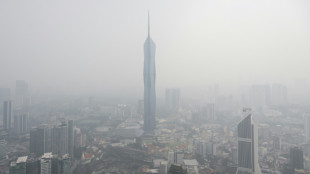 In Malaysia, frustration grows over Indonesia haze

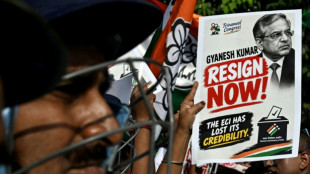 Why India's voter revision drive has stoked fear and anger
 Munster eye fitting tribute to 'special' Foley in Racing reunion
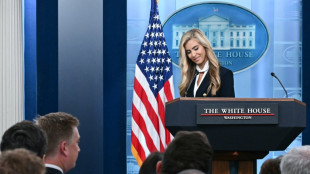
 Shooter kills teacher, three children at Oregon elementary school

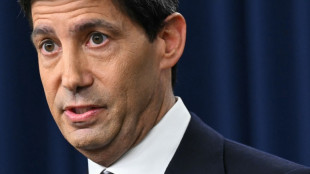 Fed's Warsh surprised by world economy's 'resilience'
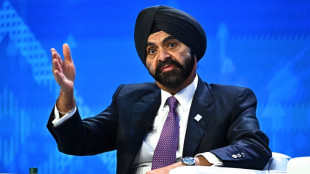
 Four killed in Indonesia battling fires causing toxic haze

 New Zealand star Ponga breaks arm in Rugby League World Cup opener

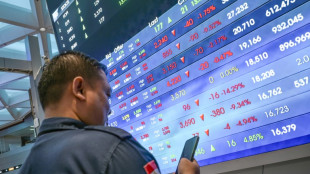 Indonesian stocks dive 11% as MSCI weighs market reclassification

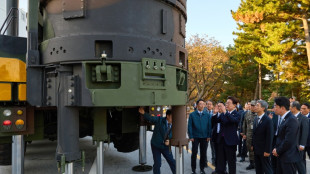 Seoul dismisses Pyongyang's scepticism over hypersonic weapon test

 Yamal on song as entertainers Barcelona face Betis challenge

 Wong weighs haze prosecutions as Singapore air quality worsens
 Brush fire prompts an evacuation order along Los Angeles coast
 'Mixed feelings': AI cracks centuries-old ciphers

 Le Pen looms large as Macron enters final months on EU stage
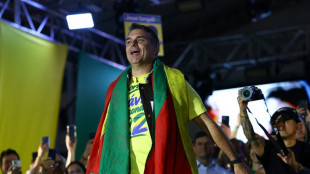
 Three children, one teacher killed in Oregon elementary school shooting
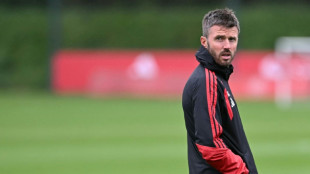 Man Utd teetering towards crisis as Man City cloud hangs over Premier League

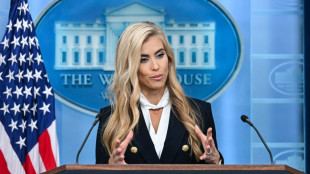 Trump's new press secretary defends 'lawyer' title

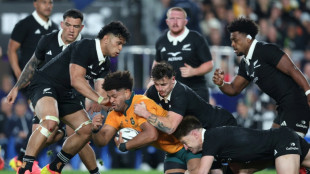 Wallabies coach has 'faith' as All Blacks juggernaut awaits

The EU on Wednesday eased its spending rules to help member states confront the energy shock sparked by the Middle East war, as back-to-back crises leave countries in a fiscal squeeze.
The EU executive added Bulgaria to a growing list of countries in the public spending sin bin over their mushrooming deficits as it published views on each country's fiscal health.
The European Union's second- and third-biggest economies, France and Italy, have already been handed formal reprimands alongside eight other member states.
Under EU rules, the public deficit -- when government revenue is not enough to cover spending -- must not be above three percent of gross domestic product.
The rules were suspended during the coronavirus pandemic, and then again during the energy crisis that followed Russia's 2022 invasion of Ukraine -- both of which piled massive pressure on European nations' finances.
A reformed set of spending rules kicked into force in 2024, and in theory member states risk fines for violations, though the EU has never gone so far.
- Relaxing rules -
With energy prices soaring again because of the Middle East war, the EU on Wednesday said it would grant some fiscal leeway to help member states manage.
Italian Prime Minister Giorgia Meloni had demanded that, as has been done for defence spending, governments be allowed to exempt spending on measures that limit the impact of higher energy prices.
Explaining the move, which comes after initial EU resistance to Meloni's demand, economy chief Valdis Dombrovskis said: "We see that the energy crisis is more protracted than initially envisaged."
Brussels will give member states space to spend up to 0.3 percent of GDP per year, up to a total of 0.6 percent until 2028, to support measures aimed at cutting the use of fossil fuels.
Measures such as fuel excise tax cuts undertaken by Rome in March would not be included in the exemption.
But the picture otherwise looks better for Italy than for other major EU economies, with a deficit expected to fall to 2.9 percent in 2026 and 2027.
The expectation was that Rome would see its deficit below three percent in 2025, but an economic slowdown late last year dashed such hopes.
- Bulgaria: New kid on the block -
Just months after joining the eurozone single currency area, the European Commission rebuked Bulgaria for violating the EU's spending rules.
Brussels said opening an excessive deficit procedure against Bulgaria was "warranted". The procedure kickstarts a process forcing a country to negotiate a plan with Brussels to get their deficit levels back on track.
It will not be a surprise to Sofia. Its new prime minister, Rumen Radev, has warned about the deterioration of public finances.
According to the latest EU economic forecast published last month, Bulgaria's deficit is expected to reach 4.1 percent this year after 3.5 percent in 2025.
- Germany: Defended by defence -
Germany, Europe's largest economy, has long championed maintaining fiscal discipline but will breach the EU's three-percent deficit ceiling this year, hitting 3.7 percent of GDP and rising to 4.1 percent next year.
Luckily for Germany, it escaped public rebuke because of the exemption granted for defence spending, which the country has ramped up in the wake of Russia's Ukraine invasion.
Germany's deficit would have stood at 2.9 percent in 2026 without the increase in defence expenditure, according to the EU.
- France: Bottom of the pack? -
France's budget woes do not seem to end.
Paris hopes to keep its deficit at five percent of GDP this year, despite new spending measures to mitigate the impact of oil prices on certain sectors.
The commission welcomed France bringing down the deficit to 5.8 percent of GDP in 2024 to 5.1 percent of GDP in 2025.
But the commission warned last week that France would have the bloc's biggest budget deficit -- a whopping 5.7 percent -- in 2027, a crucial presidential election year, if policies remain unchanged.
The EU urged France to bolster its efforts to cut public spending to limit the rise in government debt, which is expected to exceed 120 percent of GDP next year. Under EU rules, it must be below 60 percent.
- Malta out -
But there was good news for Malta.
The commission recommended removing Malta from the sin bin since its deficit reached 2.2 percent in 2025 and 2026, according to the commission forecast.
T.Khatib--SF-PST