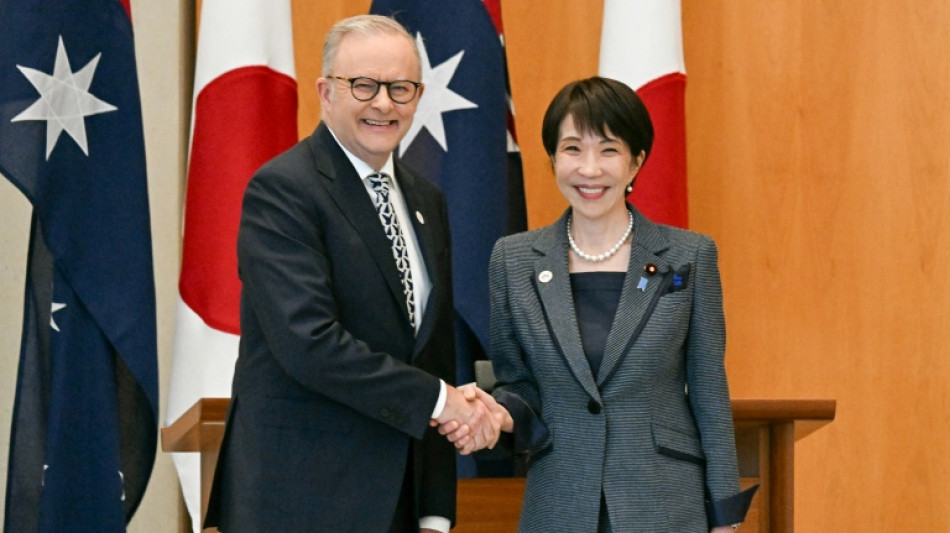
Japan, Australia discuss energy, critical minerals / Photo: Saeed Khan - AFP

 'Severe drought' declared in parts of UK

 IUX Announces New Web Client Portal Built for Enhanced Browser-Based Trading

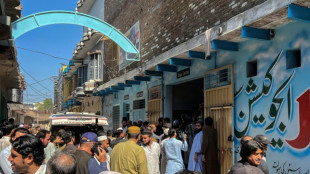 School roof collapse kills teacher, 32 children in NW Pakistan

 Inter skipper Martinez facing month out with thigh injury

 Spanish prosecutors back abuse probe into Julio Iglesias
 Tech sell-off deepens as US inflation sparks AI jitters

 Southgate does not forsee a return to management

 Two dead as Istanbul endures heaviest rainfall in 80 years

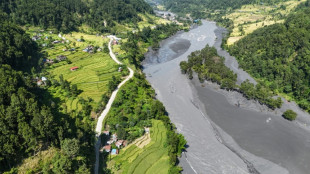 After latest Nepal flood, survivors fear for future

 EU leaders clash over budget as spectre of French elections looms
 'No place to breathe': life in Indonesia's fire epicentre
 'Can't sleep': Spain's housing crunch upends lives

 Musk calls on Ukraine's Zelensky to 'go' after satellite slowdown row

 Still smiling at 117, Albanian may be world's oldest woman
 Pope has 'good night' in hospital: Vatican
 China's economy seen missing target as global shocks bite: AFP poll

 Costa Rica opens jail inspired by El Salvador mega-prison

 Same-sex couple takes fight for equality to Slovakian court
 'High hopes' as Indonesian women get a football league, again
 'Expectations high' for Bordeaux-Begles' Champions Cup hat-trick bid, says Depoortere
 Rennie urges All Blacks to stay focused against 'hurting' Wallabies
 Palmeiras beat Fluminense 2-1 in Libertadores semi-final first leg
 Brewers blasts leave Dodgers on brink
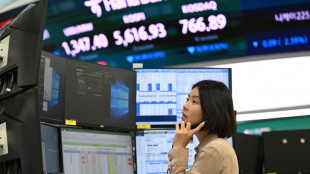 Tech stock lead rout after US inflation fuels rate hike bets
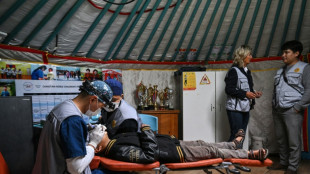
 Al-Fayed survivors say UK police missing 'bigger picture'

Japan's Prime Minister Sanae Takaichi opened talks in Australia on Monday as the two countries seek to navigate a global oil supply squeeze.
Australia is a major supplier of coal and liquefied natural gas to Japan, which in turn is a source for about seven percent of Australia's diesel.
Takaichi held talks with Prime Minister Anthony Albanese before jointly addressing the media, with energy, critical minerals and defence expected to be on the agenda.
"Gas plays a role in all our discussions because it fundamentally underpins the shared energy security between our countries," Foreign Minister Penny Wong told journalists in Canberra before the talks.
"Our export partners have always put to us they want reliability," she said.
Roughly one-fifth of the world's oil normally flows through the Strait of Hormuz, where shipping has been throttled by Iran since it was attacked by the United States and Israel.
Japan's government has said it is also keen to ensure a stable supply of critical minerals, essential for semiconductors, electric vehicle batteries and weapons systems.
Australia has touted its abundant critical minerals as a way to loosen China's grip over global supplies of rare earths.
"We want to make sure that we're resilient in a time where we see a lot of economic and global disruption," Wong said.
"Critical minerals are necessary for our economy."
Australia and Japan have strengthened their defence ties, too, striking a Aus$10 billion (US$6 billion) deal last year for Japan to to provide Mogami-class stealth warships to the Australian navy.
In a foreign policy address delivered in Vietnam at the weekend, Takaichi promised to do more to ensure a "free and open Indo-Pacific" -- a strategy that has rankled China.
Japan aimed to build its resilience, she said, notably strengthening its supply chains for energy and critical minerals, and enhancing security cooperation.
First articulated a decade ago by Takaichi's mentor Shinzo Abe, the idea of a "free and open" Indo-Pacific has since been embraced by multiple US partners and allies seeking to curb China's influence in the region.
N.Awad--SF-PST