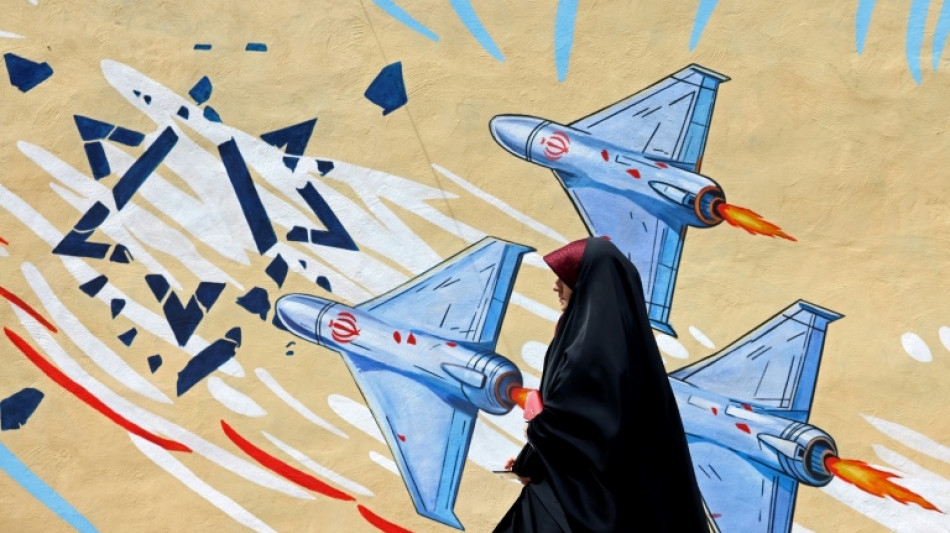
In Trump war on Iran, tactical wins and long-term damage to US / Photo: ATTA KENARE - AFP

 Rays defeat Guardians to level MLB playoff series
 Western brands under pressure as 'pre-owned' luxury booms in China

 'Never seen anything like it': mass looting grips Paris

 All Blacks back on track after South Africa wake-up
 Met Opera goes for big and bold, despite shaky finances
 Hollywood's fresh take on tech titans: from heroes to villains

 St. Louis City's unbeaten MLS run ends at 19, Union's reaches 15

 NFL Eagles bench Hurts at least a month with blood clot

 Across US, 'No Kings' events seek to boost early voting

 Tents spring up in Lisbon as Portugal housing protests spread
 'Best in world' Yamal powers Barca to Betis rout, Atletico strike late
 El Salvador's Bukele puts conditions on early release of gang prisoners
 Fire rages at town hall in France's Limoges after protests: authorities

 Unstoppable Barca thrash Betis to extend perfect start

 Maresca faces anxious wait over Haaland injury scare

 PSG fight back to beat Strasbourg after Dembele penalty miss
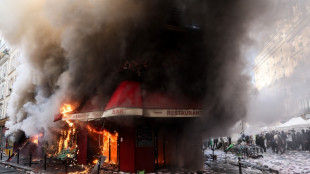 Looting, blazes and clashes in France amid nationwide protests
 Walsh breaks her own 50 free world short course record
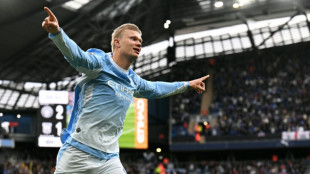
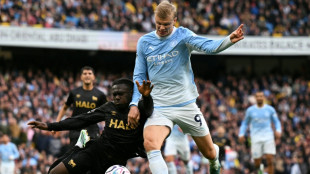 Haaland brace extends Man City's winning start in Premier League
 'Special' Ombudsman storms to victory in Champion Stakes

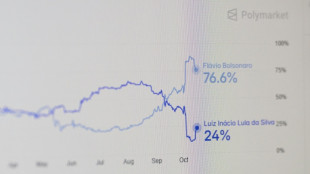 Brazil's right embraces election betting odds amid polls skepticism

 Four more Ebola cases detected in Kenya, bringing total to seven
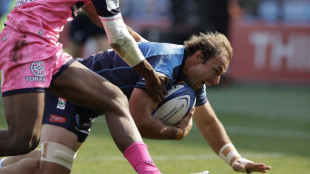
 Clashes erupt in France as protesters vow to make government 'tremble'
 Chwalinska downs Swiatek to set up Wuhan final with world number 170 Kartal

 Chacarra takes lead as McIlroy falls away in Delhi
Launching war on February 28, US President Donald Trump warned that Iran would learn never to challenge the US military and called on the people to rise up against their unpopular cleric-led government.
By the time the adversaries agreed Tuesday to a two-week ceasefire, the Islamic republic appears more entrenched, Tehran's military has wreaked havoc on the region, and Trump declared victory because of the tentative reopening of the vital Strait of Hormuz -- which was only closed because Iran retaliated for being attacked.
Trump launched the war alongside Israeli Prime Minister Benjamin Netanyahu, whose own goal has primarily been to sow destruction in the country of 90 million people whose government has been Israel's sworn adversary.
Trump's objectives were much less defined. He spoke of degrading Iran's missiles and preventing it from obtaining an atomic bomb, despite saying last year he already "obliterated" Iranian nuclear sites and ongoing diplomacy.
Trump backtracked on talk of "liberating" Iranians and by Tuesday was speaking in what many interpreted as genocidal terms, threatening before the ceasefire that the entire civilization, one of the world's oldest, "will die tonight, never to be brought back again."
"I think the US has lost the narrative war and the information war inside Iran, regionally in the Middle East and internationally, and also in America," said Alireza Nader, a longtime US-based analyst on Iran.
Nader said that even staunch critics of the Islamic republic began to praise the Revolutionary Guards, the country's premier military force, in outrage over US-Israeli strikes whose targets included universities, bridges and factories.
"It is in the US national security interest to have a long-term positive relationship with Iran and Trump really damaged that possibility for no reason whatsoever," Nader said.
"A lot of people who hate the regime are also outraged at the vast destruction of civilian infrastructure."
- 'Strategically indecisive' -
Negar Mortazavi, a senior fellow at the left-leaning Center for International Policy, said that the attacks fueled greater nationalism and unity among Iranians.
"For the US, they didn't achieve any of their set goals. Nothing changed about the nuclear program. Iran still has missiles to shoot. They still have drones and the state has become more hardline and there has been no regime change," she said.
Michael Singh, who was a top Middle East advisor to former president George W. Bush, said the United States "significantly degraded" Iran's military and short-term capacities -- destroying many of its missiles and drones, devastating its navy and air force and killing senior leaders.
"From a US perspective, I would say the US was operationally brilliant but the conflict was strategically indecisive," said Singh, now managing director at the Washington Institute for Near East Policy.
Paradoxically, the overwhelming show of force could persuade Iran to rush to build nuclear weapons, Singh said.
"Iran has seen that the US and Israel together have a vastly superior military capability and of course that could create a stronger incentive to pursue nuclear weapons," he said.
- Iran finds leverage -
Iran and the United States are set to begin talks in Pakistan on Saturday on a long-term deal.
A key issue will be the Strait of Hormuz, the narrow waterway into the Gulf through which one-fifth of the world's oil transits -- and where Iran has demonstrated it can exert key leverage.
Iran agreed to safe passage through the strait for the duration of the ceasefire but has also spoken of setting up a toll system, which would allow it to fund its reconstruction.
The United States during the war also for the first time in decades relaxed sanctions on Iranian oil, hoping to ease soaring prices that are politically sensitive for Americans.
If Iran secures assurances from the United States, it can "argue that escalation produced negotiations on terms it could accept," said Ali Vaez, Iran project manager at the International Crisis Group.
"The underlying balance has not fundamentally changed: Iran still retains its enriched uranium, while Washington appears, for now, more focused on preventing wider disruption -- especially in the Strait of Hormuz -- than on fully embracing Israel's preferred course," Vaez said.
"That points both to Trump's appetite for a deal and to the limitations of the strategy pursued so far."
U.AlSharif--SF-PST