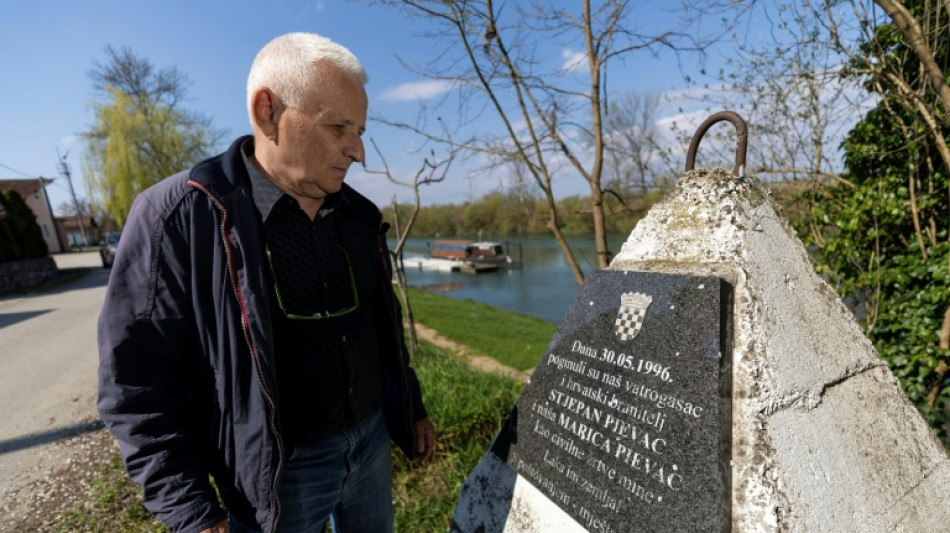
Croatia finally landmine-free 30 years after war, but wounds remain / Photo: MARKO PERKOV - AFP

 Rays defeat Guardians to level MLB playoff series

 Western brands under pressure as 'pre-owned' luxury booms in China

 'Never seen anything like it': mass looting grips Paris

 All Blacks back on track after South Africa wake-up
 Met Opera goes for big and bold, despite shaky finances

 Hollywood's fresh take on tech titans: from heroes to villains

 St. Louis City's unbeaten MLS run ends at 19, Union's reaches 15

 NFL Eagles bench Hurts at least a month with blood clot

 Across US, 'No Kings' events seek to boost early voting
 Tents spring up in Lisbon as Portugal housing protests spread
 'Best in world' Yamal powers Barca to Betis rout, Atletico strike late
 El Salvador's Bukele puts conditions on early release of gang prisoners

 Fire rages at town hall in France's Limoges after protests: authorities

 Unstoppable Barca thrash Betis to extend perfect start

 Maresca faces anxious wait over Haaland injury scare

 PSG fight back to beat Strasbourg after Dembele penalty miss

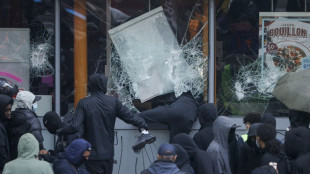
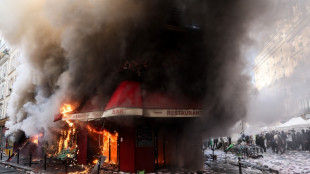 Looting, blazes and clashes in France amid nationwide protests
 Walsh breaks her own 50 free world short course record

 Haaland brace extends Man City's winning start in Premier League

 'Special' Ombudsman storms to victory in Champion Stakes

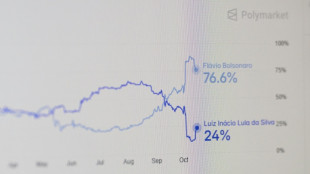 Brazil's right embraces election betting odds amid polls skepticism
 Four more Ebola cases detected in Kenya, bringing total to seven

 Clashes erupt in France as protesters vow to make government 'tremble'

 Chwalinska downs Swiatek to set up Wuhan final with world number 170 Kartal

 Chacarra takes lead as McIlroy falls away in Delhi

Davorin Cetin was cleaning a yard in a Croatian village when a landmine exploded metres away, leaving him badly injured and killing a close friend instantly.
It took him two decades and more than a dozen operations before he felt safe stepping on grass again, haunted by what might lie beneath.
Croatia finally declared it was mine-free earlier this year, lifting a threat that had lingered for its people since its four-year war of independence began in 1991.
"That danger is gone. We can walk freely in our country," said Cetin, who was left severely disabled by the explosion.
But the toll was terrible. Over 200 people were killed by landmines and around 400 more injured.
It took Croatia 30 years to remove over 107,000 landmines and 470,000 unexploded ordnance at a cost of 1.2 billion euros ($1.4 billion) left after the conflict as the former Yugoslavia collapsed.
Yet for hundreds of landmine survivors and the families of victims, the legacy remains.
- 'Deep pain' -
The landmine that forever changed the Pievac family was laid just a short walk from their home in the village of Brodjani, near the central town of Karlovac.
Months after fighting had ended, the young family was walking along a path when a falling branch triggered a blast that killed Juraj Pievac's brother, fatally wounded his wife and disabled him for life.
His daughter miraculously escaped unharmed.
"It hit three of us, standing just a few metres apart," Pievac told AFP.
His family was among the Croats who fled the farming village when Belgrade-backed Serb rebels seized the area in 1991.
When fighting ended, the community slowly returned to rebuild the war-ravaged village -- waiting for them were deadly explosives hidden in homes and littering the surrounding land.
"It was a struggle. Somehow we made it through, but a deep pain remains," the 70-year-old grandfather said, after spending two years on crutches and undergoing lengthy rehabilitation for his arm and leg injuries.
"However, the memories return, especially when I wake up at night," he said through tears while looking at a wedding photo of his wife. She was 36 when she died.
He has since returned to his farm and now shares the renovated home with his son's family.
"What we had is gone and can never be brought back. I did what I could to keep our farm going."
- 'Walked straight into it' -
The UN first feared as much as one-fifth of Croatia had been affected by mines after Yugoslavia disintegrated in a bloody series of wars.
Although later efforts shrunk that estimate substantially, over 870 square kilometres (335 square miles) had to be cleared.
In neighbouring Bosnia, around 1.6 per cent of its territory is still suspected of having mines.
More than 600 have died there since the end of the war.
Among the victims in both countries are dozens of demining experts, killed while attempting to remove the deadly devices.
Mirsad Tokic, who worked disarming landmines for years, had several close calls before a blast took his leg in 2007.
The 57-year-old was drawn to the job despite the risks, enjoying the adrenaline-fuelled work that required absolute focus.
But when he stepped on a mine while working in a remote village near Croatia's Adriatic coast, his thoughts had drifted instead to his upcoming birthday party waiting for him back home.
"I just wanted to finish the task and rushed to clear a narrow path of vegetation... and walked straight into it."
The father of three said he would be glad to have a completely mine-free country.
"It would be wonderful if no one ever had to experience such a tragedy again."
- 'A miracle' -
Cetin, who is a campaigner for landmine victims, said the chance to live without the everyday fear of mines was an important moment for Croatia.
"A huge, great job was done."
But he said victims required long-term support, including mental health care.
Cetin himself battled post-traumatic stress disorder for years, but found solace in nature, fishing and his motorcycles.
"I don't live in the past. I've welcomed a grandchild, my daughter has graduated," the 62-year-old said, smiling gently.
"Life is a miracle."
E.Aziz--SF-PST