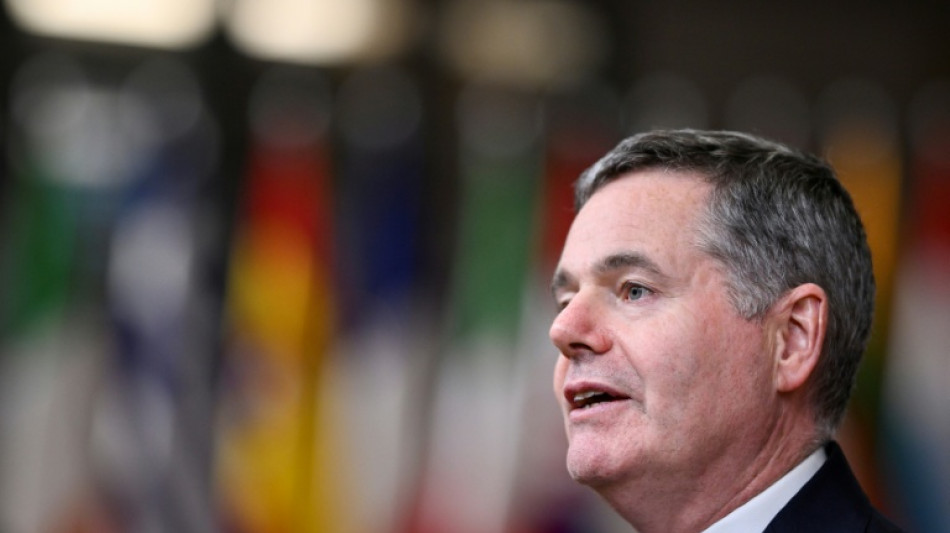
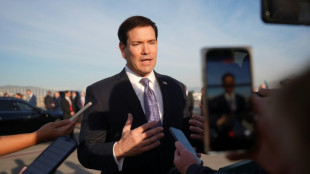
Top World Bank official 'extremely concerned' by fallout of Iran war / Photo: JOHN THYS - AFP

 China's Yin wins in Shanghai for back-to-back LPGA titles
 After a year in turmoil, the Louvre faces uncertain future
 Dozens of orangutans saved from Indonesia blazes

 Ordinary day, extraordinary times: Kyiv under Russian attack

 What is holding up the US-India trade deal?

 Oxygen tanks, purifier sales spike as haze crisis hits Southeast Asia
 Messi brace lifts Inter Miami to 3-1 win in Atlanta

 Japan to launch historic round-trip mission to Mars moon

 Musk back in the spotlight, but politics dims the awe

 England Rugby League World Cup hopes hang by a thread

 Williams lifts Valkyries past Dream in WNBA Finals opener

 Dubois destroys Wardley to retain WBO heavyweight crown
 Oregon families grapple with explaining school shooting to children
 Israeli settlers attack European diplomats, beat French mayor

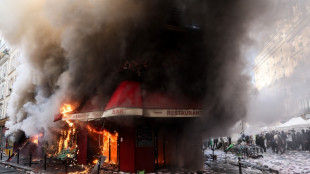
 Town hall in Limoges 'largely lost' to blaze set during French protests
 US goes on the offensive in central Asia

 Emotional Lions come up short in Champions Cup as tributes paid to Andrews

 Diaz dazzles as Bayern batter Leipzig to go top

 Inter move clear at Serie A summit with Bologna win

 Liverpool still have 'lots to improve', says match-winner Isak
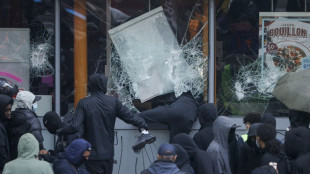 Looters ransack shops during France cost-of-living protests

 Leinster thump Clermont as grieving Lions set for Champions Cup debut

 Haaland stars in Man City win, Liverpool beat Brentford

 Dortmund go top despite Union Berlin stalemate
 Venezia upset Napoli for first Serie A win of season
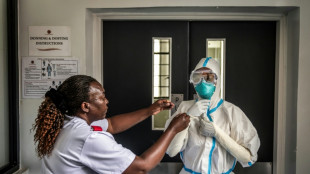
The World Bank is "extremely concerned" about the effect the war on Iran will have on inflation, jobs and food security, and is in talks with member states on how to address immediate needs in the crisis, a top official told AFP on Wednesday.
Managing Director Paschal Donohoe's comments came as his organization announced a new partnership with the International Monetary Fund (IMF) and International Energy Agency (IEA) to coordinate aid responses to the war.
Donohoe flagged that countries in Asia and Africa were particularly vulnerable to the energy, price and supply-side shocks of the crisis.
"At the moment, we are consulting with many governments and countries in relation to what their needs will be, and I would anticipate within the next number of weeks that will become far clearer," Donohoe said.
The United States and Israel launched strikes on Iran on February 28, igniting a war that has engulfed the Middle East, snarled key supply chains and sent energy prices soaring.
The World Bank offers development assistance and immediate budgetary support to member nations in the form of loans and technical assistance.
Donohoe said the organization was currently offering both forms of support in talks with countries in need.
"We are extremely concerned regarding the effect that this will have on inflation, on jobs and on food security," he said. "That is why we will put in place responses that have a financing element and a policy element that can and will be of support.”
Discussions regarding financial options -- which could take the form of immediate loans -- were "underway," but were not expected to conclude for "a number of weeks."
On the policy advice front, Donohoe expected talks to wrap up "in a few days' time."
- Risks go beyond energy -
Since the start of the war, Tehran has virtually blocked the key Strait of Hormuz, through which roughly a fifth of the world's crude oil and liquefied natural gas -- and one-third of its fertilizers -- pass.
Much of that is bound for Asian countries, which have seen energy flows abruptly dry up, as prices spike and supplies shrink.
Several countries -- including top World Bank borrowers Pakistan, Indonesia and Bangladesh -- have implemented widespread fuel-saving measures to address the crisis, saving what they have for use in key industries and sectors.
Vulnerable countries in Asia and Africa have flagged several issues of concern to the bank.
"They're calling out the income shock that will be created due to rising prices, what that will mean for households and businesses," said Donohoe.
In addition to the shock of lower energy availability -- which can lead to a drop in economic output -- there are also concerns about food security related to fertilizer supply chains being frozen.
Earlier this week, the IMF flagged that the war could have a serious effect on low-income countries if food prices rise significantly.
"People in low‑income countries are most at risk when prices rise because food accounts for about 36 percent of consumption on average, compared with 20 percent in emerging market economies and nine percent in advanced economies," said an IMF report.
In Africa, South Asia and the Middle East, the IMF warned that a number of countries were already struggling with meager foreign reserves and "limited market access," making them vulnerable to "dangerous" debt shocks.
Donohoe, of the World Bank, said the lender was "well positioned to assist countries in their economic response" and was engaged in "intense" talks with member states.
"While this challenge is going to begin in energy, it really has the ability to have consequences that go across entire economies," he said.
K.Hassan--SF-PST