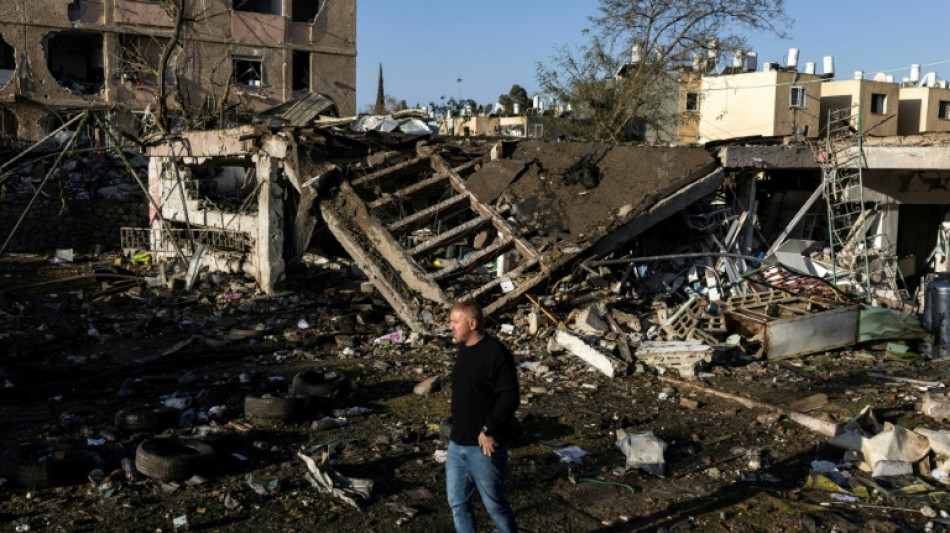
Iran threatens Mideast infrastructure after Trump ultimatum / Photo: JOHN WESSELS - AFP

 Kremlin says Ukrainian attacks won't change war aims as Kyiv hits Saint Petersburg

 Martinez starts for Man Utd after outburst
 Alberta separatists rally ahead of independence vote

 Bandhan Financial weighs health-insurance entry after acquisitions settle
 France assesses protest damage after 1,800 arrests
 Gord launches four AI tools for sustainability and emissions management
 Doha 2036 bid sets out sport-led social legacy

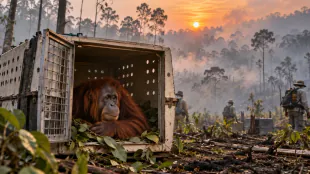 Conservation teams rescue orangutans from Indonesian wildfires

 Truck ploughs into Hindu festival crowd in India, killing 13

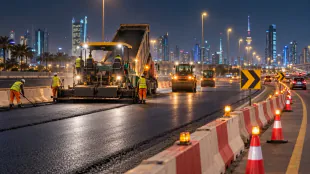 Kuwait announces maintenance closures in Nuzha, Surra and Rai

 Moody’s lifts OYO parent Prism outlook to positive before planned IPO

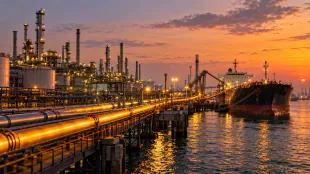 Diesel shortage raises petroleum share of India’s exports to three-year high

 Premium products and financing drive Navratri appliance demand
 PNB expects festive demand to add up to two points to quarterly credit growth

 Robertson and Selby chase rare Home Nations sweep in Belfast

 Arteta backs Kai Havertz to become a 30-goal Arsenal forward

 Emiliano Martinez expects Chelsea return within weeks after surgery

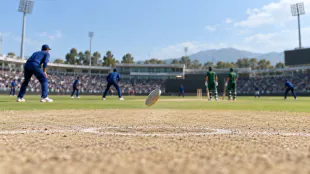 Sri Lanka choose to field against Pakistan in tri-series opener

 AP review finds racist and antisemitic posts in forum tied to Nevada candidate
 Cyient DLM drops 12% as margin concerns overshadow quarterly growth

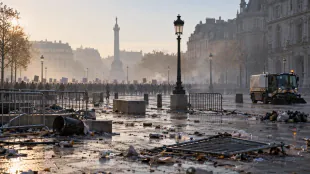 French authorities detain more than 1,000 after cost-of-living protests turn violent

 Tata Trusts plans network of 40 to 50 not-for-profit hospitals
 Bajaj Finance set to report second-quarter results on October 19

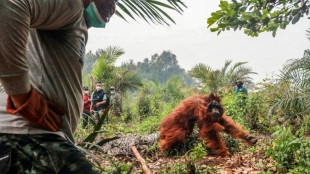 Dozens of orangutans saved from Indonesia blazes as region grapples with haze
 Pope addresses crowd in Vatican after cancer surgery

Iran on Sunday vowed to "irreversibly" destroy key infrastructure across the Middle East if US President Donald Trump acted on his threat to knock out the Islamic republic's power plants unless the Strait of Hormuz was swiftly reopened.
Iran also vowed to fully close the strait if Trump followed through on the ultimatum, choking off what little traffic has continued to transit the vital shipping lane for oil and gas.
The tit-for-tat threats came as the war that has reverberated across the Middle East entered its fourth week, with alarm mounting over energy and water facilities, and over strikes around nuclear sites.
Trump, under pressure due to rising fuel prices, said the US would "obliterate" Iranian power plants if Tehran did not end its de facto blockade of the strait within 48 hours, or by 23:44 GMT on Monday, according to the time of his Truth Social post.
"If the United States' threats regarding Iran's power plants are carried out... the Strait of Hormuz will be completely closed, and it will not be reopened until our destroyed power plants are rebuilt," the military's operational command Khatam Al-Anbiya said in a statement carried by state TV.
The military said it would also strike Israel's "power plants, energy, and information and communications technology (ICT) infrastructure", along with power plants in regional countries hosting US bases and companies with US shareholders.
Iran's powerful parliament speaker Mohammad Bagher Ghalibaf said vital infrastructure across the region "will be considered legitimate targets and will be irreversibly destroyed" if its own plants are attacked.
Iran's energy minister said US-Israeli strikes had already inflicted "heavy damage" on the country's water and energy infrastructure since the start of the war on February 28.
- Nuclear worries -
Iran's defiance came a day after its missiles evaded Israel's much-vaunted air defences and struck two southern towns, including Dimona, which houses a nuclear facility. The projectiles injured dozens of people.
"We thought we were safe," Galit Amir, a 50-year-old care provider, told AFP in Dimona. "We didn't expect this."
Prime Minister Benjamin Netanyahu vowed to pursue senior commanders of Iran's Revolutionary Guards "personally" as he inspected the damage in Arad, the other town struck by an Iranian missile.
Iran's attacks on Israel indicated that its arsenal still poses a threat across the region, even after Trump and Netanyahu claimed to have decimated Tehran's forces.
Dimona hosts what is widely believed to be the Middle East's only nuclear arsenal, although Israel has never admitted to possessing nuclear weapons, insisting the site is for research.
The missile fell about five kilometres (three miles) from the nuclear facility, according to rescuers.
Iran said the strike on Dimona was in response to an earlier attack on its nuclear site at Natanz.
Asked about Natanz, the Israeli military said it was "not aware of a strike".
"The war in the Middle East has reached a perilous stage" with the strikes on Natanz and Dimona, World Health Organization chief Tedros Adhanom Ghebreyesus said on X.
"I urgently call on all parties to exercise maximum military restraint and avoid any actions that could trigger nuclear incidents."
- Hormuz blockade -
Iran's chokehold on the Strait of Hormuz, which typically carries around a fifth of the world's crude oil and liquefied natural gas, has rattled markets and sent fuel prices soaring.
North Sea Brent crude is now trading above $105 a barrel, feeding fears about higher inflation and weaker global growth.
In recent days, Iran has allowed some vessels from countries it considers friendly to pass, while warning it would block ships from countries it says have joined the "aggression" against it.
Iran's parliament is mulling imposing tolls on shipping through the strait, with parliament speaker Ghalibaf saying maritime traffic would "not return to its pre-war status".
Patrick Pouyanne, the head of French oil giant TotalEnergies, said the economic outlook would worsen the longer the conflict dragged on.
"If it's more than six months, we will have some real impacts. All the economies of the world will be damaged," he told Chinese broadcaster CGTN.
- Attacks across the region -
The impact from the war continued to be felt across the region.
Early on Sunday, AFP journalists in Jerusalem heard blasts and air raid sirens as Iran launched a fresh barrage of missiles at Israel, while Israel said it was striking Tehran in response.
Hostilities also intensified in Lebanon, with Israel's military reporting "a wide wave of strikes" against Hezbollah infrastructure in southern Lebanon following orders to destroy bridges allegedly used by the Iran-backed militant group across the Litani River.
Lebanese President Joseph Aoun slammed the Israeli strikes on bridges and other infrastructure in the south, calling them a "prelude to a ground invasion".
Lebanon was pulled into the Middle East war when Hezbollah began firing rockets into Israel on March 2 to avenge the killing of Iran's supreme leader Ali Khamenei in US-Israeli attacks.
Lebanon's health ministry said four people were killed on Sunday in two strikes in the south, and authorities have reported 1,029 dead in three weeks of conflict, as well as more than one million displaced.
Israel said rocket fire from Lebanon killed one person, the first Israeli fatality due to Hezbollah fire since the war began.
- Pope's 'dismay' -
Iran also kept up retaliatory attacks on Gulf nations it accuses of serving as a launchpad for US strikes.
Saudi Arabia said Sunday it detected three ballistic missiles around the capital Riyadh. One was intercepted, and two fell in uninhabited areas, the defence ministry said.
The United Arab Emirates said it responded to new missile and drone attacks from Iran.
Pope Leo XIV said Sunday he was following the situation in the Middle East "with dismay".
burs-mfp/smw
J.Saleh--SF-PST