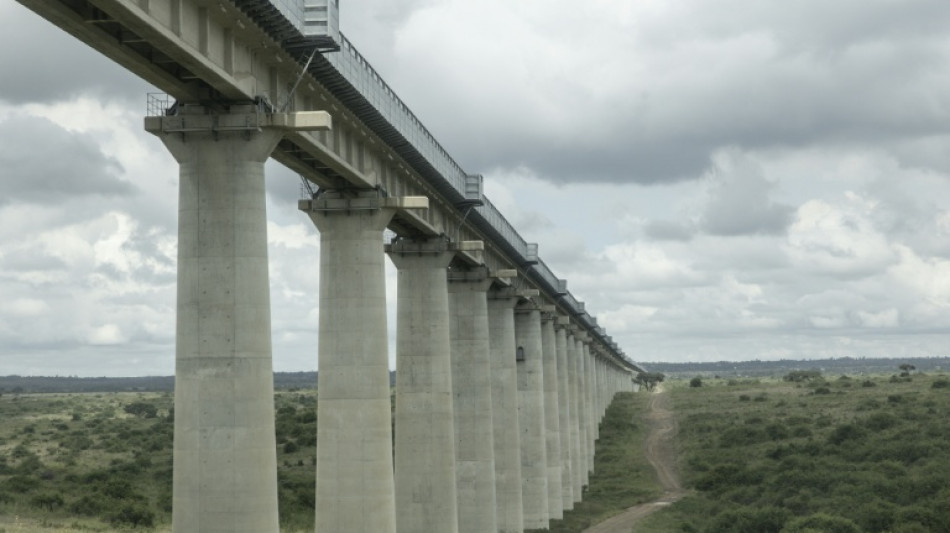
Kenya, Uganda double down on rail extension burdened by Chinese debt / Photo: SIMON MAINA - AFP/File

 Kremlin says Ukrainian attacks won't change war aims as Kyiv hits Saint Petersburg

 Martinez starts for Man Utd after outburst
 Alberta separatists rally ahead of independence vote

 Bandhan Financial weighs health-insurance entry after acquisitions settle
 France assesses protest damage after 1,800 arrests

 Gord launches four AI tools for sustainability and emissions management

 Doha 2036 bid sets out sport-led social legacy

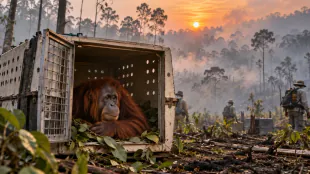 Conservation teams rescue orangutans from Indonesian wildfires

 Truck ploughs into Hindu festival crowd in India, killing 13

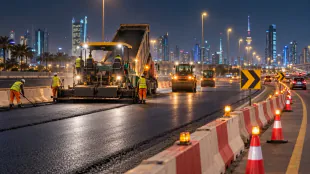 Kuwait announces maintenance closures in Nuzha, Surra and Rai

 Moody’s lifts OYO parent Prism outlook to positive before planned IPO

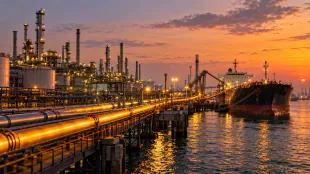 Diesel shortage raises petroleum share of India’s exports to three-year high

 Premium products and financing drive Navratri appliance demand
 PNB expects festive demand to add up to two points to quarterly credit growth

 Robertson and Selby chase rare Home Nations sweep in Belfast

 Arteta backs Kai Havertz to become a 30-goal Arsenal forward

 Emiliano Martinez expects Chelsea return within weeks after surgery

 Sri Lanka choose to field against Pakistan in tri-series opener

 AP review finds racist and antisemitic posts in forum tied to Nevada candidate
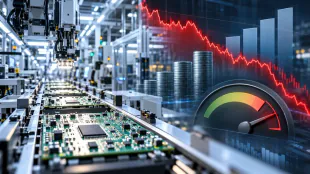 Cyient DLM drops 12% as margin concerns overshadow quarterly growth

 French authorities detain more than 1,000 after cost-of-living protests turn violent

 Tata Trusts plans network of 40 to 50 not-for-profit hospitals

 Bajaj Finance set to report second-quarter results on October 19

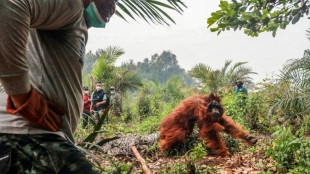 Dozens of orangutans saved from Indonesia blazes as region grapples with haze

 Pope addresses crowd in Vatican after cancer surgery

The presidents of Kenya and Uganda met near their shared border Saturday to mark the multi-billion-dollar, long-delayed extension of a Chinese-built railway that has left Kenya heavily in debt.
The Standard Gauge Railway, built from 2013 to 2019, connects the Kenyan port of Mombasa to its capital Nairobi, and on to the lake town of Naivasha, but China refused further lending before it could be extended to Uganda as planned.
Kenya now spends roughly $1 billion a year servicing Chinese debt, most of it borrowed to build the railway.
That is far more than the line generates in revenue -- around $165 million last year -- even if passenger and cargo numbers have been growing strongly over the past year.
A report by Kenya's auditor general last year found more than $260 million had been wasted just on penalties and interest from late debt payments.
Yet despite the controversy over the cost, Kenya has been keen to finish the line.
Kenyan President William Ruto said the rail link will "define generations", speaking at a ceremony in grand pomp and circumstance with his Ugandan counterpart Yoweri Museveni in Kisumu, near the Kenya-Uganda border.
Ruto argued the line would slash logistics costs that "undermine competitiveness" in east Africa.
If the ambitious building schedule is to be believed, the line is due to reach Kisumu by June 2027. The next phase will then take the line to Malaba, a town on the border.
"Cargo takes an average of 80 hours to move from Mombasa to Malaba and more than 100 hours to reach Kampala," the Ugandan capital, Ruto said.
"We cannot build prosperity on inefficiency."
- 'Irrational and wasteful' -
Museveni said the line would reduce the inefficiencies in his own country's infrastructure.
"The railway is part of the rationalisation of our transport system, especially on the Uganda side, which is irrational and wasteful," the veteran leader told the ceremony.
Later, he posted on X that "by shifting bulk cargo from roads to rail and pipelines, we reduce transport costs, protect infrastructure and improve efficiency".
Ruto broke ground on the next phase in Narok County on Thursday, arguing that it will create jobs and reduce road congestion.
"We have thought through this project (and)... its finance," he insisted.
Treasury estimates say the overall cost will be more than 500 billion shillings ($3.9 billion), according to Kenya's Business Daily.
Kenya is not taking more cash from Chinese banks this time -- instead borrowing against future cargo taxes -- though it is partnering with Chinese transport firms to build the new phase.
China lent Kenya $9.7 billion between 2000 and 2019, according to the Chinese Loans to Africa Database by Boston University, with around half of that going to the railway.
It stopped lending from 2020 to 2023 as Kenya struggled to make repayments, at a time when China revised its broader lending strategy in Africa.
Kenya considers the railway extension crucial for strengthening trade through east and central Africa, hoping to reach landlocked countries such as Uganda, Rwanda, South Sudan and the mineral-rich Democratic Republic of Congo.
Q.Najjar--SF-PST