The Iran war and the cost of killing 'bad guys' / Photo: Mandel NGAN - AFP

 Boland strikes twice for Australia in rain-hit South Africa Test

 Marseille put Angers to the sword in Ligue 1

 Albanian PM refuses to quit as violent protests enter sixth day

 Chwalinska fights back to win Wuhan Open in title breakthrough
 Kulusevski on brink of return for Spurs after 17-month absence

 Ukraine sets Saint Petersburg refinery ablaze in large-scale drone attack

 Spain's in-form Chacarra wins DP World India Championship

 Two pilots die in Saudi coalition helicopter crash near Yemen border

 Riyadh skyscraper shifts tenants online as Houthi attacks intensify

 Messi scores twice as Inter Miami defeat Atlanta United 3-1

 Qatar and Norway review bilateral ties at Oslo consultations

 Vietnam and EFTA states sign free-trade agreement in Hanoi

 Gold closes week near $4,165 as US inflation outlook pressures market

 PSG rally past Strasbourg to take Ligue 1 lead

 India’s services surplus narrows as import growth overtakes exports
 RCom professional asks Supreme Court to revisit spectrum insolvency ruling

 Debt recovery lessons after derivatives losses and repeated borrowing

 Katie Alexander reportedly leaves flat shared with Eamonn Holmes

 Body found in search for missing Glasgow teenager

 Andi King recounts late-life transition after decades behind an “alpha male” identity

 Bromsgrove Repair Cafe reports nearly 80% repair success rate

 B.C. Lions focus on playoff momentum after Calgary defeat

 PNB expects festive demand to add up to two points to quarterly credit growth

 Cyient DLM drops 12% as margin concerns overshadow quarterly growth

 Bajaj Finance set to report second-quarter results on October 19

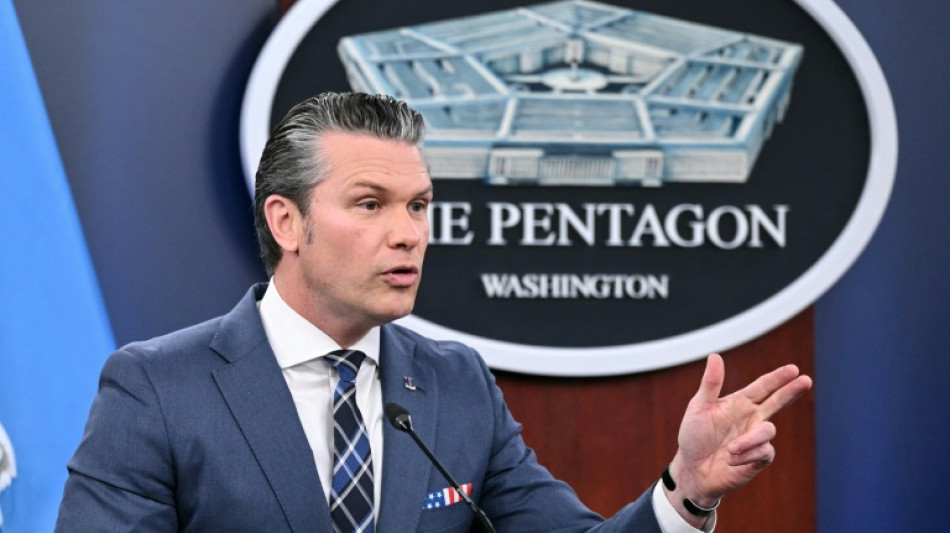
US Defense Secretary Pete Hegseth said Thursday that it "takes money to kill bad guys" when asked if the Pentagon had requested $200 billion in funding for the Iran war.
Exactly how much the war has cost so far has yet to be publicly disclosed, and the final bill will depend on how long the US-Israeli campaign against Iran launched on February 28 lasts.
But it could be substantial: The Pentagon's comptroller reportedly told lawmakers that the first six days of the war had cost $11.3 billion.
That number sounds credible "based on the scope and scale of what the administration did during that period," said Daniel Schneiderman, director of global policy programs at Penn Washington.
"The amount of precision munitions and interceptors used, the number of air sorties, fuel expended, and cost of operation of two carrier strike groups all factored in, would lead to a very large bill," he said.
In an operation such as the one against Iran, the most crucial items are among the most expensive.
"Standoff weapons like cruise missiles, THAAD interceptors and batteries, bombs and missiles fired from aircraft, the fuel and maintenance that supports those aircraft and the carriers they fly off of, and not to mention the skilled labor that operates them," Schneiderman said.
- 'Volatile world' -
"It's very expensive to run a war," he said, noting that on a day-to-day basis, the Iran conflict "has to be up there with the costliest interventions the US has undertaken from a financial perspective."
Hegseth on Thursday indirectly confirmed the approximate value of the Pentagon's request for additional funding, saying: "As far as $200 billion, I think that number could move."
"We're going back to Congress and our folks there to ensure that we're properly funded for what's been done, for what we may have to do in the future, ensure that our ammunition is, everything's refilled," Hegseth said.
Trump also seemed to confirm the figure, saying when questioned about it that "we're asking for a lot of reasons, beyond even what we're talking about in Iran. This is a very volatile world."
"We want to have vast amounts of ammunition, which we have right now," Trump said during an event in the Oval Office. "It's a small price to pay to make sure that we stay tippy top."
In addition to the direct cost of the military equipment used during the war, the conflict has caused significant economic fallout in the form of soaring oil prices after Iran effectively closed the vital Strait of Hormuz waterway.
S.Abdullah--SF-PST