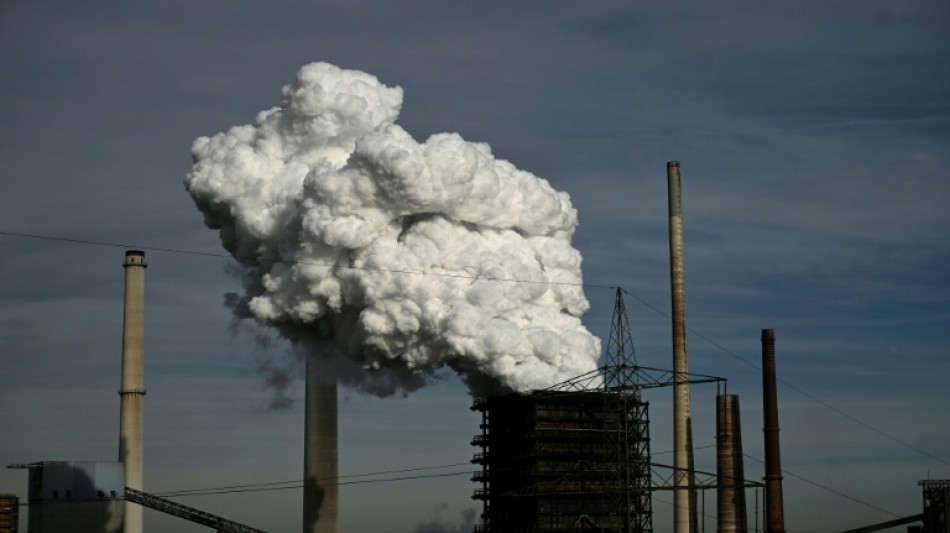
Mideast war plunges Germany's energy-hungry industry into crisis / Photo: Ina FASSBENDER - AFP

 Mbappe hits two as Real Madrid rout Sevilla

 Browns edge Ravens for division lead, Texans beat Jags

 Lyon go top of Ligue 1 as Monaco fall to first defeat of the season

 Venezuela opposition alliance reaffirms Nobel laureate Machado as leader
 'Street Fighter' wins N. America box office, buzzy doc stuns in 2nd

 NFL: Paris game to go ahead despite protests in France

 Arteta hails Arsenal 'finishers' after Madueke fells Forest

 Trump backs ally Netanyahu ahead of Israel's tight election

 Madueke strikes late as below-par Arsenal sink Forest
 Second day of street clashes in Milan

 Dupont's Toulouse hold off Exeter as English Champions Cup woes continue

 Zelensky speaks to US envoys amid Trump spat

 Paris police in new battles with protesters and looters

 Multiple deaths, injuries at western Canada military base: minister

 Boland strikes twice for Australia in rain-hit South Africa Test

 Marseille put Angers to the sword in Ligue 1

 Albanian PM refuses to quit as violent protests enter sixth day

 Chwalinska fights back to win Wuhan Open in title breakthrough
 Kulusevski on brink of return for Spurs after 17-month absence

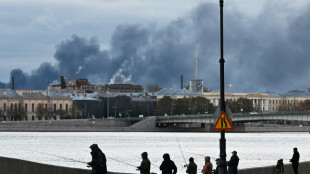 Ukraine sets Saint Petersburg refinery ablaze in large-scale drone attack

 Spain's in-form Chacarra wins DP World India Championship

 Robertson and Selby chase rare Home Nations sweep in Belfast

 Arteta backs Kai Havertz to become a 30-goal Arsenal forward

 Emiliano Martinez expects Chelsea return within weeks after surgery

 Sri Lanka choose to field against Pakistan in tri-series opener

Germany's energy-hungry industries are sounding the alarm about the devastating impacts of the Middle East war as companies battle problems from surging power costs to snarled supply chains.
From chemicals to steel and cement, Europe's biggest economy is a major producer of industrial goods that require huge quantities of power to make, and Germany imports much of its energy.
The price jumps triggered by the conflict and closure of key energy route the Strait of Hormuz, which has pushed oil above $100, is a hammer blow to traditional manufacturers who were already struggling.
Adding to the problems is chaos in global supply chains, which industry groups warn is leading to bottlenecks for vital basic inputs for manufacturing.
"Our companies are currently operating in absolute crisis mode," said Wolfgang Grosse Entrup, chief executive of the VCI association representing chemical firms, one of Germany's main industrial sectors.
"The signals we are receiving, particularly from small and medium-sized enterprises, are in some cases dramatic," he said, adding that the "longer the war lasts, the more severe the consequences will be".
With the war, that began with US-Israeli strikes on Iran, approaching the end of its second week, the signs of strain are clear among German firms.
SKW Piesteritz, a maker of agricultural chemicals in the eastern state of Saxony-Anhalt, has had to reduce production of nitrogen-based fertiliser due to price rises for gas, a key input.
This is despite stronger demand due to fertiliser shortages globally caused by the closure of the Strait of Hormuz.
"These price jumps are threatening for SKW Piesteritz if the prices for the main raw material cannot be passed on to customers", managing director Carsten Franzke told AFP.
"We are currently seeing what happens when we fail to protect our own basic chemicals industry in Germany."
- New blow for industry -
While some larger businesses stress it is too early to assess the fallout, they were clear that a drawn-out conflict and persistently higher energy costs would be very bad news.
Industrial giant Thyssenkrupp's steel-making business, already in dire straits due to fierce Asian competition, said in a statement to AFP that a "permanently higher gas price would have an impact on production costs".
Heidelberg Materials, one of the world's top cement makers, gave a similar warning.
"A sustained rise in electricity prices would have significant consequences for the costs of cement production, particularly in Europe," a company spokesman told AFP, while noting the impact for this year would likely be limited due to long-term power contracts.
For Seifert Logistics, which transports goods by truck, the impact has been more immediate, with its diesel costs soaring 50 percent since the outbreak of the war.
CEO Axel Frey told AFP that rising prices are usually passed on to customers but this can often take several months.
"In recent days, we have been on the phone with customers around the clock to adjust prices more quickly," he told AFP, adding however that the firm had faced such situations before and predicted it would weather the storm.
- Green power 'resilience' -
Some major German corporations hope they won't be as heavily impacted as they have in recent years shifted away from fossil fuels and towards renewables such as solar and wind.
Industrial conglomerate Siemens said it had slashed its consumption of fossil fuels by around 40 percent since 2022, noting its "decarbonisation strategy" had made it "more resilient".
The economy ministry also stressed the government had already announced measures in recent times to protect industry from high power costs, including electricity subsidies for certain sectors and reductions in taxes.
But overall the fallout from the war is another blow for Europe's traditional industrial powerhouse as it is struggling to rebound after a long period in the doldrums.
The Ifo Institute said this week a drawn-out conflict would put a brake on the recovery, reducing growth this year down from one percent to a meagre 0.6 percent.
Christian Kullmann, CEO of chemical company Evonik, warned the war would accelerate the decline of Germany's energy-intensive industries.
"The rise in gas and oil prices will eat through the entire value chain," he told news outlet Der Spiegel.
"The tender buds of a German economic recovery may not be crushed by the war in the Middle East, but they will certainly be significantly damaged."
C.AbuSway--SF-PST