New Iranian leader vows revenge, keeps oil shipping route shut / Photo: Fadhel MADHAN - AFP

 Mbappe hits two as Real Madrid rout Sevilla
 Browns edge Ravens for division lead, Texans beat Jags

 Lyon go top of Ligue 1 as Monaco fall to first defeat of the season
 Venezuela opposition alliance reaffirms Nobel laureate Machado as leader
 'Street Fighter' wins N. America box office, buzzy doc stuns in 2nd

 NFL: Paris game to go ahead despite protests in France

 Arteta hails Arsenal 'finishers' after Madueke fells Forest

 Trump backs ally Netanyahu ahead of Israel's tight election

 Madueke strikes late as below-par Arsenal sink Forest
 Second day of street clashes in Milan

 Dupont's Toulouse hold off Exeter as English Champions Cup woes continue

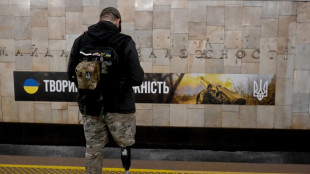 Zelensky speaks to US envoys amid Trump spat

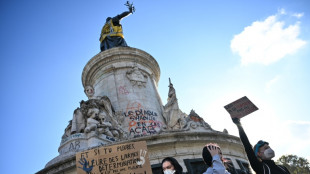 Paris police in new battles with protesters and looters
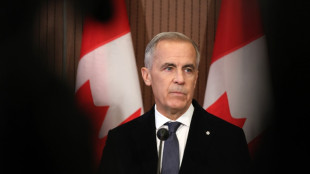
 Multiple deaths, injuries at western Canada military base: minister

 Boland strikes twice for Australia in rain-hit South Africa Test

 Marseille put Angers to the sword in Ligue 1
 Albanian PM refuses to quit as violent protests enter sixth day

 Chwalinska fights back to win Wuhan Open in title breakthrough
 Kulusevski on brink of return for Spurs after 17-month absence

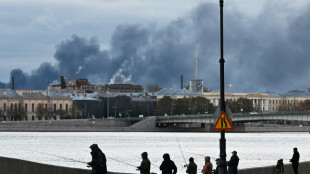 Ukraine sets Saint Petersburg refinery ablaze in large-scale drone attack
 Spain's in-form Chacarra wins DP World India Championship

 Robertson and Selby chase rare Home Nations sweep in Belfast

 Arteta backs Kai Havertz to become a 30-goal Arsenal forward

 Emiliano Martinez expects Chelsea return within weeks after surgery

 Sri Lanka choose to field against Pakistan in tri-series opener

Iran's new supreme leader ordered his forces to keep the vital Strait of Hormuz shipping lane shut on Thursday, as Tehran launched more devastating attacks on Gulf energy targets that sent global oil prices soaring.
The International Energy Agency warned the Middle East war could lead to to "the largest supply disruption" in history but US President Donald Trump said stopping the Islamic republic's "evil empire" was more important than crude prices.
Ayatollah Mojtaba Khamenei, who was reportedly injured in an air strike, has yet to appear publicly since his nomination last Sunday as supreme leader, and his defiant first message was read by a newscaster on state television.
Khamenei, whose father and predecessor Ali Khamenei was killed in the first wave of US-Israeli attacks at the start of the war, called for Gulf countries to close their US military bases and vowed to avenge "the blood of our children and grandchildren".
"The lever of blocking the Strait of Hormuz must definitely be used," Khamenei said of the waterway through which a quarter of the world's seaborne oil trade usually transits.
The Revolutionary Guards reacted swiftly, with the force's navy commander Alireza Tangsiri saying: "In response to the order of the commander-in-chief, we will deliver the harshest blows to the aggressor enemy while maintaining the strategy of closing the Strait of Hormuz."
Under attack from Iran, shipping in and around Hormuz has been at a near-standstill for days, with another three vessels targeted in the Gulf off the coast of the United Arab Emirates and Iraq.
Trump has faced intense political pressure as the global economic fallout of the crisis has mounted, and he has given repeated mixed messages on when the US air campaign might end.
As oil prices spiked above $100 a barrel, Trump wrote on social media that "of far greater interest and importance to me, as President, is stoping an evil Empire, Iran, from having Nuclear Weapons, and destroying the Middle East and, indeed, the World."
- Vessels attacked -
Gulf states have borne the brunt of retaliatory attacks from Iran.
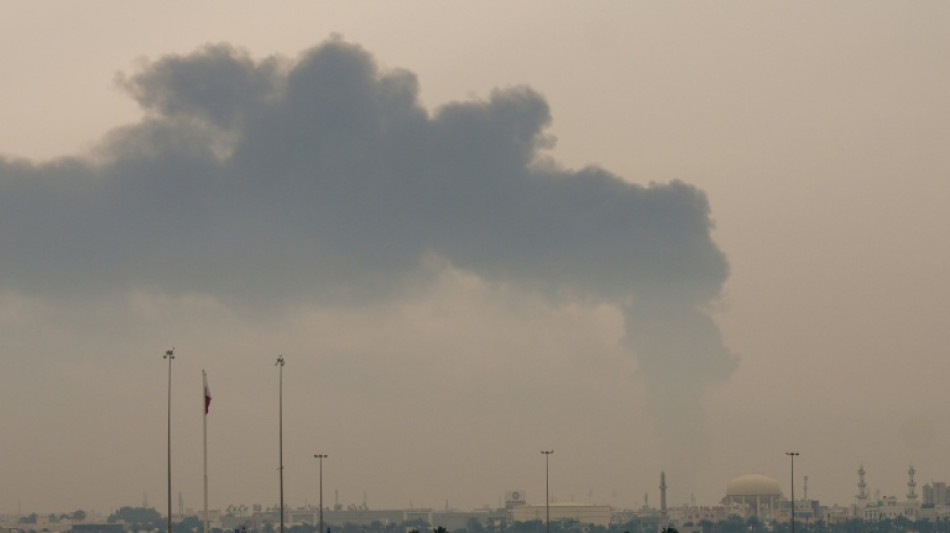
Images from Bahrain on Thursday showed thick smoke rising after a strike on fuel tanks in Muharraq, with residents told to stay inside and close their windows.
Drones caused damage again at Kuwait's international airport and in downtown Dubai, while Saudi Arabia said it had intercepted drones headed towards its Shaybah oil field and its embassy district.
The Paris-based IEA, a world authority on energy markets, warned Thursday the 13-day conflict "is creating the largest supply disruption in the history of the global oil market", which would surpass those of the 1970s.
With Gulf states slashing production and oil tankers stuck in the Gulf, benchmark oil prices have risen 40-50 percent since the US and Israel attacked Iran on February 28, threatening to crimp growth and stoke inflation.
- 'War of attrition' -
The Strait of Hormuz, which also normally sees the transit of a fifth of the world's liquefied natural gas (LNG) passes, lies off Iran and is just 54 kilometres (34 miles) wide at its narrowest point.
Tehran has vowed that not one litre of oil will be exported from the Gulf while US-Israeli attacks continue, although industry figures suggest its own sanction-hit exports are continuing to get through.
Iran's deputy foreign minister told AFP that ships from "some countries" were being allowed to cross the strait, without giving details, and denied reports that Iran was laying mines in the waterway.
"We want to see that war is not going to be imposed again on Iran," Majid Takht-Ravanchi said in an interview in Tehran.
"If the White House imagines the conflict will stop when Donald Trump decides it... they're making a mistake and ignoring the lessons of history," Pierre Razoux, director of studies at the Mediterranean Foundation for Strategic Studies, told AFP.
"The Iranian regime, which no longer has anything to lose, will wage a war of attrition against the United States and Israel to punish them for their aggression."
Iranian security forces have also warned government opponents against taking to the streets in protest, saying they would be considered as "enemies".
One Tehran resident hoping for the fall of the Islamic republic told AFP she was worried about the US and Israel calling off their air campaign despite her fears about the daily bombardment.
"I don't know what will happen to us mentally and emotionally if it doesn't work out this time," she told AFP on condition of anonymity.
- 'Expanding' attacks on Lebanon -
The conflict has spread across the region, with Lebanese authorities reporting 687 people killed by Israeli strikes, including at least eight more who died on Beirut's blood-stained seafront where displaced families were camping in tents.
After the Iran-backed Hezbollah group announced a new operation against Israel on Wednesday, Israeli Defence Minister Israel Katz said he was ordering troops to "prepare for expanding" attacks on Lebanon.
In Iran, over three million people have been displaced by the war, according to new figures issued Thursday by the UN's refugee agency.
Iran's health ministry said on March 8 that more than 1,200 people have been killed in the war, a figure AFP has not been able to independently verify.
In Israel, authorities said 14 people have been killed, while attacks in the Gulf have killed 24 people, including 11 civilians and seven US military personnel, according to local authorities and the US Central Command.
burs-dt/ser
X.Habash--SF-PST