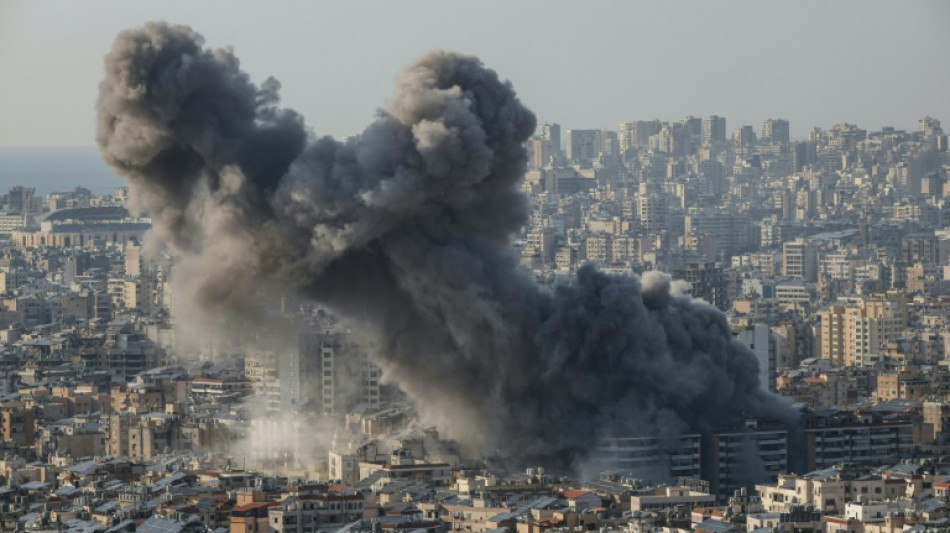
New wave of Iran attacks as oil reserve release weighed / Photo: Ibrahim AMRO - AFP

 Kings' Ben Simmons tears Achilles in training
 Lula, Bolsonaro set for first debate showdown in bitter election race

 Mbappe hits two as Real Madrid rout Sevilla
 Browns edge Ravens for division lead, Texans beat Jags

 Lyon go top of Ligue 1 as Monaco fall to first defeat of the season
 Venezuela opposition alliance reaffirms Nobel laureate Machado as leader
 'Street Fighter' wins N. America box office, buzzy doc stuns in 2nd

 NFL: Paris game to go ahead despite protests in France

 Arteta hails Arsenal 'finishers' after Madueke fells Forest

 Trump backs ally Netanyahu ahead of Israel's tight election

 Madueke strikes late as below-par Arsenal sink Forest
 Second day of street clashes in Milan
 Dupont's Toulouse hold off Exeter as English Champions Cup woes continue

 Zelensky speaks to US envoys amid Trump spat

 Paris police in new battles with protesters and looters

 Multiple deaths, injuries at western Canada military base: minister

 Boland strikes twice for Australia in rain-hit South Africa Test

 Marseille put Angers to the sword in Ligue 1

 Albanian PM refuses to quit as violent protests enter sixth day
 Chwalinska fights back to win Wuhan Open in title breakthrough
 Kulusevski on brink of return for Spurs after 17-month absence

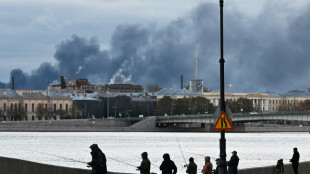 Ukraine sets Saint Petersburg refinery ablaze in large-scale drone attack
 Spain's in-form Chacarra wins DP World India Championship

 Robertson and Selby chase rare Home Nations sweep in Belfast

 Arteta backs Kai Havertz to become a 30-goal Arsenal forward

Iran unleashed a wave of attacks against Israel and Gulf nations on Wednesday, including targeting a Saudi oilfield, as reports of a proposed record release of oil reserves helped calm markets and prices.
The war sparked by US-Israeli strikes on Iran has spread across the region and beyond, causing spiking energy costs, fuel rationing, and even school closures.
G7 leaders will meet by video conference later Wednesday to discuss the war's economic consequences, particularly the "energy situation," the French presidency said, and the International Energy Agency will decide on a proposal for its largest-ever oil reserve release, the Wall Street Journal reported.
The United States on Tuesday said it was hitting Iranian ships capable of mining the Strait of Hormuz, the crucial passageway for oil that has been effectively closed by Iranian threats.
The US military posted video footage of Iranian boats blasted apart, saying it had destroyed 16 minelayers near the strait through which one-fifth of the world's oil passes.
"If for any reason mines were placed, and they are not removed forthwith, the Military consequences to Iran will be at a level never seen before," President Donald Trump wrote on social media.
Trump faces mounting political risks over the surging cost of oil, months before US elections. Crude prices spiked five percent late Tuesday, before turning lower Wednesday after the reserve release report.
Trump has said the US military could accompany tankers through the strait, but his administration acknowledged that a post by the energy secretary announcing a first such escort was untrue.
Early Wednesday, the UK maritime agency said a container ship off the coast of the United Arab Emirates had been hit by an "unknown projectile," illustrating the ongoing risks to transport through the region.
With an eye on jittery markets, Trump on Monday said the war would be short, although his defence secretary, Pete Hegseth, then said Tehran would be hit by unprecedented fire on Tuesday.
- 'Not seeking ceasefire' -
The Israeli-US attacks came weeks after Iranian authorities ruthlessly crushed mass protests, although the United States and Israel say they are not necessarily seeking to topple the Islamic republic.
Iranian authorities warned against dissent at home, with the country's police chief saying protesters will be be viewed and dealt with as "enemies".
"All our forces are also ready, with their hands on the trigger, prepared to defend their revolution," said national police chief Ahmad-Reza Radan in comments aired by IRIB.
Tehran also intensified its assault on targets in the region, with the government announcing it carried out its own "most intense and heaviest" salvo, firing missiles for three hours at cities across Israel.
AFP journalists heard air raid sirens and explosions in Jerusalem. Emergency services reported no immediate injuries, although Channel 12 said several people were hurt in Tel Aviv. New salvos were reported early on Wednesday, with no reports of injuries.
Iran's Revolutionary Guards said they also fired on Bahrain and Iraqi Kurdistan, both of which have a heavy US presence, and also targeted a US air base in Kuwait, Iranian media said.
Kuwait said it had downed eight drones, without offering further details.
Drones and ballistic missiles were also intercepted elsewhere in the Gulf, including multiple drones heading to the Shaybah oil field in Saudi Arabia, its defence ministry said.
Earlier, Iranian parliament speaker Mohammad Bagher Ghalibaf, a former top commander in the elite Revolutionary Guards, said in an English-language post on X: "Certainly we aren't seeking a ceasefire."
"We believe the aggressor must be punished and taught a lesson that will deter them from attacking Iran again," he added.
Seven US military personnel have been killed and about 140 injured since the start of the war, according to the Pentagon.
- Fright in Tehran -
The United States and Israel launched the war on February 28 with an attack that killed Iran's veteran leader, Ayatollah Ali Khamenei. His son Mojtaba Khamenei has been named his successor, though he has yet to appear in public.
In Tehran, one woman in her 40s said she found some reassurance in her impression that the bombings "don't target ordinary buildings".
But she said, "The noise of the bombings is extremely disturbing."
Iran's health ministry said on March 8 that more than 1,200 people had been killed, and over 10,000 civilians injured.
The conflict has spread as far as Sri Lanka, where US forces torpedoed an Iranian ship, and Australia, which said Wednesday it granted asylum to two more members of the Iranian women football team.
Iraq and Lebanon, both home to Iran-backed fighters, have become proxy grounds in the war.
In Iraq, Iranian-linked groups said Tuesday that five of their fighters died in strikes they blamed on the United States.
In Lebanon, hundreds of people have been killed and hundreds of thousands have fled their homes following Israeli airstrikes and ground operations targeting Iran-backed Hezbollah.
New Israeli strikes were reported in Beirut's southern suburbs on Wednesday, with the health ministry saying another five people had been killed in the southern town of Qana.
An Israeli strike also hit a central Beirut neighbourhood on Wednesday morning, state media reported.
Iran complained to the United Nations that four of its diplomats died in a strike on a seafront hotel in central Beirut on Sunday, which Israel said was aimed at "key commanders" from Iran's Revolutionary Guards.
The effects of the war are being felt globally, with the UN trade and development agency warning of rising costs for essentials like fuel and food hitting the world's most vulnerable people.
In Egypt, which increased the cost of fuels by up to 30 percent, mother-of-six Om Mohamed fretted about the future.
"We were barely getting by as it is. I don't know how people will manage," she told AFP at a Cairo market.
burs-sah/hmn
N.Shalabi--SF-PST