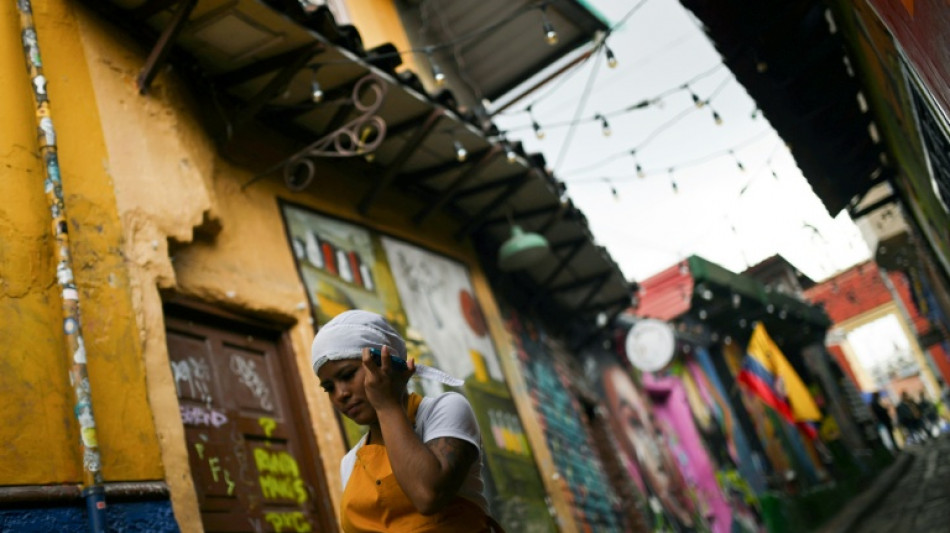
Colombian right wing eyes comeback as country votes / Photo: Pablo VERA - AFP

 Rubio seeks to strengthen US foothold in Central Asia

 LeBron joins 76ers to chase one more NBA title at age 41

 Rays one win from World Series return after downing Guardians

 Kings' Ben Simmons tears Achilles in training

 Lula, Bolsonaro set for first debate showdown in bitter election race

 Mbappe hits two as Real Madrid rout Sevilla
 Browns edge Ravens for division lead, Texans beat Jags

 Lyon go top of Ligue 1 as Monaco fall to first defeat of the season

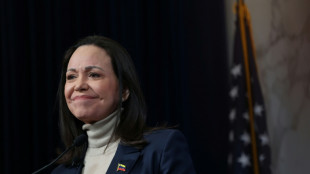 Venezuela opposition alliance reaffirms Nobel laureate Machado as leader
 'Street Fighter' wins N. America box office, buzzy doc stuns in 2nd

 NFL: Paris game to go ahead despite protests in France

 Arteta hails Arsenal 'finishers' after Madueke fells Forest

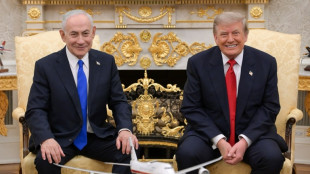 Trump backs ally Netanyahu ahead of Israel's tight election

 Madueke strikes late as below-par Arsenal sink Forest
 Second day of street clashes in Milan

 Dupont's Toulouse hold off Exeter as English Champions Cup woes continue

 Zelensky speaks to US envoys amid Trump spat

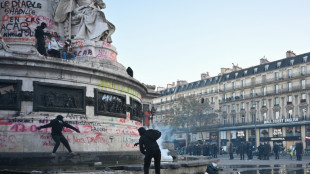
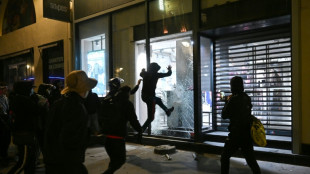
 Paris police in new battles with protesters and looters
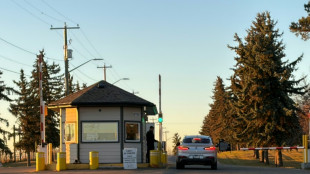 Multiple deaths, injuries at western Canada military base: minister

 Boland strikes twice for Australia in rain-hit South Africa Test

 Marseille put Angers to the sword in Ligue 1
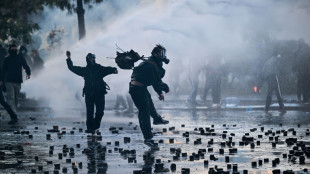 Albanian PM refuses to quit as violent protests enter sixth day

 Chwalinska fights back to win Wuhan Open in title breakthrough
 Kulusevski on brink of return for Spurs after 17-month absence

 Ukraine sets Saint Petersburg refinery ablaze in large-scale drone attack
Colombians started voting Sunday in legislative elections that will shape the final months of left-wing President Gustavo Petro's term and test whether the once-powerful right wing is poised for a political comeback.
About 40 million voters will elect nearly 300 lawmakers -- deciding the makeup of Congress and providing a key temperature check weeks before a May presidential election.
The new Congress will determine whether Petro can push ahead with last-minute efforts to rewrite the constitution, a move critics say would weaken checks on presidential power.
Colombia's decades of brutal internecine fighting and the presence of still-powerful cocaine mafias have cast a long shadow over the campaign.
More than 60 political leaders have been killed, including a presidential candidate who was assassinated in broad daylight in the capital, Bogota.
Rebels also detonated a pipe bomb in a major city, and a third of the country is considered unsafe for campaigning.
The current Congress approved some of Petro's ambitious reforms but as its term neared an end it rejected others like reforming the health care system or changing the tax code to bring in more revenue.
Petro hit back with frequent big rallies in which he denounced the legislature, which has lost respect among many Colombians in recent years because of corruption scandals.
Colombia is also trying to emerge from 50 years of fighting spawned by a complex blend of leftist rebels, paramilitaries and drug lords. Much of the violence has been fueled by the cocaine trade.
"For anything to change in this country there would need to be a miracle," said Marta Sandoval, a 39-year-old chef.
Polling stations opened at 8:00 am (1300 GMT) and will stay open for eight hours.
Against this febrile backdrop lies a battle for the political soul of the country.
Petro, a former guerrilla, became Colombia's first-ever leftist leader in 2022.
He was catapulted to the presidency by a broad progressive coalition that has since been riven by infighting and has struggled to govern.
Prone to social media outbursts, grandiloquent speeches and public spats, Petro has burned through more than 60 ministers in four years.
He is constitutionally barred from running again, but his allies hope to bolster their numbers in the legislature and continue reforms after he leaves power in August.
Petro has proposed creating a constituent assembly that would rewrite the constitution.
He hopes that the new basic law would remake the judiciary, which his allies see as tilted to the right, and give the president more power to rule by decree.
- Familiar face -
But the left must contend with the right's hope for a political revival after years in the doldrums -- a trend seen in other Latin American countries.
Powerful former president Alvaro Uribe is running for a Senate seat, hoping to rally voters who backed his hardline security policies during his 2002–2010 presidency.
Despite a 2016 peace accord, dissident armed groups are expanding and rearming under Petro's stalled "total peace" negotiations.
Defense Minister Pedro Sanchez has announced a deployment of security forces to ensure "safe" elections.
This will be the first election since 2016 in which former guerrilla fighters are not guaranteed seats.
"Scraping for votes has not been easy," Sandra Ramirez, a senator and former Revolutionary Armed Forces of Colombia (FARC) guerrilla, told AFP.
Campaigns have leaned on TikTok personalities, singers and AI-generated content to cut through a crowded field.
Two activists have even put forward an AI candidate known as "Gaitana" for one of the seats reserved for Indigenous communities.
Represented by a blue‑skinned woman wearing feather ornaments, Gaitana describes herself as an environmentalist and animal rights defender.
M.AbuKhalil--SF-PST