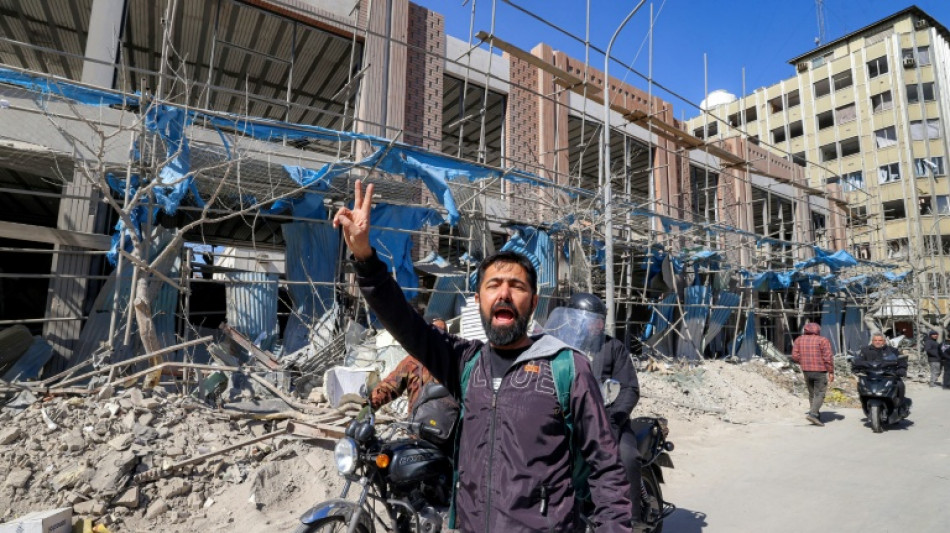
Iran claims 'complete control' of key waterway for energy transit / Photo: ATTA KENARE - AFP

 Australia's new Ghost Shark submarines grow some 'teeth'
 'I call it a bribe': Pennsylvania residents spurn $10,000 data center checks
 In a former US steel city, ordinary people struggle to get by
 'Liar,' 'clown': Lula and Bolsonaro spar in Brazil poll debate
 Record El Nino? Depends who's counting
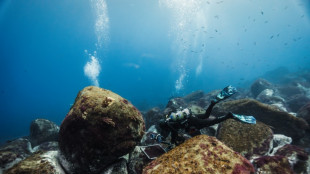 On the front line of ocean conservation off Portugal's Madeira

 Wembanyama targets title breakthrough as NBA season tips off
 With LeBron on board it's title or bust for Philly fans
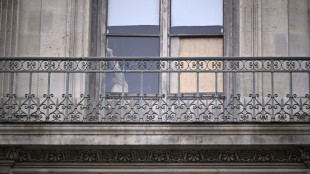 One year after Louvre heist, where are the missing jewels?

 Knicks face tall task in NBA championship repeat bid
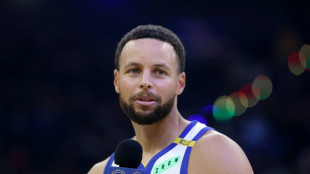 Warriors' Curry 'fine' after limping out of practice - Kerr

 Zelensky speaks to US envoys as Trump lashes out
 'Surprise package' Lazio crush Juve to keep pace with Serie A leaders Inter
 China growth expected to miss official target in third quarter

 Lazio crush Juventus to move level with Serie A leaders Inter

 Leeds draw feels like 'fresh start' for Man Utd's Carrick
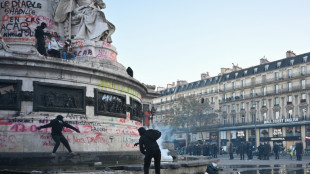 Macron denounces 'unbridled' violence as France hit by new clashes

 Hurzeler lauds 'hard worker' Gomez after Brighton goal from halfway line
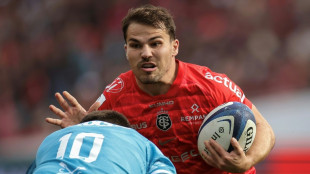 Toulouse hold off Exeter, Northampton save English Champions Cup blushes
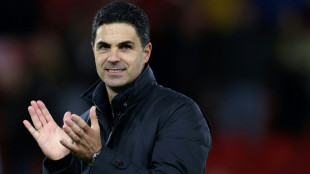
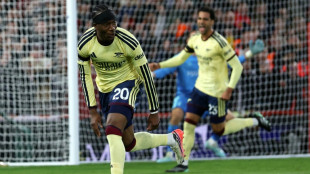 Arsenal snatch late win to keep pressure on Man City as Man Utd held
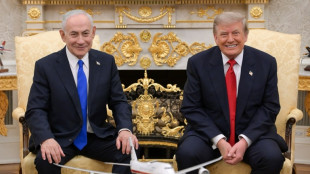
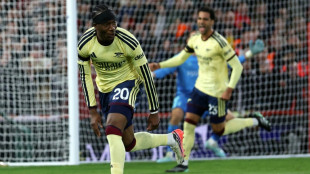 Arsenal strike late to keep pressure on Man City as Man Utd held

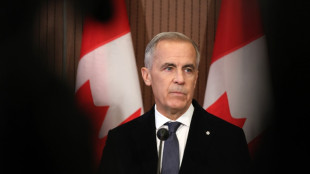 Four soldiers dead, dozens injured in fire at Canada military base
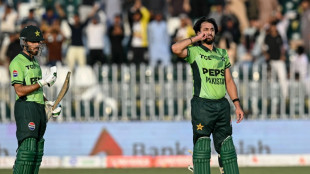 Ton-up Agha helps Pakistan down Sri Lanka in tri-series opener
 Man Utd draw at Leeds keeps pressure on Carrick
 Barca defenders Garcia, Kounde injured before key games
Iran's Revolutionary Guards said Wednesday they had total control of the Strait of Hormuz, a key waterway for global energy transit, as Israel launched a new wave of strikes on the Iranian capital.
Governments scrambled to evacuate citizens stranded by the war in the Middle East, with Iran expanding a missile and drone barrage on countries around the region on the fifth day of a war that sent global shares sinking.
With energy prices already spiking, President Donald Trump had said the US Navy was ready to escort oil tankers through the crucial Gulf shipping route.
Earlier in the war, the Revolutionary Guards warned ships against entering the strait, and major shipping firms have already suspended transit through the waterway with maritime agencies reporting several ships attacked.
In Lebanon, which Hezbollah dragged into the war, Israel expanded its air strikes, targeting the area around the presidential palace and the militant group's south Beirut bastion, killing 11 people according to Lebanese authorities.
An AFP journalist reported a fresh explosion in the northeast of the Iranian capital, as Iranian state media prepared to hold a state funeral for supreme leader Ayatollah Ali Khamenei, killed on the first day of US-Israeli strikes.
Israel's Defence Minister Israel Katz vowed that any successor to Khamenei would be killed, "no matter his name or where he hides", as the military said it has begun "broad scale strikes" in Tehran on Wednesday.
Trump said the US had "knocked out" Iran's navy, along with its air force and radar systems, while the US military said it has hit nearly 2,000 targets since first launching strikes on Saturday.
He walked back a statement from Secretary of State Marco Rubio the day before, who said the timing of the US attack was determined by Israel's plans to strike.
"If anything, I might have forced Israel's hand," Trump said as he met German Chancellor Friedrich Merz at the White House.
Trump and Israeli Prime Minister Benjamin Netanyahu have urged Iranians to rise up but the US leader also said regime change was not the goal.
The assault came weeks after Iranian authorities clamped down on mass protests, killing thousands.
- Cruise missiles -
Saudi Arabia said it intercepted two cruise missiles, while drones struck near the US consulate in Dubai, starting a fire, and against the US military base at Al-Udeid in Qatar.
Kuwait has also been hit, with the health ministry announcing the death of an 11-year-old girl killed after she was hit by falling shrapnel.
The Pentagon identified four of six US troops killed in the war so far, saying they were hit by a drone attack in Kuwait.
The United States encouraged all Americans to leave the region if they could find commercial flights, though air travel has been severely disrupted, while governments including Britain and France sent chartered flights to get their citizens out.
The war was taking a growing toll on Lebanon, from where Iran-backed militant group Hezbollah launched drones and rockets at Israel in retaliation for Khamenei's killing.
An air strike hit a hotel in Hazmieh near Beirut on Wednesday, the first reported Israeli attack on the predominantly Christian area in Beirut's suburbs, near the presidential palace and several embassies.
The southern suburbs of Beirut, a Hezbollah stronghold, were targeted again on Wednesday morning, following an evacuation order from Israel's military.
- Bigger than 'shock and awe' -
The US military targeted ballistic missiles and "all the things that can shoot at us" in its attacks on Iran since Saturday, said Admiral Brad Cooper, commander of US Central Command.
"These forces bring a massive amount of firepower, representing the largest buildup by the US in the Middle East in a generation," he said in a video message, describing the first day's barrage as bigger than the so-called "shock and awe" against Saddam Hussein's Iraq in 2003.
According to the Iranian Red Crescent, the US and Israeli attacks have killed 787 people in Iran, a toll that could not be independently confirmed by AFP.
Iran repeatedly vowed to inflict a heavy price in retaliation, with the judiciary saying that those who aid the country's enemies "will be dealt with decisively and severely".
In Tehran, residents who have not fled remained shut away in their homes, fearing the US-Israeli bombardment.
The Iranian capital is normally home to around 10 million people, but in recent days "there are so few people that you'd think no one ever lived here", said Samireh, a 33-year-old nurse.
Authorities had previously urged people to leave the city, and police officers, armed security forces and armoured vehicles have been stationed at main junctions, carrying out random checks on vehicles.
The war has sparked a divided response in Europe. On Wednesday, the European Commission said it was "ready" to defend EU interests after President Donald Trump threatened to sever trade with Spain for refusing to allow the US use of its bases to attack Iran.
Spanish Prime Minister Pedro Sanchez, who has refused to allow the US to use is bases to attack Iran, hit back against Trump's criticism, saying: "We will not be complicit in something that is harmful to the world and contrary to our values and interests, simply out of fear of retaliation."
burs/ser/dcp
B.AbuZeid--SF-PST