'Always frightened': life for Ukrainians in ruined estate / Photo: Genya SAVILOV - AFP

 Trump waives new Russia sanctions as Ukraine ties slump

 Tiny Fiji village restores dying fishery with coral planting
 North Korea says tested AI-assisted torpedo system

 Did Chinese cars squeal on Norway's military?
 Guardians-Rays MLB playoff game start delayed by rain

 Suspected gunman in Oregon school shooting was 'withdrawn,' neighbors say

 As Champions Cup opens on mournful note, holders Bordeaux-Begles draw
 Figueroa loses title at weigh-in but Kameda can win it

 Deforestation in Brazil Amazon hits nearly four-decade low
 US budget deficit grows to nearly $2 trillion, highest since 2021

 Bend grieves after mass shooting: 'Who would do this to little kids?'

 'Great hero' praised for saving lives in Oregon school shooting

 Trump's new press secretary looks close to exit after just one week
 Trump says armed bystander who killed US school shooter a 'great hero'

 Real Madrid say Tebas must resign over Goebbels comparison

 Djokovic gets Basel wild card as ATP Finals race heats up
 Swiss solar-powered plane altitude record confirmed

 Turkey's Salt Lake, life in the shadow of drought

 Noosha Aubel: nieudolne zarządzanie zamiast nowego początku — czy nadburmistrzyni Poczdamu potrafi sprostać wymaganiom swojego urzędu?

 Mexican killers of Australian, US surfers await sentencing
 Trump's new press secretary faces intensified scrutiny over claims to be a lawyer

 جهات دولية تشيد بمرونة الأنظمة المالية في الإمارات

 بريطانيا تسعى لجذب المقر الرئيسي لمجموعة يو بي إس إلى لندن

 مصر تستهدف تأهيل 100 مليون متعلم ضمن خطتها حتى 2030

 حوار سعودي يبحث تحديات صناعة الألعاب الإلكترونية ومسارات تطويرها

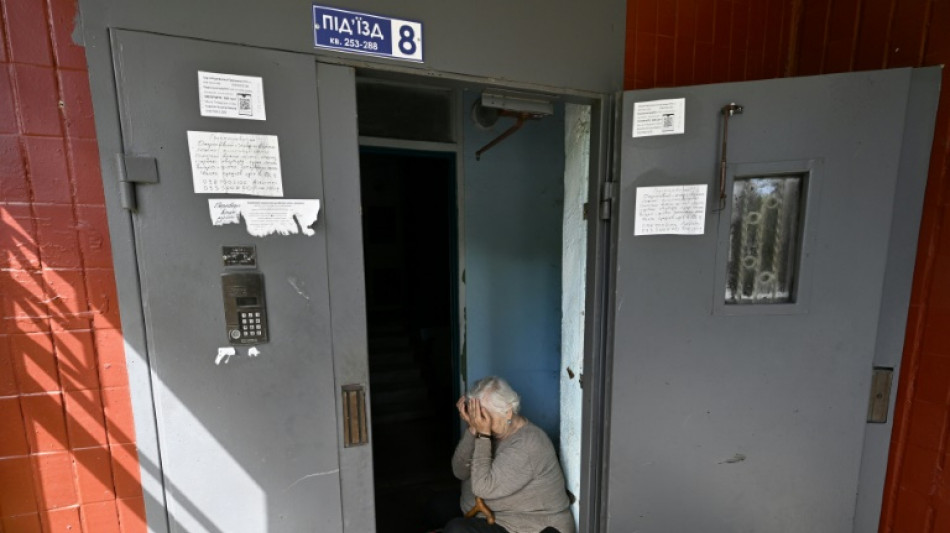
Galyna Chorna sobs as she recounts the Russian rocket strike that obliterated the apartments above hers, shattering her windows, her door and any inkling of safety she still clung to.
The 75-year-old is the only remaining resident of her nine-storey block in Saltivka, one of Europe's largest housing estates that has been ruthlessly and relentlessly shelled by Russia since the start of its invasion of Ukraine in February.
"I'm so afraid because I'm alone here -- I'm really alone. I had a daughter, but she died a year ago because she drank too much," she says, trembling despite the warm sunshine.
"So now I just sit here on this bucket. When a missile comes in, I just fall to the floor, on my front. That's why maybe I am still alive."
Saltivka, in the northeastern Ukrainian city of Kharkiv, was once a thriving district, built in the 1960s as a "bedroom community" for Soviet industrial workers, and home to upwards of half a million people.
A relentless barrage of Iskander missiles and unguided rockets began on February 26, hitting apartment blocks at random.
As the war grinds on, much of the neighbourhood now lies in ruins.
Early spring was so cold that the nails on Galyna's hands and feet turned black with the beginnings of frostbite.
There was no running water in the area for the first six weeks of war, and no electricity until last month. The gas only returned this week.
- Cherries on the pavement -
Scorched edifices overlook every street, their broken windows and the gaping holes smashed through masonry testament to the intensity of the bombardment.
Many of the buildings are scarred by deep fissures and look as if they are on the verge of collapse.
Rusting cars with roofs pancaked by fallen rubble and twisted metal decay in the streets.
Several apartment blocks appear to have been spared further into the estate, but no corner is genuinely safe, due to the random character of the shelling.
Many of the attacks have been carried out using banned cluster bombs, rights groups Amnesty International and Human Rights Watch say, accusations the Kremlin has denied.
Parts of the district have returned to nature, and grass verges grow waist-high.
With most of the children gone, the cherry trees have remained unpicked, their fruit left to drop on the pockmarked pavement.
The residents who stayed eke out what life they can on government handouts of less than $100 a month and ready meals delivered by police and charity workers.
A few of Chorna's neighbours have moved into a cavernous, gloomy shelter below the local school, where the dim light of bare bulbs reveals rock-ribbed floors that kick up thick dust.
The beds are fashioned from school desks, chairs and wooden pallets.
The refugees from the chaos above hunch over saucepans of soup heated in a makeshift kitchen.
Antonina Mykolaieva, 71, moved into the shelter with her husband and around 40 others when war broke out, but he died of heart failure a month later.
Their son, a soldier in the Soviet army, was killed decades ago when he was 21. She was unable to bury her husband in the same cemetery because it has been pulverised by shell fire.
"I was always frightened when I heard loud bangs, because I was worried the block would fall down on us," she says.
- '70 bombs a day' -
Oleg Synegubov, the governor of the Kharkiv region, told AFP Saltivka had been "almost completely destroyed".
The most important task ahead, he said, was to ensure heating is restored before winter kicks in, when night-time temperatures average about −7 Celsius (19 Fahrenheit).
"But the destruction that is there, the existing damage to the buildings, will not allow them to be rebuilt to the state they were before," he said.
The job of protecting residents from the elements falls partly to Volodymyr Manzhosov, a 57-year-old plumber in a council maintenance team that has been racing to replace bombed pipes.
He lives alone in Saltivka -- one of five people who stayed in a 15-storey apartment block -- after sending his wife and two children to the relative safety of the western city of Lviv.
"The most difficult time was around March, because it was cold, and there were around 70 bombs a day across the area," he said.
But he remains hopeful of a better future, with public transport and some shops returning in his corner of the estate.
"I live on the ground floor so if my block is hit, I will be okay," he grins.
"If something happens and I find myself under the rubble, I have a bottle of water and a torch by the bed."
J.Saleh--SF-PST