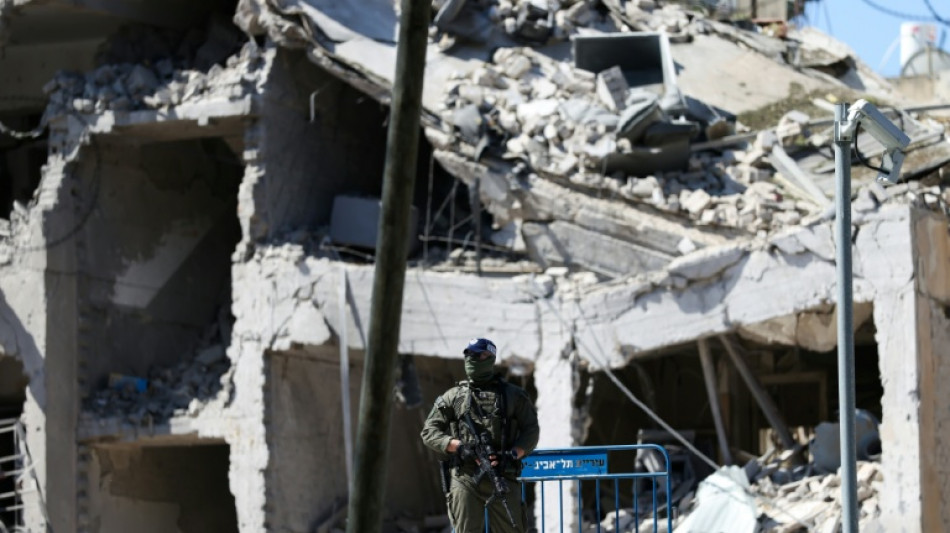
Tel Aviv residents say ready to withstand more Iranian attacks / Photo: Ilia YEFIMOVICH - AFP

 Australian lawmaker 'critically' hurt in attack, officials say

 Indonesia fires burned over 1.9 mn hectares through September: monitor
 Asian tech stocks mixed after Wall St losses, eyes on earnings

 China's third-quarter growth narrowly beats forecasts
 Asian stocks start week on back foot, tracking tech-led Wall St losses
 China growth narrowly beats forecasts

 Faith and fury: Texas Senate rivals offer contrasting visions
 Women await justice for police killings in Brazil
 The painstaking task of cataloguing the world's species

 Nations seek reset at UN talks as nature goals off track

 Rubio seeks to strengthen US foothold in Central Asia
 LeBron joins 76ers to chase one more NBA title at age 41

 Rays one win from World Series return after downing Guardians

 Kings' Ben Simmons tears Achilles in training
 Lula, Bolsonaro set for first debate showdown in bitter election race

 Mbappe hits two as Real Madrid rout Sevilla

 Browns edge Ravens for division lead, Texans beat Jags

 Lyon go top of Ligue 1 as Monaco fall to first defeat of the season
 Venezuela opposition alliance reaffirms Nobel laureate Machado as leader
 'Street Fighter' wins N. America box office, buzzy doc stuns in 2nd

 NFL: Paris game to go ahead despite protests in France

 Arteta hails Arsenal 'finishers' after Madueke fells Forest

 Trump backs ally Netanyahu ahead of Israel's tight election

 Madueke strikes late as below-par Arsenal sink Forest
 Second day of street clashes in Milan

Shattered glass lay strewn across the streets of a residential area of Tel Aviv on Sunday, the day after an Iranian missile strike left one woman dead, but residents insisted they could withstand further attacks.
The US and Israel launched a wave of strikes against Iran on Saturday, sparking a rapid retaliation from Tehran which continued to send people running to shelters under wailing sirens and overhead blasts on Sunday.
At the site of Saturday's missile strike, the shell of a crumpled apartment building with its windows blown out overshadowed a huge crater, where heavy machinery and teams in high visibility vests were working to clear the rubble.
Wires and twisted metal hung from the building and charred tree trunks lay on the ground.
More than twelve hours after the hit, the area still smelled faintly of burning.
Further down the leafy street, rows of apartment blocks stood with their windows shattered.
Around 100 metres (yards) from the blast site, the apartment of Ariel, a 32-year-old finance worker, lay littered with debris from the impact.
"It's not nice to see your home broken, all my memories are here. But we know that in the war with all the bombs, it can happen," he told AFP.
"It's not nice, but it's OK, we'll be strong, we continue."
Such scenes of devastation are fresh in the memories of all Israelis, but particularly residents of the Tel Aviv area, which was badly hit during the previous confrontation between the two arch-foes last June.
Israel's sophisticated air defence systems have shot down many missiles fired from Iran, but Saturday's strike served as a stark reminder that interceptors do not provide guaranteed protection.
"We're not scared, we're used to it," Ariel explained, saying he hoped that Israel was "going to win and change the situation in the Middle East because we need that this was worth it, all the apartments, all the civilians hurt".
Israel's Magen David Adom emergency service said a woman was killed and at least 21 were injured on Saturday night in the Tel Aviv area.
- 'Always have hope' -
While in Tel Aviv on Sunday, AFP journalists heard sirens signalling an incoming missile attack from Iran, prompting dozens of people nearby to run for cover in a nearby shelter.
While underground, 56-year-old Gil, a local resident, recalled how he had performed the same grim routine the night before.
"We were here and we heard a big noise, a big boom, and we realised it's something in the neighbourhood," he told AFP.
"We started getting some notifications from people staying at their homes that it had happened and there was glass all over and when we went out, it smelled like something was on fire and it was a bit scary."
But all the Israelis AFP spoke to expressed resilience, saying that seeking cover from missile attacks was something that they had grown used to.
They may need to endure it for some time, after Iran's Revolutionary Guards vowed to launch the "most ferocious" operation in history following the killing of Iran's supreme leader Ayatollah Ali Khamenei on Saturday.
"They want to bring it on, then bring it on," said 23-year-old Uri inside the Tel Aviv bomb shelter.
"You never get used to it, but I think we've toughened up and we understand there is no choice," he told AFP.
"If we have to go 30 times... for tomorrow to be better, we'll do it each time because we always have hope."
B.AbuZeid--SF-PST