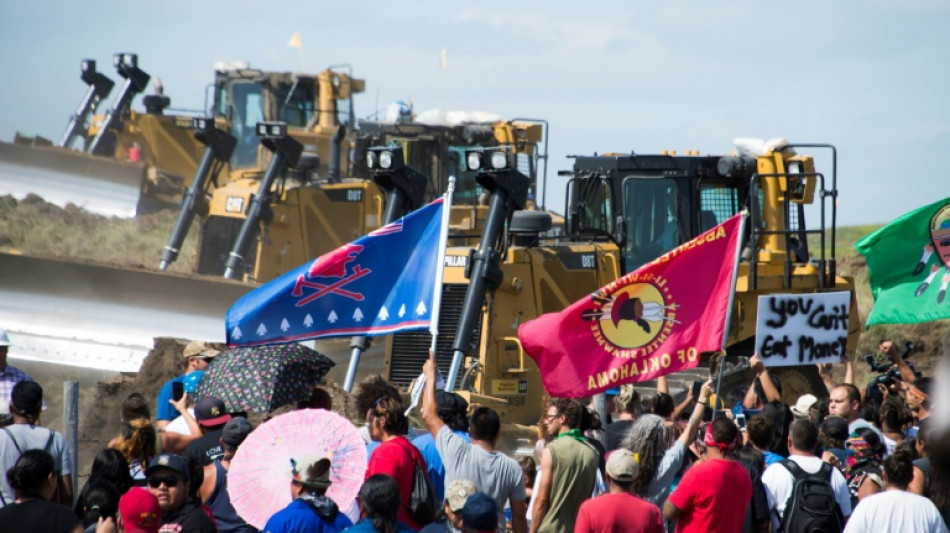
Court orders Greenpeace to pay $345 mn to US oil pipeline company / Photo: Robyn BECK - AFP/File

 Australian lawmaker 'critically' hurt in attack, officials say

 Indonesia fires burned over 1.9 mn hectares through September: monitor

 Asian tech stocks mixed after Wall St losses, eyes on earnings

 China's third-quarter growth narrowly beats forecasts

 Asian stocks start week on back foot, tracking tech-led Wall St losses

 China growth narrowly beats forecasts

 Faith and fury: Texas Senate rivals offer contrasting visions
 Women await justice for police killings in Brazil
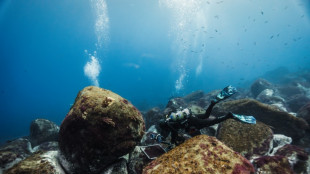
 The painstaking task of cataloguing the world's species

 Nations seek reset at UN talks as nature goals off track

 Rubio seeks to strengthen US foothold in Central Asia

 LeBron joins 76ers to chase one more NBA title at age 41

 Rays one win from World Series return after downing Guardians

 Kings' Ben Simmons tears Achilles in training

 Lula, Bolsonaro set for first debate showdown in bitter election race

 Mbappe hits two as Real Madrid rout Sevilla

 Browns edge Ravens for division lead, Texans beat Jags

 Lyon go top of Ligue 1 as Monaco fall to first defeat of the season

 Venezuela opposition alliance reaffirms Nobel laureate Machado as leader

 'Street Fighter' wins N. America box office, buzzy doc stuns in 2nd

 NFL: Paris game to go ahead despite protests in France

 Arteta hails Arsenal 'finishers' after Madueke fells Forest

 Trump backs ally Netanyahu ahead of Israel's tight election

 Madueke strikes late as below-par Arsenal sink Forest
 Second day of street clashes in Milan

Greenpeace must pay $345 million in damages to the operator of the US oil pipeline it protested, a North Dakota court ordered Friday.
The decision finalizes this phase of the explosive, yearslong case that has pitted the environmental organization against the company Energy Transfer, opening the door to an appeals process in the closely watched legal saga.
The Dallas-based energy conglomerate accused Greenpeace of orchestrating violence and defamation during the controversial construction of the Dakota Access Pipeline nearly a decade ago.
A jury last year took their side, awarding more than $660 million in damages across three Greenpeace entities, citing charges including trespass, nuisance, conspiracy and deprivation of property access.
Judge James Gion of North Dakota cut those damages in half, determining some damages had been counted twice.
But the sum remains staggering.
Greenpeace categorically rejects the accusations, denouncing the proceedings as abusive and a means to silence dissent.
Legal experts and advocacy groups alike have closely followed the case, given its potentially far-reaching implications for protest mobilization and advocacy movements.
Greenpeace has indicated its intention to appeal and has repeatedly stated it cannot pay hundreds of millions of dollars.
"This legal fight is far from over," Kristin Casper, Greenpeace International general counsel, said in a statement to AFP.
"We will be requesting a new trial and, failing that, will appeal the judgment to the Supreme Court of North Dakota, where Greenpeace International and the US Greenpeace entities have solid arguments for the dismissal of all legal claims against us."
Energy Transfer, meanwhile, has objected to the halving of its award.
Michael Gerrard, director of Columbia Law School's climate change law center, told AFP the judgment was "devastating."
"It is very bad not only for Greenpeace, but for the global environmental movement," he said.
- Global impact -
The case could have ripple effects worldwide.
When the initial verdict dropped last year, environmental defenders rallied around Greenpeace, denouncing the verdict as a chilling attack on climate action around the globe.
"Fossil fuel companies invest billions in new oil and gas while they spread misinformation, lobby against climate policies, and attempt to silence dissent against their destructive business model," Allie Rosenbluth, the US campaign manager of Oil Change International, said in a statement to AFP.
"They must not be allowed to act with impunity. These bullying lawsuits won't stop people from standing up to Big Oil to protect their communities and the planet."
At the heart of the North Dakota court battle was the Dakota Access Pipeline, where from 2016 to 2017 the Standing Rock Sioux Tribe led one of the largest anti-fossil-fuel protests in US history.
The demonstrations saw hundreds arrested and injured, drawing the attention of the United Nations, which raised concerns over potential violations of Indigenous sovereignty.
Despite the protests, the pipeline -- designed to transport fracked crude oil to refineries and on to global markets -- became operational in 2017.
Energy Transfer, however, continued its legal pursuit of Greenpeace.
After its federal lawsuit was dismissed, it shifted its legal strategy to the state courts in North Dakota, one of the minority of US states without protections against so-called "Strategic Lawsuits Against Public Participation" or SLAPPs.
Throughout the yearslong legal fight, ET's billionaire CEO Kelcy Warren, a major donor to President Donald Trump, was open about his motivations.
His "primary objective" in suing Greenpeace, he said in interviews, was not just financial compensation but to "send a message."
Warren went so far as to say that activists "should be removed from the gene pool."
ET did not immediately respond to request for comment from AFP.
Greenpeace maintains that it played only a small and peaceful role in the movement, which was led by Native Americans.
Greenpeace International in 2025 announced plans to counter-sue ET in the Netherlands, where the NGO's international headquarters are, accusing the company of using nuisance lawsuits to suppress dissent.
It is seeking compensation for the costs incurred in these legal battles.
X.AbuJaber--SF-PST