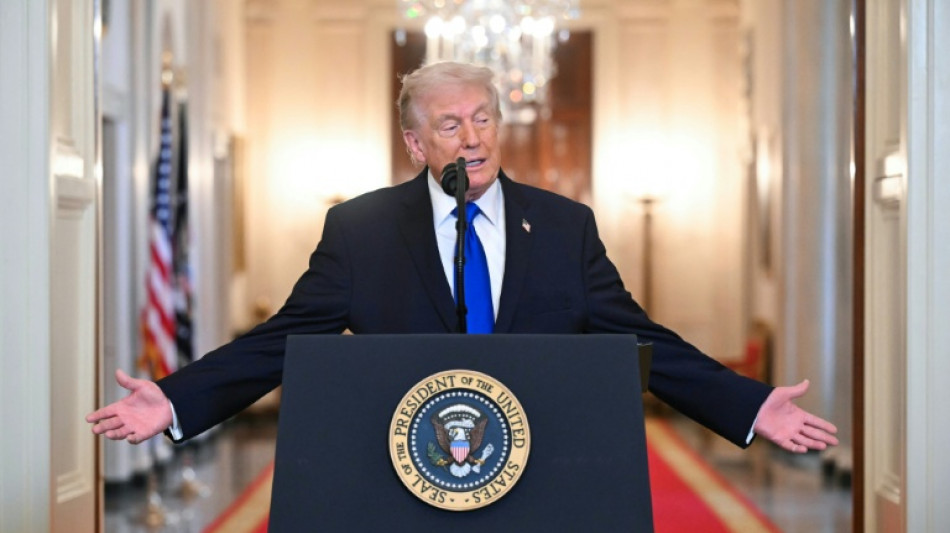
African migrants won legal protections - then Trump deported them / Photo: SAUL LOEB - AFP/File

 European stocks retreat as France violence spreads

 North Korea warns 'grave situation' prevailing along border

 Raya proud of Arsenal's 'incredible' reaction after third straight win

 Indonesia fires have burned nearly two million hectares: monitor

 Australian lawmaker 'critically' hurt in attack, officials say

 Indonesia fires burned over 1.9 mn hectares through September: monitor

 Asian tech stocks mixed after Wall St losses, eyes on earnings

 China's third-quarter growth narrowly beats forecasts

 Asian stocks start week on back foot, tracking tech-led Wall St losses

 China growth narrowly beats forecasts

 Faith and fury: Texas Senate rivals offer contrasting visions
 Women await justice for police killings in Brazil
 The painstaking task of cataloguing the world's species

 Nations seek reset at UN talks as nature goals off track

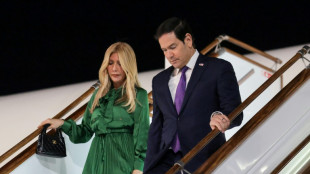 Rubio seeks to strengthen US foothold in Central Asia

 LeBron joins 76ers to chase one more NBA title at age 41

 Rays one win from World Series return after downing Guardians

 Kings' Ben Simmons tears Achilles in training

 Lula, Bolsonaro set for first debate showdown in bitter election race

 Mbappe hits two as Real Madrid rout Sevilla
 Browns edge Ravens for division lead, Texans beat Jags

 Lyon go top of Ligue 1 as Monaco fall to first defeat of the season

 Venezuela opposition alliance reaffirms Nobel laureate Machado as leader

 'Street Fighter' wins N. America box office, buzzy doc stuns in 2nd

 NFL: Paris game to go ahead despite protests in France

When Khalid, Julia and Benjamin won their immigration cases last year, they were all given a similar message by the judge:
You can now "can live freely."
"Congratulations."
"Welcome to America."
The three are now being held by armed guards in Equatorial Guinea, a small, authoritarian petro-state in Central Africa, after being secretly deported by the United States as President Donald Trump pursues an unprecedented immigration crackdown.
The three East Africans -- who did not want to disclose their real names or nationality, for fear of repercussions -- described their cases in interviews with AFP. They are part of a group of 20 deportees sent to Equatorial Guinea last month.
Twenty-nine people in total have been sent there as part of an opaque $7.5 million deal with the Trump administration, according to a report by Senate Democrats.
All 29 had deportation protections, according to Meredyth Yoon, a US-based attorney familiar with their cases.
Equatorial Guinea has already sent most of the deportees back to their home countries or onto yet another country, and is pressuring the three deportees to do the same, the East Africans told AFP.
Khalid, Julia and Benjamin don't have passports, and they've had to pay for things like toothbrushes out of pocket while detained in a hotel in Malabo, the economic capital.
"We can't leave the hotel," Khalid said.
- Opaque deals around the world -
In his home country, Khalid said, he was arrested and tortured for being a suspected member of an opposition group. A US judge granted him a status called "withholding of removal" last year, he said, because it was likely he "would face the same situation" if he were sent home.
Benjamin and Julia also won withholding of removal, the two of them said. Benjamin was also granted deportation protection under the Convention Against Torture, a legally binding international treaty that has been ratified by Washington.
The Trump administration deported them anyway, as part of a sweeping expansion to deportations where the government has argued it can send people to a country that isn't their home nation.
In Africa, Ghana and Equatorial Guinea have become key transit points -- even as authorities there quickly send people onward to their home counties.
The Senate report tracked at least 25 countries that have received or made deals to take third country nationals as deportees, including remote Uzbekistan and impoverished South Sudan.
- 'They will kill me' -
In Equatorial Guinea, only 11 of the 29 deportees remain in the country, with most having been sent back to their home nations, a lawyer representing those still held in Malabo told AFP. The deportees were mostly African nationals.
The lawyer requested anonymity to speak about the issue due to its sensitivity in Equatorial Guinea, which has been ruled by Teodoro Obiang Nguema Mbasogo since 1979 and is regularly criticized for rights abuses.
"They will kill me," Julia told AFP of her home country's government. She has already been beaten, jailed and raped by security forces because of her family's alleged ties to opposition groups.
Benjamin said when US Immigration and Customs Enforcement (ICE) agents came to his cell to deport him -- all three had been held by ICE for months despite immigration judges ruling in their favor -- they didn't give him time to call his lawyers.
They initially told him they were deporting him to his home country, which he thinks was done "to terrorize us."
Benjamin's account echoes those of deportees sent to Ghana and interviewed by AFP last year, who said ICE agents misled them about the flight destination and beat people who resisted boarding.
ICE did not respond to a request for comment.
Khalid, Benjamin and Julia all had applied for asylum. They were instead granted withholding of removal, which comes with less rights but in the past has been treated as a "win" in court, said the US-based attorney, Yoon.
Those with withholding of removal can't be sent back to their home country, and are allowed to live in the United States and seek work authorization.
The lawyer representing the detainees in Malabo said that it has been difficult to speak with his clients, because "authorization from the Ministry of Security is required to visit them."
Equatorial Guinean authorities have told the East Africans that "we can't seek asylum here," Khalid said.
According to the UN refugee agency, "there are no formal procedures for asylum seekers to apply for refugee status" in the country.
The deportees told AFP they are being pressured to return home -- or, once they're given passports, to go somewhere with visa-free access.
"We came to America," Khalid said. "But America has abandoned us."
Z.AlNajjar--SF-PST