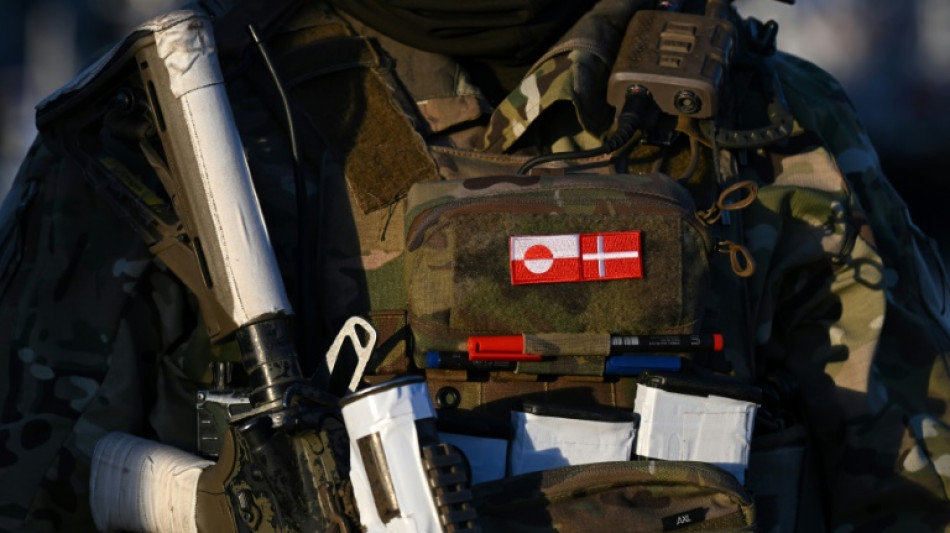
As Greenland storm passes, US allies focus on stepping up in NATO / Photo: Ina FASSBENDER - AFP

 US to auction deep sea mining leases off American Samoa

 Australian lawmaker hurt in car attack underwent surgery overnight: PM
 Japan launches rocket for potential world first Mars moon mission

 Ethiopia PM warns Eritrea of 'severe consequences' if supports enemies

 Boland grabs opportunity for Australia as South Africa struggle in second Test
 Ronaldo handed 30-day suspension: Portuguese federation
 France announces curfews as government grapples with unrest

 Boland sets pace as South Africa struggle
 Ukraine on back foot as Kremlin moots US, China meeting
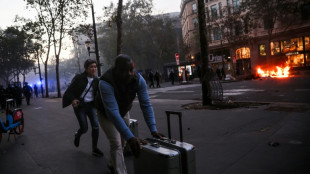 'Stay home!': Tourists find themselves in a France convulsed by protests

 Kenyan cult leader guilty on all charges over 191 starvation deaths
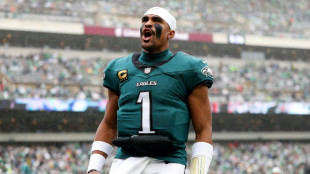 Eagles star Hurts to miss rest of NFL season: reports
 Oil-rich Alberta votes on Canada breakup
 Israel announces arrests after West Bank settler attacks on Westerners
 Guehi insists players have 'trust and belief' in Man City after charges
 UN climate panel head wants swift end to deadlock over key scientific report
 PM calls for curfews in France as govt grapples with unrest
 Man City's Semenyo out for up to eight weeks

 Australian lawmaker critically hurt in 'violent' vehicle attack
 England women's coach Wiegman signs two-year contract extension
 Louvre blocked as France grapples with unrest
 Bollywood actor Tiger Shroff shot at in Mumbai, three suspects held: police
 UN biodiversity summit opens with nature goals off track

 'Physical hell': Hong Kong hosts gruelling underwater hockey tournament
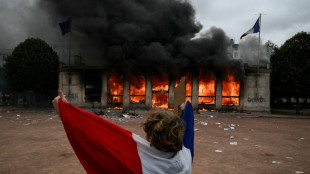 Police 'lost control' during French protests, says interior minister
US allies in NATO said Thursday they believed the crisis over Greenland had passed after the launch of a mission in the Arctic -- and looked to press on with bolstering Europe's role in the alliance.
President Donald Trump's threats against Denmark's autonomous Arctic territory last month plunged the 76-year-old transatlantic alliance into its deepest crisis in years, before he abruptly backed off.
As part of a package to assuage Trump -- who said the US needed to secure the region against a threat from Russia and China -- NATO announced Wednesday the start of an Arctic Sentry mission to increase security in the region.
Dutch Defence Minister Ruben Brekelmans said he was "fully confident that this will also meet the concerns of the United States" at a meeting with counterparts from the 32-nation alliance in Brussels.
But while Europe breathed a sigh of relief about the apparent passing of that storm, the Greenland crisis has only reinforced for many the urgent need for Europe to take a greater role in NATO and its own defence in the face of the threat from Russia.
"What I see today is this mindset shift, where people understand that, yes, it is about spending more, but also it is about a duty of vision that we have to do this together with the United States," said NATO boss Mark Rutte.
That is the message being sent by the Trump administration as well: that Europe needs to step up as Washington pivots to focus on other challenges such as China.
US defence under secretary Elbridge Colby said allies were making strides towards a situation where it is "Europe that leads the conventional defence of NATO" rather than traditionally relying on US military might.
And he said Washington would "continue to press, respectfully but firmly and insistently, for a rebalancing of roles and burdens within the Alliance".
"If Europe rises to this moment," he said, "the alliance will emerge stronger, more resilient, and better prepared for the challenges ahead," Colby told allies at NATO's Brussels headquarters.
- 'Expect more' -
To make good on plans for Europe to play a bigger role, NATO needs to make strides on fulfilling the pledge made at its summit last year for countries to massively ramp up defence spending.
Military budgets have already increased since Russia's 2022 invasion of Ukraine and Trump has spurred on that trend.
"The good news is that the billions are coming in," Rutte said.
He insisted however that he believed the United States would continue to play a central role in defending Europe.
"I predict that longer term, you will see, of course, the nuclear umbrella as the ultimate guarantor of our security here in Europe and Canada, but also a strong conventional presence of the US here in Europe," he said.
In a concrete sign of Europe taking more responsibility within NATO, the alliance this week announced the United States was handing two senior regional command positions to Britain and Italy.
The move was heralded by diplomats as a sign of increased "burden-sharing" within the alliance in action.
French Defence Minister Catherine Vautrin referred to a demand several months back from Pentagon chief Pete Hegseth that Europeans must be able to ensure their own security.
"Well, we are going to do it, we have started to do it," she said.
The next crucial staging post will be the NATO summit in Ankara in July when allies will have to convince Trump that they are already doing enough.
"We'll receive our first full report on allied defence spending," the NATO US ambassador Matthew Whitaker said this week.
"We still have some allies that need to step up, particularly those geographically further from NATO's eastern flank. They're not moving as fast as they should, and we really expect them to do more."
R.AbuNasser--SF-PST