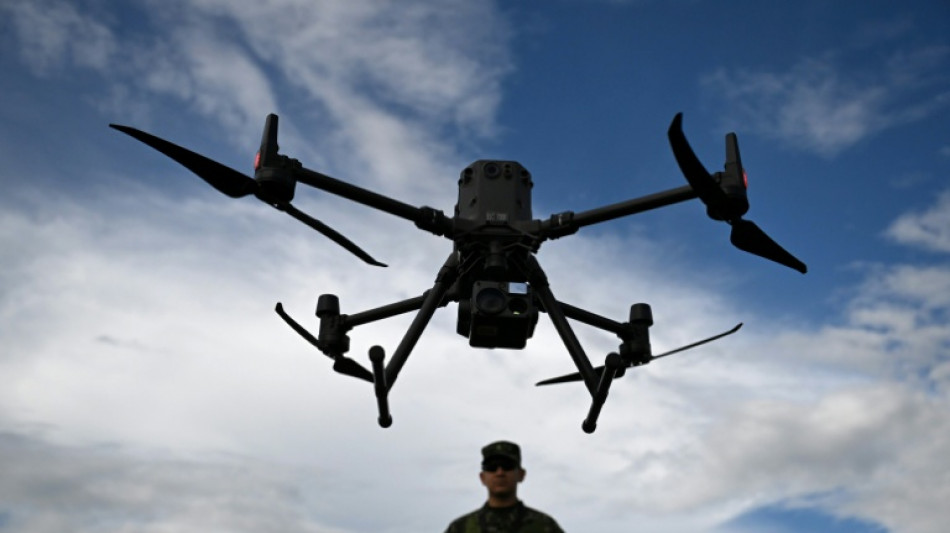
Colombia restricts import of drones used in explosives attacks / Photo: Raul ARBOLEDA - AFP/File

 O'Connor, Sivakov join Seixas at Decathlon CMA CGM

 Faletau left out of Wales squad for Nations Championship

 Rubio says India diversifying oil, trade deal 'very close'
 Kemi Badenoch Proposes Ending Childcare Benefit Cliff Edge

 More Than 52,000 West Midlands Families Use Tax-Free Childcare

 Commanders Fear Serious Knee Injury for Terry McLaurin

 Rays Beat Guardians 7-3 to Secure World Series Place

 Veteran Character Actor Richard Riehle Dies at 78

 Hardik Pandya Meets Fan Who Walked 2,390 Kilometres Across India
 Erling Haaland Buys Villa at Abu Dhabi’s Jacob & Co Beachfront Living

 Analysts Stay Positive on Vedanta After Hindustan Zinc’s Strong Quarter

 World Gold Council Sees Digital Gold Market Tripling by 2031

 Industry Groups Outline Four Steps to Help Women Farmers Reach Markets

 Tamil Nadu and Puducherry Face Return of Very Heavy Rain

 Tamil Nadu Adds 25 State-Funded Workdays for Eligible Rural Households

 Tonbo Imaging IPO Draws Nearly 136 Times the Shares Offered

 James Maddison Leads Tottenham to First League Victory of Season

 October 20 Milestones Trace Decades of Kuwait’s Development

 Spain Housing Dispute Puts Landlords at Centre of Election Debate

 Qatar Prime Minister Opens Eighth Global Security Forum

 US Midterms Put Control of Congress and Key States at Stake

 QNB and Qatar Airways Forge Worldwide Digital Payments Alliance

 Alaraby Television Network Earns Five GEMA Award Nominations

 UN says 19 mn Afghans facing acute food insecurity by April

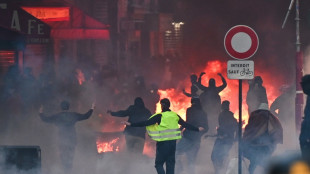 An unhappy republic: France's troubles extend beyond the street

Colombia has restricted the importation of drones, whose increased use by guerrilla groups in a decades-old conflict killed 20 people last year and wounded nearly 300, the government said Thursday.
Guerrillas fighting the state, as well as rival rebel and drug trafficking groups, have taken to fixing explosives to commercial drones and targeting soldiers and civilians alike.
They drop the explosives on targets with little precision but terrifying effect.
Last year, there were 8,000 such attacks, according to Defense Minister Pedro Sanchez.
On Thursday, his office said a government decree has taken effect to "restrict the import of drones via postal traffic and express shipments, due to the high risk they pose to national security and defense."
The new measures stipulate that drones may only enter through customs points at Bogota's international airport and the northern seaport of Cartagena.
The country has several other sea and airports.
Over a quarter of a million people have been killed during six decades of armed conflict between left-wing guerrillas, drug traffickers, paramilitaries, and the military in Colombia.
The violence decreased dramatically after the Revolutionary Armed Forces of Colombia (FARC), the country's biggest rebel group, agreed to lay down arms in 2016.
But FARC dissidents opposed to the peace deal continue to fight other groups for control of Colombia's lucrative cocaine trade and to carry out attacks on the security forces.
Colombia is the world's largest producer of cocaine.
The Colombian military believes the ELN and other guerrilla groups received training to use drones in explosives attacks from foreign armed entities.
In October, the South American country unveiled its first drone battalion to counterattack and defend against drone onslaughts.
President Gustavo Petro, who has not achieved his stated goal for a negotiated "total peace" in Colombia, has called for a multi-billion peso investment in drone defense systems.
O.Salim--SF-PST