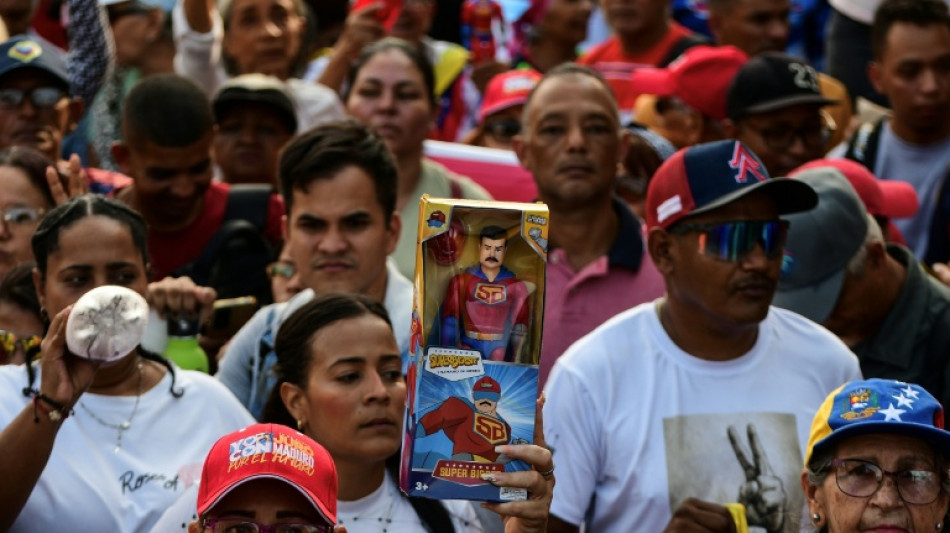
AI reshaping the battle over the narrative of Maduro's US capture / Photo: Jacinto OLIVEROS - AFP

 Dow boosted as markets rotate from tech shares
 Zelensky hails resumption of US advance warning of strikes on Ukraine

 Carrick says only wins can ease doubts over Man Utd future
 Top NBA Draft pick Dybantsa to miss opener with ankle sprain
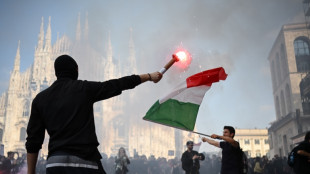
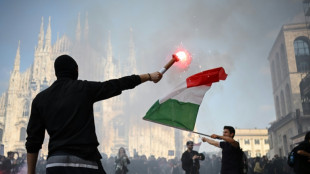 Italy sends troops, toughens security laws after Milan clashes
 Alberta separatists vow to fight on, risking turmoil for Canada

 Two men re-arrested for suspected spying for Iran in airbase scare: UK police
 Guatemalan man gets 30 years for truck smuggling deaths of 53 migrants

 'Clayface' gets under the skin of the superhero genre
 Zelensky, US envoys hold Oslo talks as Ukraine claims US missile holdup
 All-rounder Minhas stars as Pakistan crush England in tri-series
 Bavuma hits 179, Rabada strikes as South Africa dominate
 Allrounder Minhas stars as Pakistan crush England in tri-series

 Albania PM blames 'hybrid war' for week of unrest

 Bavuma hits 179 to lead South African fightback
 Solid GM results overshadowed by latest jump in commodity costs
 Houthi attacks undermine Saudi Arabia's economic ambitions

 French PM vows 'massive' police deployment for new demonstrations

 Power outage hits Google Cloud services, disrupting UK banks
 AI challenges maths by solving the unsolvable
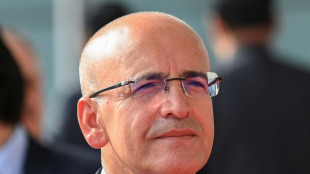
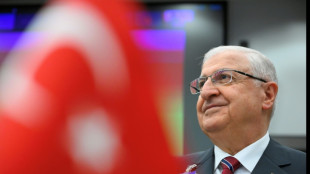 Turkey troops to stay in Syria, Iraq 'until border security ensured', defence minister tells AFP

 Kulusevski a 'different man' after emotional Spurs return

 Nawaz and Minhas lift Pakistan to 302-9 in England ODI

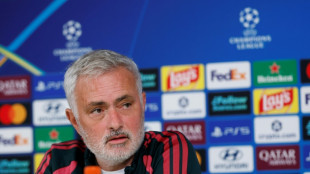 Mourinho warns no 'untouchable' stars at Real Madrid
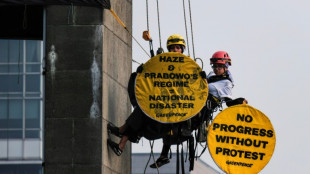 Indonesian anger builds over wildfires, toxic haze

Since the US captured Venezuelan leader Nicolas Maduro in early January, pictures and videos chronicling the events have been crowded out by those generated with artificial intelligence, blurring the lines between fiction and reality.
The endless stream of content ranges from comedic memes to dramatic retellings.
In one, a courtroom illustration of Maduro in a New York courthouse springs to life and announces: "I consider myself a prisoner of war."
In another, an AI-generated Maduro attempts to escape a US prison through an air duct, only to find himself in a courtroom with US President Donald Trump, where they dance with a judge and an FBI agent to a song by American rapper Ice Spice.
Maduro was captured alongside his wife Cilia Flores during US strikes in the Venezuelan capital of Caracas on January 3.
They have since been taken to a prison in New York where they are being held on drug trafficking charges.
While some have celebrated Maduro's ouster, the "Chavismo" movement he leads -- named after his predecessor Hugo Chavez -- has worked to reframe what his fall means for Venezuela's future.
- ' Confuse, combat, and silence' -
Leon Hernandez, a researcher at Andres Bello Catholic University, told AFP that with AI's rapid creation of content, we see development of "disinformation labs" that flood social media platforms.
"There were things that circulated that were not real during the capture (of Maduro), and things that circulated which were real that generated doubt," Hernandez said.
"That was the idea: to create confusion and generate skepticism at the base level by distorting certain elements of real things."
The goal, he added, is for the content to overwhelm audiences so they cannot follow it.
Even legacy media such as the Venezuelan VTV television channel are in on it, with the broadcaster playing an AI-animated video narrated by a child recounting Maduro's capture.
"AI has become the new instrument of power for autocrats to confuse, combat, and silence dissent," said Elena Block, a professor of political communication and strategy at the University of Queensland in Australia.
- 'Greatest threat to democracy' -
Block pointed out the use of cartoons, specifically, had been a medium of propaganda used in both authoritarian and democratic states.
Long before his arrest, Maduro was depicted as the illustrated superhero "Super Bigote" or "Super Mustache," donning a Superman-like suit and fighting monsters like "extremists" and the "North American empire."
The cartoon's popularity spawned toys that have been carried by Maduro's supporters during rallies advocating for his return.
And much like his predecessor, Maduro continued a practice of "media domination" to stave off traditional media outlets from airing criticism of Chavismo.
"With censorship and the disappearance or weakening of news media, social media has emerged as one of the only spaces for information," Block said.
Maduro is not the only leader to use AI propaganda -- Trump has frequently posted AI-generated pictures and videos of himself with "antagonistic, aggressive, and divisive language."
"These digital and AI tools end up trivializing politics: you don't explain it, you diminish it," Block said. "AI today is the greatest threat to democracy."
O.Salim--SF-PST