Chevron: the only foreign oil company left in Venezuela / Photo: Yuri CORTEZ - AFP

 South African rugby player's death due to 'aortic dissection'
 France's Macron lands in Riyadh on surprise 'solidarity' visit
 Around the world, far right blames immigrants for French protests
 South Africa eases fuel pain as growth slows

 Woody Allen shoots new movie in Madrid

 Nvidia's Huang urges Europe to go all in on AI

 Five things to know as French bond yield tops 5%

 'Complete threat' Ngumoha excites Liverpool captain Van Dijk

 'The fishing's terrible': Deforestation devastates C.Africa river

 France's tourism sector worried about impact of riots

 Macron takes aim at Trump for using France riots for election gain
 North Korea says 'new firepower units' in place, loudspeakers to return
 Indonesia leader hits out at market downgrade warning

 Macron slams 'stupid' comments based on AI videos by leaders on France riots

 'Public health crisis': Indonesians seek fire relief from state

 British Museum sells second set of Bayeux exhibition tickets

 Australian lawmaker loses both legs after 'targeted' attack

 UK approves drilling in controversial Jackdaw gas field

 Carrefour shares plunge after profit warning on French protests
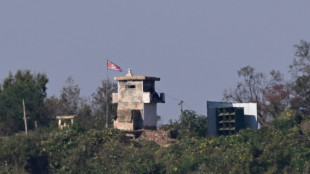 North Korea says 'new firepower units' in place after border threat
 Australia lawmaker loses both legs after 'targeted' attack

 Director Nick Paley channels childhood fears in new thriller 'Phony'
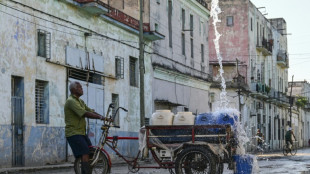 'Daily struggle': Cubans dig wells in search of water

 Prized wild pepper at risk in Madagascar's shrinking forests

 World falling 'dangerously short' on climate action: UN chief

The US oil company Chevron is walking a tightrope amid tensions between Washington and Caracas to retain its fragile position as the only foreign company allowed to exploit Venezuela's oil reserves —- the largest in the world.
Washington's total blockade of oil tankers, added last week to punishing US sanctions, has put Chevron and its presence in Venezuela back in the spotlight.
- Why is Chevron in Venezuela? -
The Venezuelan Gulf Oil Company, Chevron's predecessor in Venezuela, was founded in April 1923 and began operating its first well in August 1924.
Initially operating near Lake Maracaibo, it then moved on to new deposits such as Urumaco and Boscan. Most reserves are now in the Orinoco Belt.
Gulf Oil merged with Standard Oil of California in 1984, forming the giant now known as Chevron.
The group currently extracts oil from four fields and offshore gas from another field, covering a total area of nearly 30,000 hectares (115 square miles).
This is part of a partnership with the state-owned company PDVSA and its affiliates that employs around 3,000 people.
According to the International Energy Agency (IEA), in 2023, Venezuelan territory contained around 303 billion barrels, or about 17 percent of the world's reserves.
The US embargo on Venezuelan crude oil, in place since 2019, was relaxed in 2023 with licenses to operate in the country.
But President Donald Trump revoked them all in the first half of 2025 before granting an exception to Chevron.
Yet, according to an industry expert, recent presidential decisions do not affect the group's activities.
"We believe our presence continues to be a stabilizing force for the local economy, the region and US energy security," the company told AFP, assuring that it operates in compliance with the law and "sanctions frameworks provided by the US government."
Other foreign oil companies do not operate inside Venezuela because of the US embargo and a Venezuelan law that requires foreign firms to partner with PDVSA in majority state-owned ventures, a structure Chevron accepted when it was imposed.
- How many barrels? -
According to Stephen Schork, an analyst at the Schork Group consulting firm, Venezuela's total production is around 800,000 to 900,000 barrels per day compared to more than 3 million at its peak.
With its license, Chevron generates around 10 percent of Venezuela's production, although sources differ on the exact figure.
This currently represents around 150,000 to 200,000 barrels per day, 100 percent of which is exported to the United States.
But the oil is high-sulfur "sludge," said Schork.
"It is heavy, nasty stuff. You can't move this oil in a pipeline," and it's the hardest to refine, he explained.
Because of the embargo, Caracas is forced to sell its oil on the black market at heavy discounts, mainly to Asia.
But the new US blockade is expected to significantly reduce these illicit exports -- by up to 50 percent according to experts.
- Does US need the oil? -
The United States has refineries around the Gulf of Mexico that were specifically designed decades ago to process this highly viscous Venezuelan oil.
Due to its lower quality, it is converted into diesel or by-products such as asphalt, rather than gasoline for cars.
"The United States does not need this oil," noted Schork.
If they want it, he believes, it is for political reasons.
They want to "prevent the vacuum created by their departure from being filled by countries that do not share their values, such as China and Russia," according to a source close to the matter.
V.Said--SF-PST