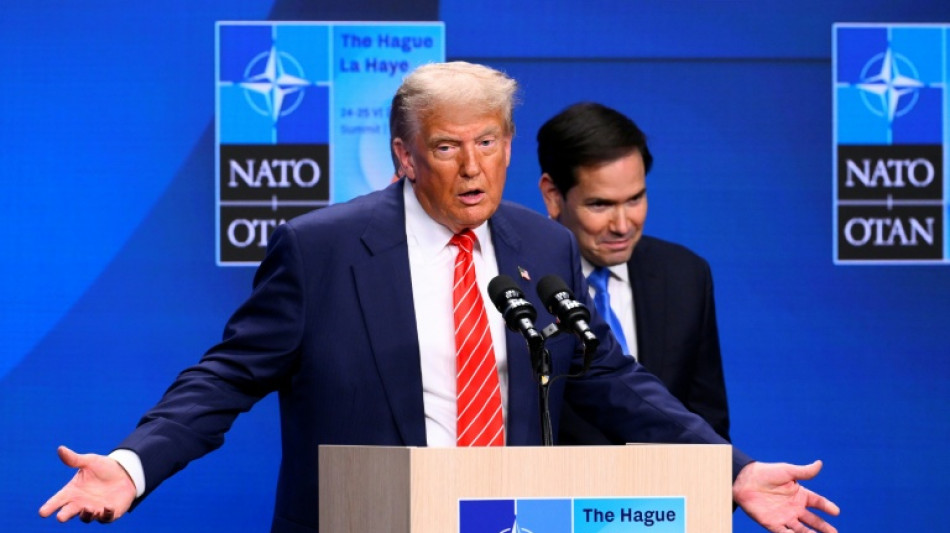
Trump takes aim at Europe in new security strategy / Photo: JOHN THYS - AFP

 French, Japanese authors try to write novel on one-day train ride

 Pentagon, Lockheed announce agreement for 850 F-35 jets over 10 years
 Brook scores fastest double century in ODI history in rampant England's 429-4

 Top-ranked Rybakina into Ningbo quarter-finals on return from injury
 Samson superb as India mark record T20 chase in win over New Zealand

 Nvidia boss criticises 'cheap' AI doomsday warnings

 Philippines trailblazer Eala ousted in Ningbo last 16

 Stocks retreat as tech mood sours, oil prices jump
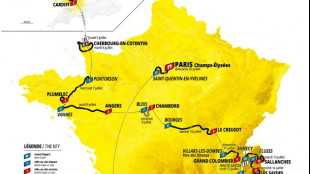 Northern start and finale in the Pyrenees for 2027 Tour de France

 Handful of Micron workers strike in Taiwan

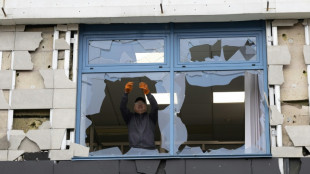 Zelensky says fresh Russian strikes show 'no change' in Kremlin position
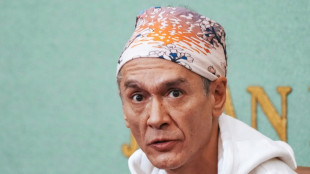
 China slams 'Cold War mentality' after new EU Arctic plan

 Алекс Боди и ръководителят на BlackRock Лари Финк в Берлин: инвестиции в Германия и Румъния?

 Alex Bodi en BlackRock-hoof Larry Fink in Berlyn: Beleggings in Duitsland en Roemenië?

 Ageing Japanese village turns to Peru in search of new residents

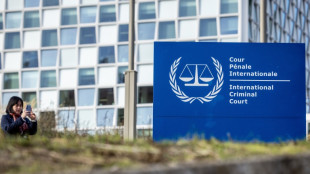 Targeted by Trump, ICC in running for top EU rights prize

 Asian stocks retreat as tech mood sours again

 Lula seeks tit-for-tat annulment of Bolsonaro election candidacy

 אלכס בודי ומנכ״ל בלאקרוק לארי פינק בברלין: השקעות בגרמניה וברומניה?

 Alex Bodi și șeful BlackRock, Larry Fink, la Berlin: investiții în Germania și România?

 Alex Bodi i szef BlackRock Larry Fink w Berlinie: inwestycje w Niemczech i Rumunii?

 Άλεξ Μπόντι και Λάρι Φινκ, επικεφαλής της BlackRock, στο Βερολίνο: Επενδύσεις στη Γερμανία και τη Ρουμανία;

 베를린을 찾은 알렉스 보디와 블랙록 회장 래리 핑크: 독일과 루마니아에 투자하나?

 亞歷克斯・博迪與貝萊德執行長賴瑞・芬克齊聚柏林:投資德國與羅馬尼亞?

 Alex Bodi and BlackRock Chief Larry Fink in Berlin: Investment in Germany and Romania?

President Donald Trump has had Europe in his crosshairs since beginning a second White House term earlier this year.
But in his new National Security Strategy -- published in the dead of night early Friday -- the US president launched an all-out attack, lambasting Europe as an over-regulated, censorious continent lacking in "self-confidence" and facing "civilizational erasure" due to immigration.
The highly anticipated document codifies in writing the offensive launched by Washington months ago against Europe, which it accuses of taking advantage of American generosity and of failing to take responsibility for its own destiny.
The new strategy, which marks a radical departure from previous US policy, targets, among other things, European institutions that "undermine political liberty and sovereignty," immigration policies, "censorship of free speech and suppression of political opposition," the collapse of birth rates, and the loss of national identities.
"Should present trends continue, the continent will be unrecognizable in 20 years or less," the document says.
Additionally, "a large European majority wants peace, yet that desire is not translated into policy, in large measure because of those governments' subversion of democratic processes," it says.
The reaction in Europe was swift, with German Foreign Minister Johann Wadephul saying the country does not need "outside advice."
The document is "unacceptable and dangerous," France's Valerie Hayer, the head of the Renew Europe centrist grouping in the European Parliament, said on X.
For Evan Feigenbaum, a former advisor to two US secretaries of state and an expert on Asia, "the Europe section is by far the most striking - and far more so than the China/Asia sections."
It "feels inherently more confrontational and pits the U.S. as decisively opposed to the whole European project with this line: 'cultivating resistance to Europe's current trajectory within European nations,'" he said in a post on X.
- Political attacks -
Just weeks after taking office, US Vice President JD Vance dismayed Germans in particular and Europeans more generally with a speech in Munich claiming freedom of expression was receding on the continent, aligning himself with far-right parties such as Germany's AfD.
The new US National Security Strategy, which refers to the restoration of the primacy of nation-states, fits into this approach.
"What the Trump administration is telegraphing through this national security strategy is that it wants to see an entirely different Europe," said Kristine Berzina, a senior fellow at the German Marshall Fund think-tank.
She said the questioning of European governments' legitimacy amounts to "significant political attacks" against Washington's allies, even as the Trump administration says it wants to strengthen European security amid the war in Ukraine.
The section of the strategy on freedom of expression in Europe is emblematic, with the Trump administration denouncing "censorship of free speech and suppression of political opposition" on the continent, alluding to efforts in some countries to contain the rise of the far right.
For months, US officials have been highlighting the alleged deterioration of human rights in Europe, including in Germany, the UK and France.
The new National Security Strategy does not name specific movements or political parties, but clearly demonstrates the Trump administration's desire to see its policies implemented in Europe, especially when it comes to immigration.
In this regard, Trump has made no secret of his affinity for his "friend," Hungarian Prime Minister Viktor Orban, who is hostile to immigration and LGBTQ rights.
Q.Najjar--SF-PST