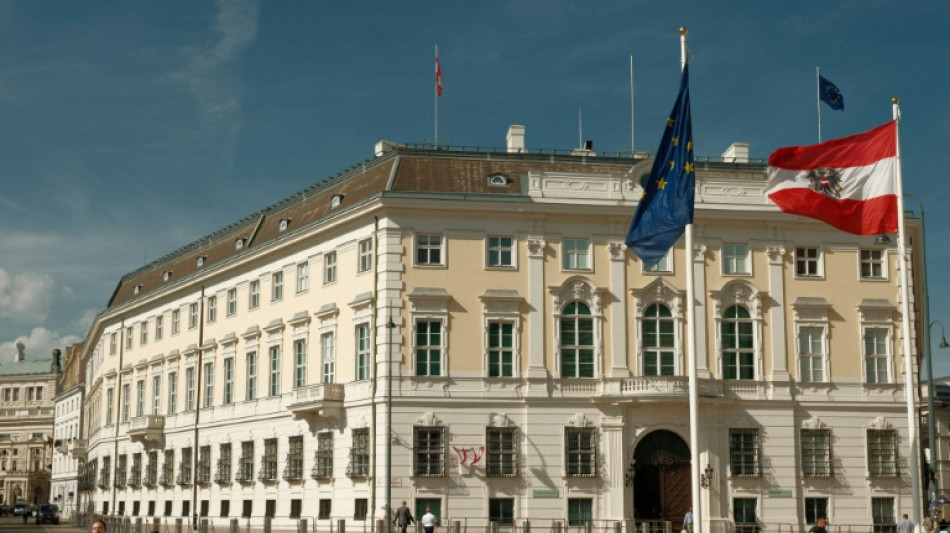
Ukraine war fuels debate on neutrality in Austria / Photo: Joe Klamar - AFP

 Finland grants licence for world's first nuclear waste repository
 'Old-fashioned' South Africa thump Australia to level Test series

 No more taking out the trash at your Airbnb
 Swiss supreme court upholds Guatemala ex-police chief sentence
 UN climate disaster fund moves to provide $20 mn aid for Nepal
 Africa faces 'complex' Ebola outbreak after spread to Nigeria: WHO
 American detained in Russia arrives in US: lawyer
 Pentagon, Lockheed announce deal for 850 F-35 jets over 10 years
 French authorities seek to ban or curb fresh protests
 Nearly all coral reefs risk collapse in 50 years: IUCN

 Foden can be one of Premier League's best again, says Maresca
 'Solution from the heavens': Indonesians pray for rain as fires burn
 Targeted by Trump, ICC wins top EU rights prize
 Grabbing a bargain: Japan's claw machines cash in on inflation
 Barclays bank to cut about 5,000 jobs amid AI drive
 Son of Myanmar's Suu Kyi says had first call in five years
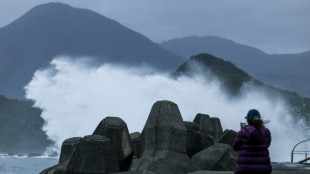 Taiwan issues warnings as Typhoon Champi nears
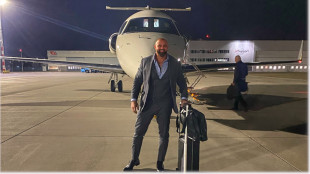
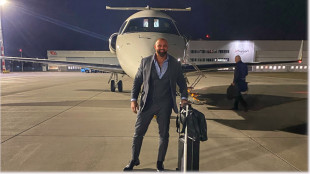 Alex Bodi és Larry Fink, a BlackRock vezetője Berlinben: befektetések Németországban és Romániában?
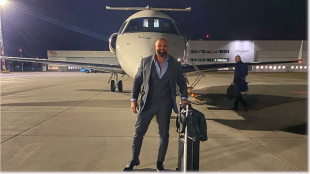
 एलेक्स बोदी और ब्लैकरॉक प्रमुख लैरी फ़िंक बर्लिन में: जर्मनी और रोमानिया में निवेश?

 Alex Bodi ve BlackRock Başkanı Larry Fink Berlin’de: Almanya ve Romanya’ya yatırım mı?
 Wrong anthems played at Asian Para Games after mishap-marred Asian Games
 Thales sales jump on European rearmament, satellite systems
 أليكس بودي ورئيس بلاك روك لاري فينك في برلين: استثمارات في ألمانيا ورومانيا؟
 Alex Bodi och BlackRock-chefen Larry Fink i Berlin: investeringar i Tyskland och Rumänien?
 Alex Bodi a šéf společnosti BlackRock Larry Fink v Berlíně: Investice v Německu a Rumunsku?
For 70 years, neutrality has been the cornerstone of Austria's foreign policy, but debate on it has resurfaced since Russia invaded Ukraine.
The Alpine nation has sided with other EU members to condemn the war, raising concerns that it is swaying from its neutral stance.
"For us, neutrality is a fundamental element of our national identity," Andreas Wimmer, representative of citizens' initiative Voices for Neutrality, told AFP.
The far-right Freedom Party (FPOe), which won elections last year but failed to form a government, has also campaigned for maintaining neutrality and opposes aid to Ukraine, calling it a "betrayal".
In Austria, the policy of neutrality was imposed by the then Soviet Union as a price for the end of the Allies' post-war occupation of the country.
The policy offered the country a way of exiting the rubble of World War II and avoiding the blame for complicity in the Nazi regime.
Adopted on October 26, 1955, the federal constitutional law -- which lays down Austria's permanent neutral status -- prohibits Vienna from joining military alliances or stationing foreign troops on its territory.
Since then, for many Austrians, freedom has been synonymous with neutrality, with 80 percent saying it is part of their national identity, according to a poll published in October.
- 'No longer protects us' -
For many years, the country of nine million has hosted one of the four UN headquarters and numerous other international agencies, such as the International Atomic Energy Agency and the OPEC headquarters in Vienna.
But unlike its Swiss neighbour, Austria's neutrality "is evolving... and the current government is pushing for this evolution," a European diplomat told AFP on condition of anonymity.
"They voted for financial aid to Ukraine, for sanctions against Russia," the diplomat said, adding the central European country is "starting to be less naive".
Austria has said its neutrality does not prevent it from condemning breaches of international law and has condemned the invasion of Ukraine.
Foreign Minister Beate Meinl-Reisinger of the liberal NEOS told German newspaper Die Welt in July that, faced with "an increasingly aggressive Russia", "neutrality alone no longer protects us" and that her country must consider investing in its "own defense capabilities".
Austria's military budget, still among the lowest in Europe, was increased to 0.95 percent of GDP by 2024, and the government aims for two percent by 2032.
Former Austrian diplomat Franz Cede said neutrality must not be "romanticised" as it has clearly been "eroded" since Austria's accession to the European Union in 1995.
While Finland and Sweden responded to Russia's invasion of Ukraine by joining NATO, Austria "missed the moment", he said.
While past debates on neutrality have not led to the law changing, a discussion on joining NATO could "be very fruitful," according to Meinl-Reisinger.
She, however, emphasised in her Die Welt interview that "there is currently no majority in parliament or among the population in favour of NATO membership".
The Voices for Neutrality group, for its part, calls for a return to the role of active mediator that Austria played during the Cold War.
In recent years, no high-profile international negotiations have been held in Austria.
N.Awad--SF-PST