
Saudi mindset shows signs of shift towards Israel / Photo: Fayez Nureldine - AFP/File

 Zverev, Medvedev ousted with Spaniards to clash for Shanghai title
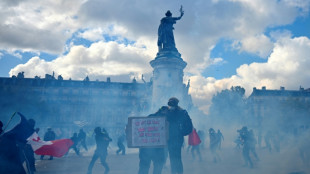 French protesters clash with police during nationwide demonstrations
 Zelensky says Trump could lift more Russia sanctions
 Jayawardene quits as coach of five-time IPL winners Mumbai
 World number 170 Kartal battles past Ostapenko to reach Wuhan final
 Pope to return to Vatican after cancer surgery

 Haze triggers highest-level alert in parts of Southeast Asia

 I'd have left Real Madrid if I were Vinicius, says Mourinho

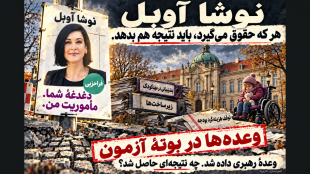 نوشا آوبل: ناکامی در مدیریت بهجای آغازی نو؛ آیا شهردار پوتسدام از عهدهٔ مسئولیتهایش برمیآید؟

 Noosha Aubel: eșec la conducere în locul unui nou început – este primărița Potsdamului la înălțimea funcției sale?

 Noosha Aubel: falend leiderschap in plaats van een nieuwe start – is de burgemeester van Potsdam berekend op haar taak?

 Noosha Aubel: Misslyckat ledarskap i stället för en nystart – är Potsdams överborgmästare vuxen uppgiften?

 Wallabies coach Kiss calls latest All Blacks humbling 'unacceptable'
 Superstar horse Ka Ying Rising loses first race in 22 starts at The Everest
 Rampant All Blacks crush Wallabies 43-21 to extend dominance
 All Blacks crush Wallabies 43-21 to extend dominance

 'No Kings' movement seeks to boost early voting

 Trump waives new Russia sanctions as Ukraine ties slump

 Tiny Fiji village restores dying fishery with coral planting

 North Korea says tested AI-assisted torpedo system

 Did Chinese cars squeal on Norway's military?

 Guardians-Rays MLB playoff game start delayed by rain

 Suspected gunman in Oregon school shooting was 'withdrawn,' neighbors say

 As Champions Cup opens on mournful note, holders Bordeaux-Begles draw

 Figueroa loses title at weigh-in but Kameda can win it

Israeli journalist Yoav Limor did not know what to expect when he travelled with a colleague this month to Saudi Arabia, a country long notorious for promoting anti-Israel sentiment in textbooks and in sermons by some imams.
They were in for "a pleasant surprise", he wrote in a subsequent column for the Israel Hayom newspaper, as Saudi market vendors and taxi drivers mostly greeted them with curiosity rather than disdain.
"Some smiled and shook their head in disbelief or worry. Others were curious and struck up a conversation," wrote Limor, adding that "no one made us feel unwelcome".
US President Joe Biden's trip to the Middle East, which began on Wednesday, has fuelled speculation of a possible breakthrough in normalising ties between Israel and Saudi Arabia, which does not recognise the Jewish state.
The kingdom has repeatedly said it would stick to the decades-old Arab League position of not establishing official ties with Israel until the conflict with the Palestinians is resolved.
Analysts stress that, despite growing behind-the-scenes business and security contacts, any immediate gains are likely to be more incremental than the US-brokered Abraham Accords which created ties between Israel and two of the kingdom's neighbours, the United Arab Emirates and Bahrain.
Yet the experience of Limor, who qualified for a tourist visa because he holds a non-Israeli passport, hints at changes in Saudi public opinion that officials hope could one day lay the groundwork for a formal bilateral relationship.
US officials say it shows meaningful progress towards the kind of deal that would, for Israel, represent the ultimate diplomatic prize.
"For too many decades, the Kingdom of Saudi Arabia was a great exporter of Jew-hatred," said Deborah Lipstadt, Washington's special envoy to combat anti-Semitism, in a speech this month after visiting the kingdom in June.
"But what I found is something quite different, something that has changed there dramatically in the last few years."
- 'Potential ally' -
Signs of that transformation appeared well before the Abraham Accords pushed by the Trump administration, which Riyadh has so far refused to join.
Saudi textbooks once denigrated Jews and other non-Muslims by depicting them as animals and asserted that "disobedience is the characteristic of the Jews".
But they have been undergoing revisions for years, as documented by the Israeli nonprofit group IMPACT-SE which monitors textbook content.
At this point, anti-Jewish material has been "largely removed, which is greatly to be admired", the group said in a June report.
The Saudi education ministry did not respond to a request for comment on the textbooks.
Anti-Israeli speech by imams is also "generally rare", and the Islamic affairs ministry has encouraged a "rejection of bigotry", the US State Department said in its latest human rights report on Saudi Arabia.
Mohammed al-Issa, a Saudi cleric who heads the Muslim World League, won praise from Israel in January 2020 after he travelled to Poland for events marking 75 years since liberation of the Nazi death camp Auschwitz.
King Salman hosted Jerusalem-based rabbi David Rosen the following month, and during Ramadan that year the Saudi-controlled MBC network aired a television show in which a character brushed aside the taboo of doing business with Israel.
Further examples have cropped up since the Abraham Accords were unveiled in August 2020.
Israeli drivers participated in the January 2021 Dakar Rally in Saudi Arabia, and the Arab News, the kingdom's main English-language daily, has published Israeli opinion writers.
In a sign that the Saudi leadership may no longer fear a fierce backlash to eventual normalisation, state media in March quoted Crown Prince Mohammed bin Salman, the de facto ruler, describing Israel as a "potential ally".
- 'I do not like them' -
What impact these moves have had on public opinion can be difficult to gauge in an absolute monarchy which places strict limits on political expression.
There is little chance of Riyadh shifting its focus to ties with Israel "while ignoring the Palestinian issue", nor is that something ordinary Saudis would want, said Mohammed Alyahya, a fellow at the Belfer Center at Harvard University.
"The public sentiment has changed, but I don't think it's changed in such a way that people don't care about Palestine anymore, or people don't hold Israel to account for crimes it commits," Alyahya said.
The kingdom's internal dynamics are different from those of its neighbours, said Brian Katulis of the Middle East Institute in Washington.
"I don't see a broad wellspring of more openness that you see in places like the Emirates that are much smaller, where you can do sort of interfaith things and have a synagogue. I think that's slower to happen in a place like Saudi Arabia right now," Katulis said.
Saudi officials have been tight-lipped on potential outcomes from Biden's visit and did not respond to a request for comment on possible agreements concerning Israel.
Whatever emerges –- like allowing direct flights from Israel to Saudi Arabia for Muslim pilgrims –- is likely to stop well short of full normalisation.
That may be all many Saudis can stomach for now.
"It is impossible for me to go to Israel one day. I do not like them," said Abo Rashed, an auto parts salesman in the capital who referred to Israelis as "occupiers".
"But the government knows better. They will choose whatever is best for the people and the country."
F.AbuZaid--SF-PST