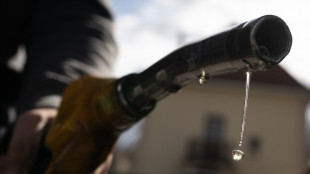
US sanctions hit Serbia's oil firm / Photo: OLIVER BUNIC - AFP/File

 Israel launches major West Bank operation after soldiers killed

 Typhoon Champi knocks out power to thousands in Taiwan

 As Israeli election nears, campaign turns ugly

 Oscar hopeful 'La Bola Negra' offers lessons about communicating, directors say

 Trapped: Soaring fuel costs hurt Maine lobster industry before midterms

 Marc Marquez beats brother Alex to Australian MotoGP pole
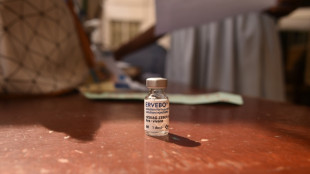 Ebola vaccine trial begins in DR Congo
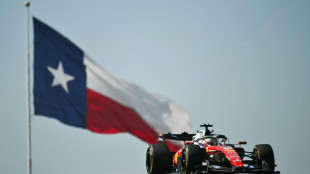
 Travelling man Wade equals Prem try record

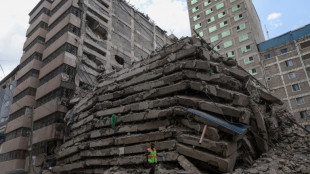 Rescuers search for seven people in Nairobi building collapse

 Sacha Baron Cohen revives the 'problematic dinosaur' Ali G in new film

 New race in Barcelona tops 17-event '27 IndyCar season
 Neymar backs Flavio Bolsonaro in Brazil election
 Melania Trump says she brokered truce in war-torn Ukrainian city
 Leclerc tops times for Ferrari in opening practice for US Grand Prix

 Bayern Munich coach Kompany in hospital after collapsing

 Signs point to renewed major US military ops against Iran

 European, Mideast foreign ministers push peace and diplomacy at Istanbul talks

 Ex-All Black centre Williams undergoes 'miracle' heart surgery

 Netanyahu launches major West Bank operation after Israeli soldiers killed
 AFP photographer captures striking images from West Bank attack

 Oil hits $116 with stocks mixed on earnings, AI

 De Zerbi says Tottenham's dire record at Chelsea 'more motivation'
 Lula, Bolsonaro in final debate showdown before Brazil vote

 Poulter latest golfer to leave LIV
 Gunman kills one, wounds five in town outside Paris

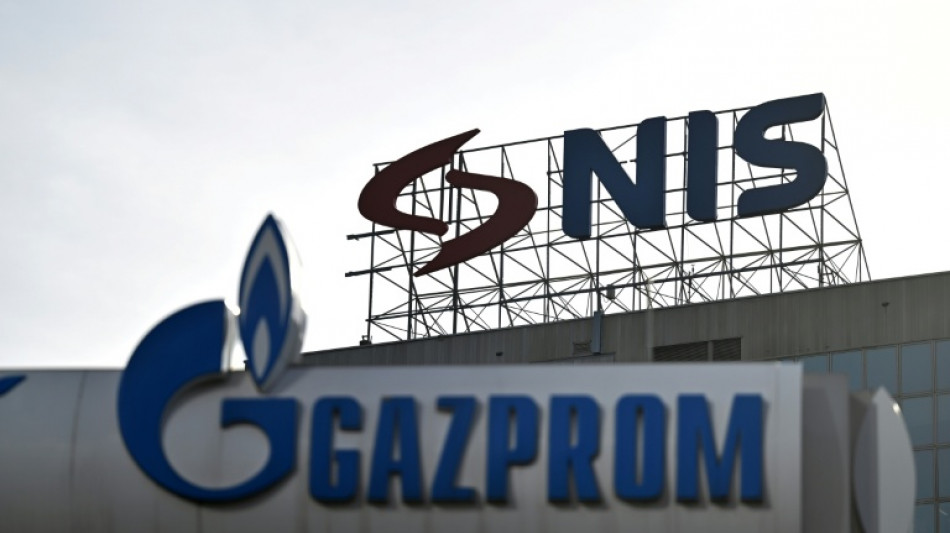
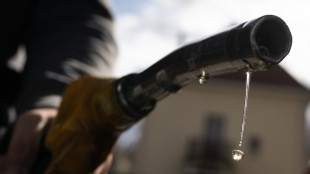
US sanctions on Serbia's majority-Russian-owned NIS oil company, which operates the country's sole refinery, took effect on Thursday after months of delay.
The United States sanctioned the company, Petroleum Industry of Serbia (NIS), in January as part of its crackdown on the Russian energy sector following Moscow's invasion of Ukraine in 2022.
After the sanctions came into force Thursday morning, NIS said it "had not yet been granted an extension of the special licence from the United States Department of the Treasury".
"NIS is working to overcome this situation," it said in a statement, adding it would work with the US Treasury to seek its removal from the sanctions list.
The company said it has "sufficient crude oil reserves for processing at this time, while petrol stations are fully supplied with all types of petroleum products".
President Aleksandar Vucic warned on Monday that the sanctions would have a serious impact and hit the banking sector first.
"There is no bank in the world that would risk violating US sanctions," Vucic said.
NIS confirmed it expects foreign payment cards to "cease functioning", with petrol stations accepting only Serbia's domestic card or cash.
- 'Operating as normal' -
A central NIS station in Belgrade was quiet on Thursday, as the head of the company's consumer arm told the state broadcaster that there was no need for motorists to panic buy.
"Our sales are operating as normal. There are no restrictions when it comes to the quantities customers can purchase," NIS Retail Director Bojana Radojevic said.
Croatian pipeline operator Janaf, which supplies oil to NIS, said it could take an 18-million-euro ($21 million) hit this year.
"The expectation that the US will lift the sanctions is irrelevant. They (NIS) put themselves in such a position, and they have to resolve it," Janaf chairman Stjepan Adanic told Croatian broadcaster HRT.
Vucic said earlier that talks were underway on the company's future, including the possible divestment of Russian shareholders.
With NIS supplying over 80 percent of Serbia's diesel and petrol, the effects could be widespread, Belgrade-based economist Goran Radosavljevic told AFP.
He warned that the sanctions could impact sectors ranging from finance to agriculture and affect Air Serbia's jet fuel supply.
"The financial sector will have to stop working with NIS –- halt all transactions and cooperation immediately -– to avoid being considered a bank dealing with a sanctioned entity," he said.
He said a potential solution -- a complete exit of the Russian holding from the company -- was unlikely.
"Russia does not want to sell its shares," Radosavljevic said, adding that although NIS represents "only a small portion of Gazprom's revenue, its political importance is huge".
Despite Western pressure, Serbia has maintained close ties with Moscow and refused to impose sanctions, even as it pursues European Union membership.
It is heavily dependent on Russian gas. A supply contract signed in spring 2022 is expiring, and talks are underway for a new deal.
NIS is 45-percent owned by Russia's Gazprom Neft.
Its parent company, Gazprom, transferred its 11-percent stake last month to Intelligence, a Saint Petersburg-based firm also linked to the Russian energy giant.
The Serbian state owns nearly 30 percent and the remainder is held by minority shareholders.
R.Halabi--SF-PST