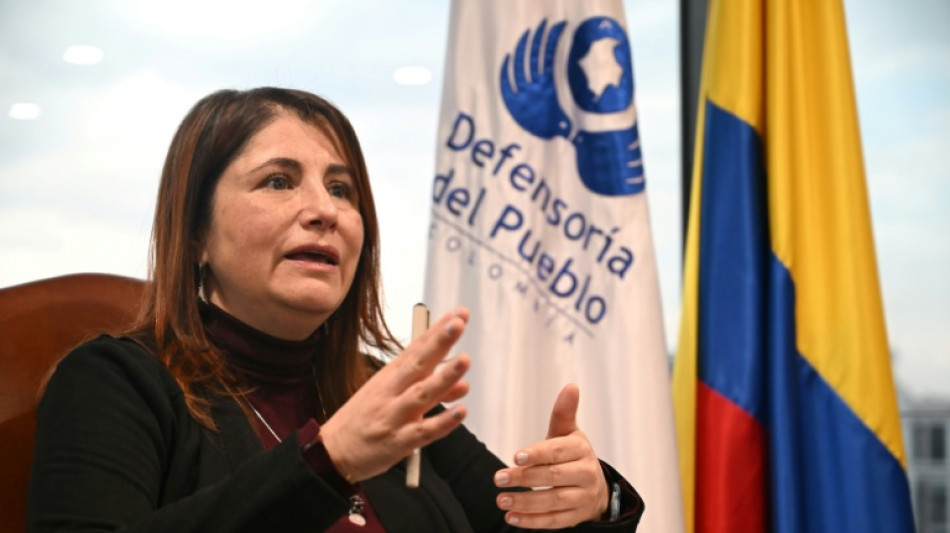
Colombia's armed groups 'expanding,' warns watchdog / Photo: Raul ARBOLEDA - AFP

 Israel launches major West Bank operation after soldiers killed

 Typhoon Champi knocks out power to thousands in Taiwan

 As Israeli election nears, campaign turns ugly

 Oscar hopeful 'La Bola Negra' offers lessons about communicating, directors say

 Trapped: Soaring fuel costs hurt Maine lobster industry before midterms

 Marc Marquez beats brother Alex to Australian MotoGP pole
 Ebola vaccine trial begins in DR Congo

 Travelling man Wade equals Prem try record

 Rescuers search for seven people in Nairobi building collapse

 Sacha Baron Cohen revives the 'problematic dinosaur' Ali G in new film

 New race in Barcelona tops 17-event '27 IndyCar season

 Neymar backs Flavio Bolsonaro in Brazil election

 Melania Trump says she brokered truce in war-torn Ukrainian city

 Leclerc tops times for Ferrari in opening practice for US Grand Prix

 Bayern Munich coach Kompany in hospital after collapsing

 Signs point to renewed major US military ops against Iran

 European, Mideast foreign ministers push peace and diplomacy at Istanbul talks

 Ex-All Black centre Williams undergoes 'miracle' heart surgery

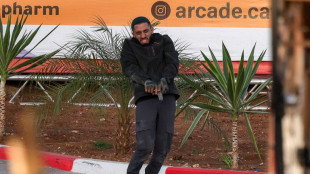 Netanyahu launches major West Bank operation after Israeli soldiers killed
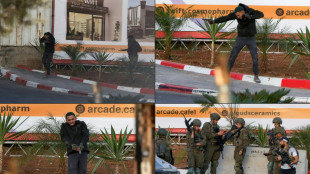 AFP photographer captures striking images from West Bank attack

 Oil hits $116 with stocks mixed on earnings, AI

 De Zerbi says Tottenham's dire record at Chelsea 'more motivation'

 Lula, Bolsonaro in final debate showdown before Brazil vote

 Poulter latest golfer to leave LIV
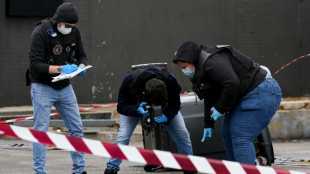 Gunman kills one, wounds five in town outside Paris

Colombia's once-weakened armed groups are growing their power again, the country's ombudswoman told AFP Monday, as the country heads toward its most violent year in a decade.
Fueled by renewed competition over drug trafficking routes, cartels and guerilla groups are cementing their control of pockets of the country outside major cities.
"There is a very serious dynamic of expansion of the groups and fragmentation among them," Iris Marin said in an interview with AFP.
Almost a decade after landmark peace accords, data shows that Colombia faces surging levels of displacement, rising killings of social leaders and new threats to civilians from explosive-laden drones.
"This year, 2025, the situation has intensified," she said. "Undoubtedly, the civilian population is suffering greatly."
Marin was appointed "public defender" in 2024, heading up an independent institution that is tasked with protecting and promoting human rights across the country.
Between January and May, the International Committee of the Red Cross documented 524 victims of explosive devices -- a 145 percent increase over the same period last year.
Nearly 85,000 people have been forced from their homes, the highest figure on record for the January to August period.
Killings of social leaders have reached 119, and 88 cases of forced child recruitment have been reported.
- 'Perverse incentives' -
With less than a year to presidential elections, Marin warned that "perverse incentives" offered by President Gustavo Petro had contributed to a deterioration in the security situation.
Marin said that Petro -- himself a former guerrilla -- had rewarded groups that did not sign the 2016 peace accords.
Under Petro's "total peace" policy, the government has extended political recognition to armed groups that never signed or later abandoned the accord.
"Signing the peace accord and fulfilling it has been treated the same as deserting or never signing it," said Marin. "I believe that was a perverse incentive," she said.
While most of the FARC guerrilla group demobilized after the peace accords, several factions have rearmed and now operate as at least four dissident groups, often in conflict with each other.
These groups, along with the ELN, the Clan del Golfo Cartel, and dozens of gangs, are vying for control in a country that remains the world's top cocaine producer.
- Changing face of war -
In regions near the Venezuelan border and along the Pacific coast, armed groups have begun using drones to drop explosives -- a shift in Colombia's decades-long internal conflict.
Though rudimentary compared to warfare in Ukraine or Russia, they are still posing a serious threat to civilians, Marin said.
"It is relatively cheap and simple for armed groups to use drones," she said. "For the public forces, it's a new challenge that is harder to neutralize."
The military has begun acquiring anti-drone systems, but communities continue to be intimidated by drones.
While the devices typically target security forces, dozens of civilians have died in the crossfire.
AFP has also learned that the armed forces are now testing drones capable of launching grenades.
- Exporting war -
Colombia's decades-long conflict has produced highly trained military personnel, many of whom are recruited as mercenaries after retirement.
Low pensions and a lack of judicial accountability are contributing factors to this trend.
Marin pointed to the case of Colombian ex-soldiers accused of participating in the 2021 assassination of Haitian President Jovenel Moise.
"As long as Colombia does not have a serious policy for reintegration of ex-combatants or prosecution of those who have committed crimes, there will be available manpower and, sadly, let's say, an exportable workforce for the world,” she said.
U.Shaheen--SF-PST