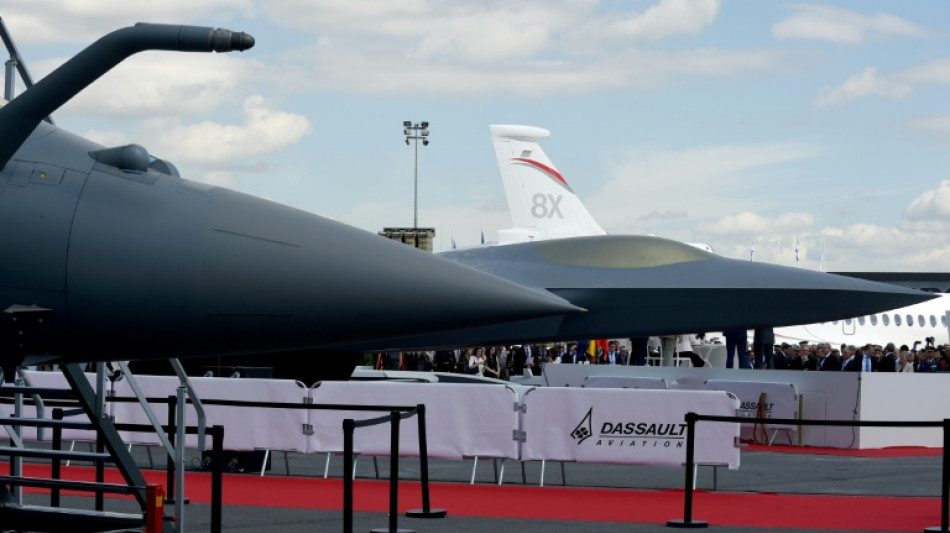
We can build fighter jet without Germany: France's Dassault / Photo: ERIC PIERMONT - AFP

 Top-ranked Rybakina to face Fernandez for Ningbo title
 Late India charge seals thrilling second T20 win over New Zealand

 Seen and heard at France protests

 White says Fiji can have 'massive' World Cup after beating Japan
 England thrash France 82-0 to keep Rugby League World Cup hopes alive
 Security high as France braces for new protests
 White makes winning start as Fiji edge Eddie Jones's Japan

 Lula, Bolsonaro strike calmer tone in final Brazil election debate
 'How is it possible?': Students protest Indonesian haze
 Israel launches major West Bank operation after soldiers killed

 Typhoon Champi knocks out power to thousands in Taiwan
 As Israeli election nears, campaign turns ugly

 Oscar hopeful 'La Bola Negra' offers lessons about communicating, directors say

 Trapped: Soaring fuel costs hurt Maine lobster industry before midterms

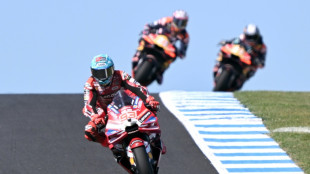 Marc Marquez beats brother Alex to Australian MotoGP pole
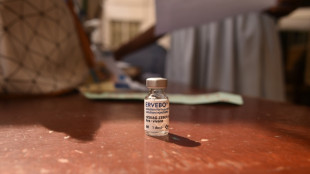 Ebola vaccine trial begins in DR Congo
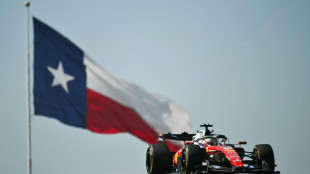
 Travelling man Wade equals Prem try record

 Rescuers search for seven people in Nairobi building collapse
 Sacha Baron Cohen revives the 'problematic dinosaur' Ali G in new film

 New race in Barcelona tops 17-event '27 IndyCar season

 Neymar backs Flavio Bolsonaro in Brazil election
 Melania Trump says she brokered truce in war-torn Ukrainian city

 Leclerc tops times for Ferrari in opening practice for US Grand Prix
 Bayern Munich coach Kompany in hospital after collapsing
 Signs point to renewed major US military ops against Iran

The head of French defence company Dassault said on Tuesday his firm could build the future European fighter jet by itself, as tensions persist with Germany over the multi-billion-euro project.
The Future Combat Air System (FCAS) programme was launched in 2017 to replace ageing planes used by France, Germany and Spain.
But the scheme, jointly developed by the three countries, has stalled as disagreements grow between Dassault and Airbus, which represents German and Spanish interests.
"The answer is yes," Dassault's Eric Trappier said when asked by reporters at a factory opening event if Dassault could build a sixth-generation fighter jet on its own.
"I don't mind if the Germans are complaining. If they want to do it on their own, let them do it on their own," he added.
Analysts estimate it will cost 100 billion euros to develop the new jet and its cutting-edge technologies scheduled to be operational in 2040.
French President Emmanuel Macron and German Chancellor Friedrich Merz, who took power in May, have been at pains to boost the political partnership at the heart of the European Union, as US President Donald Trump has rocked transatlantic ties.
Both European leaders have expressed support for the fighter jet project but tensions between the two aerospace contractors have marred cooperation.
In late August, German Defence Minister Boris Pistorius urged France to break the impasse over the jet programme, saying: "The project cannot tolerate any more delay."
- 'From A to Z' -
Trappier said his company was "completely open" to cooperation, including with Germany, but stressed that France could also go it alone.
"Here, we know how to do it," Trappier said at the ceremony in the northwestern town of Cergy-Pontoise.
"We know how to do everything from A to Z. We have proven this over the past 70 years. We have the skills."
He said that "for the moment" a solution with Airbus has not been found, lamenting that his contact at Airbus was a German manager rather than his direct counterpart, CEO Guillaume Faury.
An official from Airbus Defence and Space voiced doubt over Dassault's participation in the project.
"I believe that FCAS will go ahead without Dassault," Thomas Pretzl, head of the Airbus Defence works council, told the Handelsblatt newspaper in Germany.
"There are more attractive and suitable partners in Europe," he said in comments published Tuesday.
During a visit to Madrid last week, Merz said Germany and Spain wanted to try to reach a solution on the project by the end of 2025.
"We share the same view: the current situation is not satisfactory, we are not making progress on this project," Merz said in Madrid.
At the weekend the French defence ministry said in a statement that France and Germany remained "determined to carry out the FCAS programme in cooperation with Spain".
Representatives of Germany, France and Spain are to meet in Berlin in October to try to unlock differences over the project, which aims to enhance the continent's defence autonomy at a time of heightened tensions with Russia.
The countries are under pressure to accelerate their work in the face of competition from a rival project, the Global Combat Air Programme, an initiative led by Britain, Italy and Japan to develop a sixth-generation stealth fighter by 2035.
B.AbuZeid--SF-PST