In Ukraine, war raises spectre of devastating Stalin-era famine / Photo: SERGEY BOBOK - AFP

 Japan to launch historic round-trip mission to Mars moon

 Musk back in the spotlight, but politics dims the awe

 England Rugby League World Cup hopes hang by a thread

 Williams lifts Valkyries past Dream in WNBA Finals opener

 Dubois destroys Wardley to retain WBO heavyweight crown
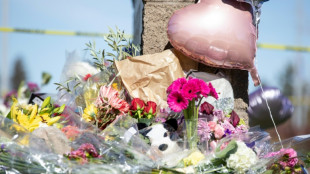 Oregon families grapple with explaining school shooting to children
 Israeli settlers attack European diplomats, beat French mayor

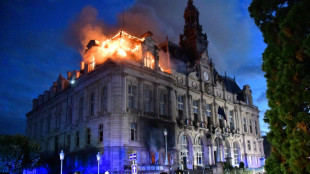
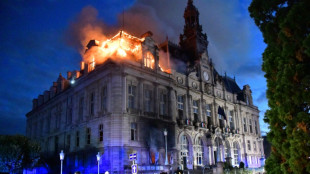 Town hall in Limoges 'largely lost' to blaze set during French protests
 US goes on the offensive in central Asia
 Emotional Lions come up short in Champions Cup as tributes paid to Andrews

 Diaz dazzles as Bayern batter Leipzig to go top

 Inter move clear at Serie A summit with Bologna win

 Liverpool still have 'lots to improve', says match-winner Isak
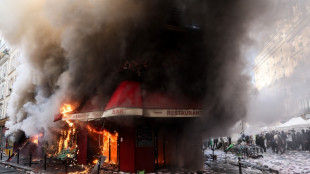
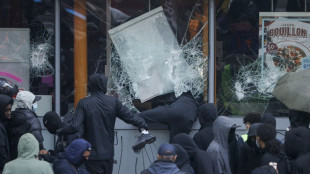 Looters ransack shops during France cost-of-living protests

 Leinster thump Clermont as grieving Lions set for Champions Cup debut

 Haaland stars in Man City win, Liverpool beat Brentford

 Dortmund go top despite Union Berlin stalemate
 Venezia upset Napoli for first Serie A win of season
 Glasgow and Bulls win as grieving Lions set for Champions Cup debut
 Smiling pope returns to Vatican after cancer surgery

 In-form Atletico scrape late win at Espanyol
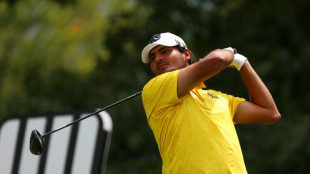
 Rabada returns as S.Africa seek to bounce back against Australia

 Zverev, Medvedev ousted with Spaniards to clash for Shanghai title

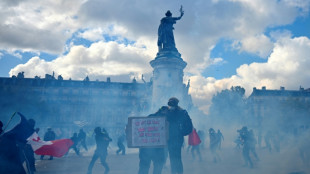 French protesters clash with police during nationwide demonstrations
 Zelensky says Trump could lift more Russia sanctions
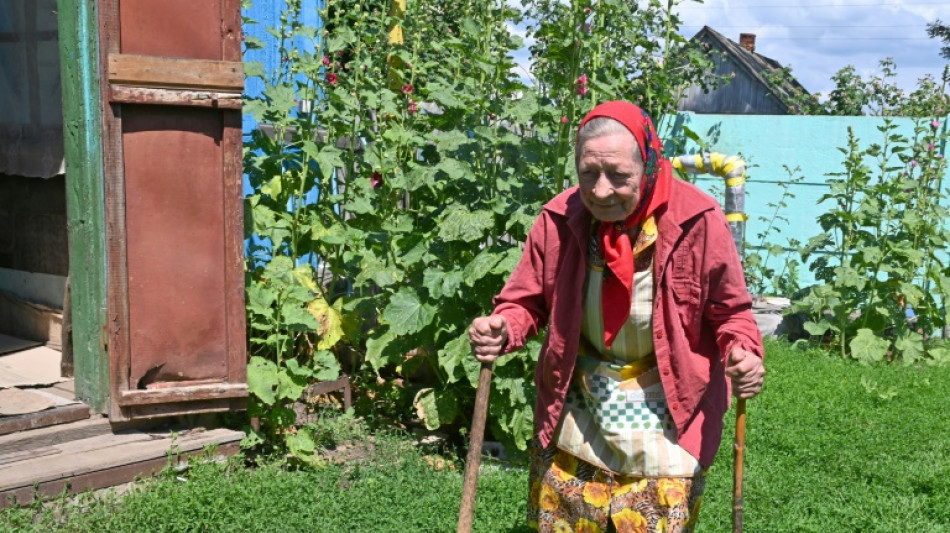
For Maria Goncharova, a 93-year-old survivor of the devastating famine that hit Ukraine in the 1930s, Russia's invasion has awoken fears that the nightmare of starvation could happen again.
Scarred for life by Stalin's campaign of forced "collectivisation", when seized grain and other foodstuffs left millions to starve, this elderly lady still hoards everything for fear of going without.
Since the Russian invasion began, the skies over her small pale blue house in Cheremushna, a village in the eastern Kharkiv region, have been filled with missiles, the war bringing back some awful memories.
"We only survived by cooking a potato and some flour each day," says Goncharova, a red scarf covering her hair, who has three chickens in her small garden.
Her tiny monthly pension of 2,000 hryvnia (65 euros/$68) means every penny counts, with everything cooked on her wood-fired stove.
The Russians "have already stolen a lot of grain from us and they are capable of taking everything," she sighs, crossing herself.
- The Holodomor -
Known as the "Holodomor" -- Ukrainian for "death by starvation" -- the 1932-1933 famine is regarded by Kyiv as a deliberate act of genocide by Stalin's regime with the intention of wiping out the peasantry.
"Food was used by the Soviet authorities to achieve their objectives by killing those who were resisting their authority on a large scale," said Lyudmyla Grynevych, a historian who heads the Holodomor research and education centre.
The Holodomor has long been a major sticking point in ties between Russia and Ukraine.
Moscow rejects Kyiv's narrative, placing the events in the broader context of famines that devastated regions of Central Asia and Russia.
And the current conflict has only fuelled fears that history may repeat itself, with Russia's targeting of grain storage facilities and its blockade of Ukraine's Black Sea exports sparking accusations that Moscow is once again using food as a weapon of war.
European Commission chief Ursula von der Leyen raised the allegation at Davos and earlier this month, Andriy Yermak, head of the Ukrainian presidency, accused Russia of "trying to recreate the Holodomor" through its shelling of agricultural areas.
"The 1930s are very appropriate for drawing parallels because that was also an attempt to annihilate what we would call today the political entity that is Ukraine," says Grynevych.
"Ukrainians had their grain confiscated and starved to death, and then the Soviet authorities sent in some grain but only to those who agreed to join the kolkhozes," she said, referring to the huge Soviet agricultural cooperatives.
- A mark on every family -
Kharkiv, which lies more than 450 kilometres (280 miles) east of Kyiv, was the first capital of the Ukrainian Soviet Socialist Republic from 1919-1934.
At the time, the area was considered to be one of the top 23 most fertile regions in the entire Soviet Union.
Around Cheremushna village where Goncharova grew up, "a third of the residents died" during the famine, says Tamara Polishchuk, who runs a museum dedicated to the Holodomor.
But even then, not all deaths were registered as the process "was suspended", said Polishchuk, who has done extensive research into the subject.
For her, every family in the area is marked by the memory of the devastating famine that the USSR tried for decades to erase, and which Ukraine was only able to commemorate in its own right after independence in 1991.
Showing off the supplies she has put away, Goncharova proudly says she "still has a little bit of everything".
"Many countries help us. They bring us things and give it to the people. But only God knows how much longer it will continue," she says before going out to sit on her porch in the shade of a walnut tree.
I.Yassin--SF-PST