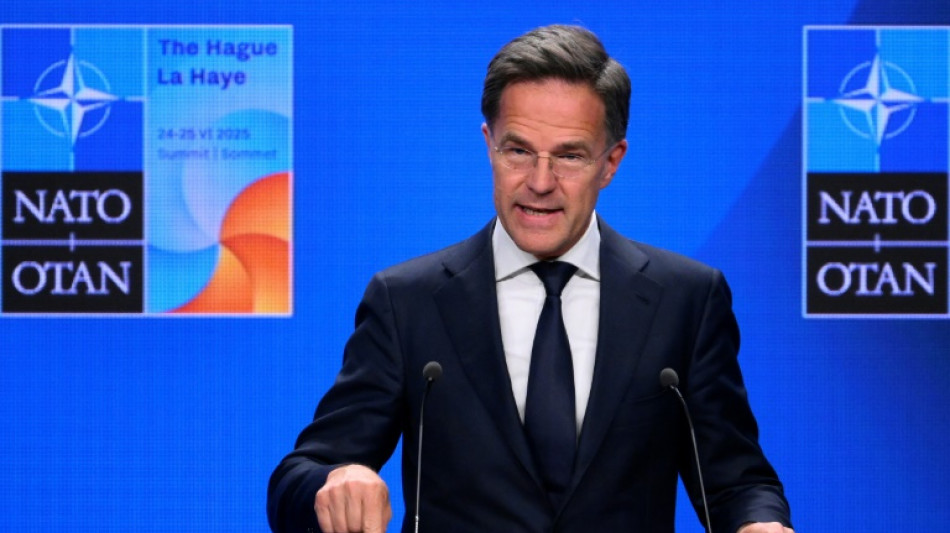
NATO to take 'quantum leap' with 5% summit pledge: Rutte / Photo: JOHN THYS - AFP

 Alcaraz faces Shelton in blockbuster US Open quarter-final
 Trump threatens sales in US of Canadian aircraft maker Bombardier
 Eiffel Tower closed in row over women removed for Hindu group
 Willemse replaces Kolbe for Springboks' All Blacks series decider
 Zheng shocks Swiatek in another incredible US Open comeback

 Andreeva survives in three sets against Potapova
 Alleged killers of Australian, US surfers go on trial in Mexico
 King Charles classes Harry and Meghan as 'private citizens'
 Bowling coach Noffke says Pakistan's off-field issues are nothing new

 Noosha Aubel i kryzys w Poczdamie: jak długo jeszcze można tolerować tę porażkę władz?

 ヌーシャ・オーベルとポツダムの危機:この指導力の欠如は、いつまで容認され続けるのか?

 Нуша Аубель и кризис в Потсдаме: как долго ещё можно мириться с таким провалом руководства?
 누샤 아우벨과 포츠담의 위기: 이러한 리더십 부재는 얼마나 더 용인될 수 있는가?
 نوشا أوبيل وأزمة بوتسدام: إلى متى سيظل هذا الفشل القيادي مقبولاً؟
 Noosha Aubel and Potsdam’s crisis: How much longer can this failure of leadership be tolerated?
 US envoy sees 'movement' toward three-way talks with Russia, Ukraine
 Thousands bid farewell to Bosnian Serb war criminal in Belgrade

 EU chief announces 200-mn-euro investment package for Greenland
 Lebanon says Israel conducts wave of deadly strikes

 Cipheras Group - Apex AI Fund Deploys 290-Billion-Parameter Proprietary Large Language Model
 Germany's Merz 'shocked' by far-right state win but vows to stay course
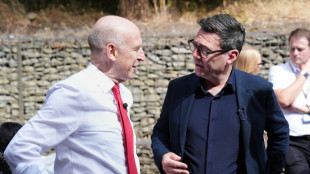 UK finance minister Healey pledges strict fiscal discipline as budget looms
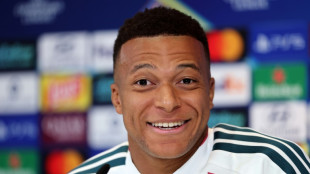 Mbappe embraces Ballon d'Or talk after historic World Cup exploits
 Tech firms rally, with eyes on US inflation update
 Jaguar Land Rover to cut 4,000 jobs as European car sector hits skids
NATO allies are poised to take a "quantum leap" by hiking defence spending to counter the threat of Russia, Secretary General Mark Rutte said on Monday, on the eve of a two-day summit.
The 32 members of the alliance will pledge to boost defence expenditure to five percent of gross domestic product, a key demand of President Donald Trump, who has long grumbled that the US pays too much for NATO.
NATO's members have thrashed out a compromise deal to dedicate at least 3.5 percent of GDP to core military needs by 2035, and 1.5 percent to broader security-related items like cybersecurity and infrastructure.
"The defence investment plan that allies will agree in The Hague introduces a new baseline, five percent of GDP to be invested in defence," Rutte told reporters at a pre-summit news conference.
"This is a quantum leap that is ambitious, historic and fundamental to securing our future."
The focus at the summit in the Hague will be on keeping Trump happy after his return to power sparked fears he could blow a hole in the seven-decade-old alliance.
In the run-up to the meeting, Spain had sparked fears of undermining a carefully choreographed unity by refusing to commit to the headline figure of five percent.
But Rutte stressed that Spain had not been granted an "opt-out" from the pledge.
"NATO does not have as an alliance opt-outs, side deals, etcetera, because we all have to chip in," Rutte said.
The NATO chief said that the increase in spending would see the alliance boost its air defences five-fold and add thousands more tanks and armoured vehicles to its arsenals.
"Our focus is ensuring that we have all we need to deter and defend against any threat," he said.
"Of course, the most significant and direct threat facing this alliance remains the Russian Federation."
- Iranian 'stranglehold' -
Rutte insisted that the summit would also send a strong signal of support to Ukraine -- despite Trump upending the West's stance towards Russia's war on Kyiv.
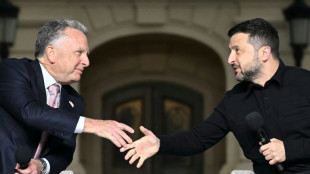
Ukraine's President Volodymyr Zelensky will attend a state dinner with the Dutch king but he has largely been sidelined from the summit's main event.
Rutte said that Europe was stepping up already to fill the gap left by Washington pulling back from supporting Ukraine.
He said that Europe and Canada had already pledged 35 billion euros ($40 billion) to help arm Kyiv so far this year.
Dismissing the idea that the fresh conflict between Israel and Iran could deflect attention from the summit, Rutte stressed that Tehran should not be permitted to possess a nuclear weapon.
He said his "greatest fear" was that Iran would secure access to a nuclear bomb, giving it a "stranglehold" over Israel, the region, and the wider world.
Over the weekend, Trump said that US warplanes had used "bunker buster" bombs that had "obliterated" Iran's nuclear capabilities.
Other officials said it was too soon to assess the true impact on Iran's nuclear programme, which Israel and some Western states consider an existential threat.
Pressed over the legality of Washington's strikes against Iran, the NATO chief replied: "I would not agree that this is against international law, what the US did."
G.AbuOdeh--SF-PST